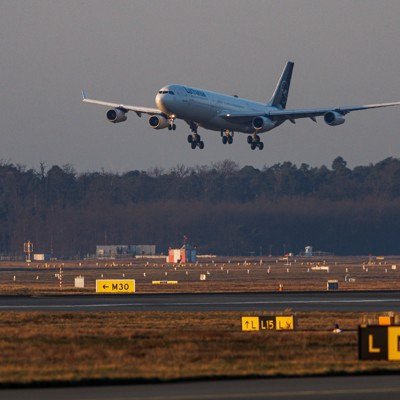
As the U.S. and Israel launched strikes on Iran, American citizens living in or visiting the Middle East found themselves stranded in countries facing bombing attacks by Iran. The State Department on March 2, 2026, urged Americans in 14 Middle Eastern countries to leave via “available commercial transportation, due to serious safety risks.” But commercial air travel and airports were shut down in many of those places and the U.S. wasn’t offering to evacuate its citizens.
Media reports featuring frustrated and frightened Americans stuck in places where danger was mounting, as well as growing criticism that the U.S. hadn’t handled the situation well or according to normal procedure, led the State Department to scramble and send charter flights to evacuate U.S. nationals from a handful of countries.

The Conversation’s politics editor Naomi Schalit interviewed former ambassador Donald Heflin, a veteran diplomat who now teaches at Tufts University’s Fletcher School, to understand how such situations are normally handled – and how the current situation diverged from longstanding practices.
What is the customary way that the United States and the State Department deal with U.S. nationals who are abroad in an area that becomes dangerous?
Over my 35-year career, I was ambassador to a small country and I worked a lot on African affairs. But most of my time was spent in consular affairs, which is the part of the State Department that does this work. And over the last 20 or 30 years, we’ve made a lot of progress. We’ve developed a model that works pretty well.
When you’re in a country with instability, what you want to do is to get the population of Americans down as small as you can. So the first thing that happens is you have some instability, and you tell Americans, “Listen, we advise against traveling here.” See if you can discourage everybody except missionaries or people whose employers really want them to go there to make money or people visiting family members, but get rid of the casual tourist.
Then, a little more time goes by and things start to get bad, and you say, “You should consider leaving.” And then, a little while later, the embassy gives its own employees and their families what they call “authorized departure,” which is, “It’s OK for you to go back to the U.S., and in fact we’ll help pay for it.” And we tell the public that, and we hope that that’ll help spur more people to leave.
And the step after that?
Next step: We order departure, where we tell parts of the embassy, “You’ve got to go home. You can’t make the decision to stay here, you and your kids go home.” And we tell the public that, and hopefully that makes the number of Americans remaining in the country smaller and smaller.
Then – and it doesn’t always happen – the last step is we evacuate. We say, “We’re getting our people out of here on planes, we’ve got space for you on the planes, you should have listened to us before.”
That’s the standard model. Unfortunately, it didn’t get followed very well this week.
What did you see this week, and how did it diverge from the normal procedure?
We went from zero to 60 very quickly. Look, the Mideast is unstable on a good day, but there had not been a new instability where people should be getting scared and going home. And then what happened was we launched the attack, and all of a sudden there was that instability.
Logically, you would think, there were two places that Americans should be getting out of. One was Iran, where we’ve told people not to be for many years. The other was Israel, because Israel is going to be attacked.
But no, the Iranians attacked over half a dozen countries. So now, all of a sudden, you’ve got Americans who feel unsafe in places that have never really been considered unsafe, like Oman, Cyprus or Turkey.
So now you have a long list of countries where you want to encourage Americans to leave and where they want to leave. There’s some demand, and you haven’t got that drawdown, where it makes things smaller, and also you haven’t done anything about arranging charter flights or military flights to get them out. So they’re going to have to stay where they are and feel unsafe for X number of days.
That’s when this started generating news stories.
This led to lot of people calling a member of Congress, a lot of people talking to the press, saying, “We got to get us out of here.” That’ll continue until the evacuation is arranged. There’s a bit of an analogy to COVID. When COVID first took off, we had a lot of Americans stuck overseas. They wanted to get home to their families. They figured U.S. health care to be the best that’s available, and it took us awhile to arrange charter flights. It was a very expensive process to get everybody home. They just kind of had to hunker down. That’s where we are right now.
Do you think this problem that’s being faced by Americans in the Middle East now should have been anticipated by the State Department?
Yes and no. I think a big part of the problem here was that the Trump administration kept the knowledge of the impending attack to a very small circle of people for operational security reasons. You can’t launch a surprise attack if half of Washington knows about it.
You can see a scenario by which a very trusted State Department officer has to eventually talk to a charter plane company about chartering a whole bunch of planes. They’re going to figure out pretty quickly what’s going to happen, and then you’ve got a security leak.
At the same time, I think going back weeks and months, maybe people should have been arranging charter flights and military flights, kind of on spec so that you could flip the switch and get that going right away. They’re kind of starting from scratch this week.
You’ve got people who are stranded, afraid and can’t get on with their lives. What should happen next?
All these Iranian strikes, the casualty numbers aren’t high. So objectively speaking, I think that very few of the Americans over there are in actual, real danger.
But casual tourists do get afraid, and they don’t travel overseas that much. This may be their first time in the Mideast, and all of a sudden this is happening. They want out bad. They’re scared, whether, objectively speaking, they have a good reason to be scared or not. And it’s better for everybody – the U.S. embassy, the host country, for people in Washington – if we get them out of there and get them home.
This will sort itself out. There will be planes, we’ll get all the people out who want to get out, but it’s going to take at least a few days, maybe a week.
This article is republished from The Conversation under a Creative Commons license. Read the original article.