

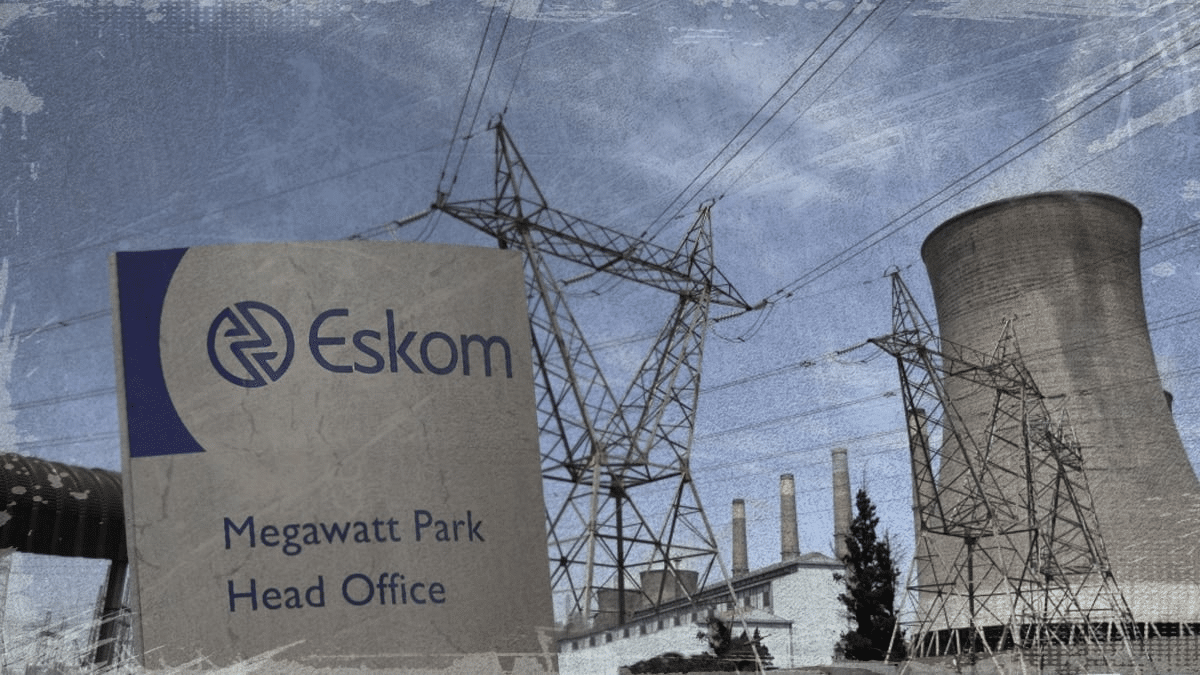
For more than a century, Eskom has dominated South Africa’s electricity system. Founded in 1923, the state utility grew into one of the largest vertically integrated power companies in the world. It generated, transmitted, and distributed electricity across a country whose industrial base was built on cheap coal-fired power.
That model has unravelled over the past 15 years. Aging coal plants, poor maintenance, corruption scandals, and mounting debt have pushed the system into crisis.

Load shedding has become a permanent feature of economic life. At its worst, power cuts removed more than 6,000 megawatts from the grid at a time, forcing businesses and households into darkness for hours each day.
President Cyril Ramaphosa’s government has now taken a historic step. Eskom’s century-long monopoly is being dismantled through the legal separation of generation, transmission, and distribution. The proposed creation of the National Transmission Company South Africa marks the first concrete move toward a more open electricity market. Yet unbundling is not the same as unplugging.
Electricity supply remains under state ownership. Eskom’s balance sheet still weighs heavily on public finances. The coal fleet remains fragile. Renewable integration is constrained by grid bottlenecks. Even as reform accelerates, structural weaknesses persist.
South Africa’s power crisis was never solely about monopoly control. It’s much more than that. Breaking Eskom’s monopoly is one milestone. But it’s not a sure-fire proof that it will solve the problem once and for all.
Loosening a century’s grip on the power sector
Eskom’s dominance dates back over 103 years. As an integrated utility, it controlled generation, transmission, and a large share of distribution. This structure enabled coordinated planning in the early decades, when coal-fired stations powered mining and heavy industry.
By the 2000s, that model had become brittle. Investment in the new generation lagged behind demand growth. The Medupi and Kusile coal plants suffered delays and cost overruns. Maintenance budgets were squeezed.
In addition, South Africa’s coal dependency shows how the system became locked into ageing coal infrastructure. More than 80% of South Africa’s electricity still comes from coal, despite ambitious renewable targets.
As breakdowns multiplied, load shedding intensified. According to Eskom’s own data, South Africa endured record levels of power cuts in 2022 and 2023. Even with some improvement in 2024, reliability remains volatile.
The unbundling process aims to introduce competition and transparency. According to the nation’s president, the new transmission company will operate as an independent grid operator, procuring electricity from multiple generators.
This may mark a break from a single-buyer model dominated by Eskom’s generation arm.
Unbundling is not the same as unplugging
Meanwhile, legal separation does not automatically transform operational culture. Eskom remains state-owned. Its generation arm continues to operate the coal fleet. Its debt remains on the books. Governance reforms are ongoing but incomplete.
The proposed National Transmission Company of South Africa will also retain full state ownership.
This means political accountability and fiscal exposure remain intertwined.
John Kofi, an energy policy expert in Johannesburg, notes that “unbundling creates space for competition, but if the same governance weaknesses persist, structural risk remains.”
Unlike in the past, private generators can now connect to the grid more easily, particularly after reforms removed licensing thresholds for embedded generation. Corporate power purchase agreements have surged in recent times.
However, the coal fleet still anchors the system. When large units fail, alternative energy from private suppliers alone cannot immediately fill the gap.
Load shedding is triggered by shortfalls in available generation relative to demand. That vulnerability remains tied to the reliability of ageing coal plants.
Debt still casts a shadow on investor confidence
On the other hand, Eskom’s debt burden remains one of the largest obstacles to any serious reform. The utility’s debt has exceeded R400 billion in recent years, roughly $21 billion to $22 billion. The government has stepped in with a multi-year debt relief package to stabilise the balance sheet.
While this intervention reduces immediate financial pressure, it shifts risk onto the sovereign. Investors evaluating South Africa’s power sector must consider both Eskom’s operational performance and the state’s fiscal position. Credit rating agencies have repeatedly flagged Eskom’s liabilities as a systemic risk.
For instance, a renewable energy investor based in Cape Town explains that the government’s “debt restructuring is helpful, but investors look at long-term regulatory certainty and grid capacity. They need assurance that new generation can be evacuated without delay.”
In other words, debt relief alone does not resolve grid congestion or maintenance backlogs.
The renewable transition may need more wires
Moreover, South Africa has expanded renewable procurement through successive bid windows under the Renewable Energy Independent Power Producer Procurement Programme.
Energy in Africa recently reported that Eskom has opened additional renewable programmes to accelerate clean energy capacity. Private developers have responded with significant interest.
Yet grid constraints are emerging as a bottleneck. In the Northern Cape and Western Cape provinces, rich in solar and wind resources, face transmission congestion. Developers have struggled to secure grid connection capacity in some corridors.
Expanding transmission infrastructure requires time, capital, and coordinated planning. Simply adding new lines does not address system balancing challenges.
The renewable transition also requires storage, flexible generation, and improved grid management systems. Without these, variability can strain the system.
In South Africa, renewable expansion reduces long-term emissions and fuel costs. In the short term, it must coexist with a fragile coal fleet.
The pace of decommissioning old coal units will depend on grid readiness and system stability. Premature shutdowns without replacement capacity risk prolonging load shedding.
Breaking Eskom’s monopoly is only one step
Market reform under the Electricity Regulation Amendment Act seeks to create a more competitive wholesale electricity market.
Independent producers can now generate electricity for the grid or directly for large customers. Municipalities are exploring procurement options.
These changes reduce Eskom’s dominance but do not eliminate systemic constraints. Municipal distribution networks remain financially strained. Non-payment and technical losses persist in several regions. Infrastructure backlogs complicate service delivery.
An academic specialising in energy economics argues that “competition in generation is welcome, but distribution reform is equally important. Municipal finances influence reliability at the end-user level.”
The government must balance liberalisation with coordination. A fragmented market without clear rules risks inefficiency.
Load shedding could persist if structural issues are not resolved. Coal plant reliability must improve. Transmission expansion must accelerate. Debt management must remain disciplined. Regulatory independence must be credible. Each of these reforms requires sustained political will.
The end of Eskom’s 100-year monopoly marks a turning point in South Africa’s electricity history. For the first time in more than a century, generation, transmission and distribution are being structurally separated. Private participation is expanding. Regulatory reform is underway.
Yet load shedding is not solely a product of monopoly control. It reflects ageing infrastructure, deferred maintenance, financial strain and planning failures accumulated over decades.
Unbundling opens the door to competition. It does not guarantee stability. South Africa’s power crisis will ease only if coal fleet performance stabilises, grid investment accelerates, and fiscal discipline holds. Renewable expansion must be matched by transmission capacity and storage solutions.
Breaking Eskom’s monopoly is one of many steps still required. The lights will stay on not because of structural reform alone, but because operational discipline, investment and governance align behind it.


