By Hugo Campos
Despite the dominance of the “Big Three” cereal crops and a steady rise in meat consumption, an overlooked food sector is projected to become ever more central to Africa’s food security and rural economic growth between now and 2050.
Over the next three decades, the remarkable yet humble yam, sweetpotato, cassava and other roots are forecast to create $140 billion in additional market value. This compares to $41 billion for rice, millet and maize, and $70 billion for meat. Meanwhile, banana and plantain are set to add another $50 billion to this balance sheet.
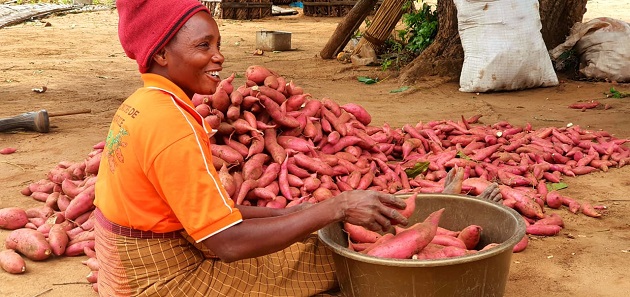
These hardy, locally suited and cost-effective crops are already staple ingredients across the entire continent, accounting for more than 40 per cent of total food production. Their importance is only growing as farmers, particularly female ones, face more challenging growing conditions and weather extremes.
Yet, despite their affordability and resilience, the starring role of roots, tubers and bananas in Africa’s climate-smart food systems of the future is not guaranteed and relies on the kind of united but agile approach on display at the first Africa Climate Summit recently held in Nairobi, Kenya.
When it comes to adapting to the already inevitable impacts of climate change, root crops can naturally withstand heat and drought better than cereals, legumes and vegetables. Cassava, in particular, is an unusual example of a food crop that may even benefit from rising temperatures, with research suggesting increases in climate suitability of up to 17.5 per cent.
However, for Africa to get the full benefit of these environmental superfoods, the continent needs coordinated efforts to optimise, scale up and mainstream these robust and valuable crops.
More and novel, de-risking investment models into genetic improvement research programmes and inclusive governance systems would be one place to start. Although root crops are traditionally difficult to breed, recent scientific breakthroughs have made it possible to produce varieties that are even more drought tolerant, heat resistant and tolerant of increased salinity.
Genomics-assisted breeding has further accelerated this progress, which is fundamental for delivering next generation varieties that are both climate-smart and more nutritious. Hardier and more nutritional root crops would benefit populations in both rural areas where they are grown, and urban areas, where it can be more challenging to supply fresh, healthy and perishable produce.
Developing Africa’s capacity to use agricultural science and research to improve the qualities of root crops according to regional and local differences also requires greater scientific cooperation. A regional roots, tubers and bananas partnership is leading the way, encompassing national research programs, CGIAR crop research centers and international science partners.
Climate variability across Africa means the impact on roots and related crops will differ country by country. For instance, some evidence suggests future climates may impact potato production in Malawi, Tanzania, and Uganda, but would favour potato systems in Burundi and Rwanda.
The continent would therefore benefit from more integrated and cross-border breeding programmes that pool resources and brain power for efficiency, while simultaneously creating the capacity needed to respond to the specific needs of different contexts.
Finally, and equally relevant, the latest and most suitable varieties must get to the farmers who need them through efficient and accessible seed delivery systems.
In Africa, improved varieties of most crops have an adoption ceiling of about 40 per cent, which means the majority of farmers are using seeds and planting material that have not been optimised for today’s conditions. The average age of a variety in farmers’ fields is often 10 years or more, leaving farmers and food supply chains missing out on a decade of ever-increasing agricultural advancements.
Finding and developing the most effective ways to reach farmers, whether through informal channels, cooperatives, government initiatives or non-profits, is vital to accelerate the adoption of new, climate-smart varieties.
The recent Africa Climate Summit demonstrated the power of a unified voice to address the common challenges facing the entire continent. Yet it also recognised the country-level nuances inherent in dealing with an emergency like the climate crisis.
When it comes to climate-proofing food security, local staple crops such as roots and tubers offer the greatest potential, and with more investment and collaboration, they can become multi-purpose solutions that meet Africa’s needs. The Green Revolution that transformed global cereal production is yet to happen for roots, tubers, and bananas. Harnessing advancements in science, environmental lessons, and regional political leadership, the moment is at hand for these crops to put Africa on a track for a food-secure future.
Hugo Campos, roots, tubers and bananas breeding lead at CGIAR, the world’s largest publicly funded agriculture research organisation
IPS UN Bureau