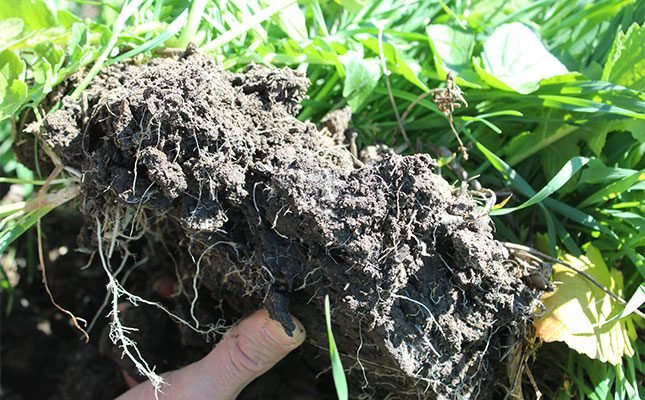
Worldwide, the pressures on soil and water are becoming harder to ignore. As weather extremes intensify and productive land grows ever strained, farmers face a truth that science has long warned of: soil and water cannot be managed in isolation.


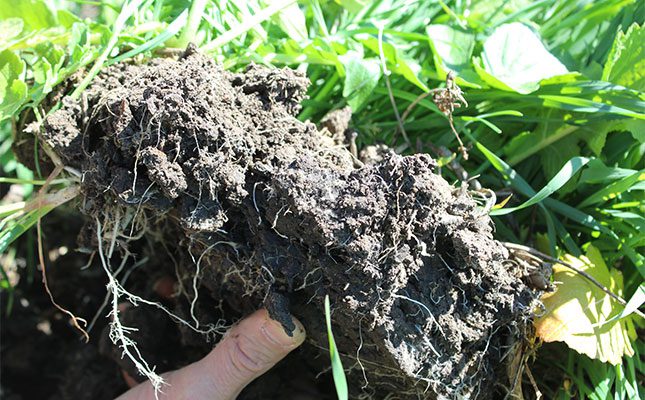
Photo: Lindi Botha
Together, soil and water form the foundation of food security, and without urgent action, both are at risk. World Soil Day on 5 December highlights this connection through the theme ‘Soil & Water: A Source of Life’.
Prof Driekie Fourie, nematologist at Syngenta Seedcare, said in a statement that this message was especially relevant for South Africa’s agriculture sector.
“Soil and water are not separate challenges. They form a single, interconnected system that underpins food security and long-term agricultural viability.”
She noted that water scarcity often drew public attention, yet soil degradation continued largely unchecked.
“Topsoil is increasingly vulnerable to erosion, compaction, and nutrient depletion, along with declining organic matter and microbial life. Unsustainable practices such as intensive tillage and monocropping have accelerated this decline. Water scarcity intensifies the damage by reducing infiltration and weakening soil structure.”
Fourie explained that organic matter is one of the most effective buffers. It improves soil structure, increases water storage, and reduces run-off.
“For every 1% increase in soil organic matter, about 185 000ℓ more water per hectare can be stored,” she said.
Although farmers cannot change soil texture, they can raise organic content by adding compost or manure, planting cover crops, and following other regenerative practices.
Central to this system is the rhizosphere, the thin layer of soil surrounding plant roots. Fourie described it as “the engine room of agriculture”, where soil biology, nutrients, and water interact, but also where threats such as nematodes and soil-borne fungi accumulate.
Effective management relies on diagnostics, biological solutions, targeted seed treatments, and reduced disturbance to protect this zone.
With nearly 60% of South African land degraded and much of the country prone to desertification, Fourie urged a shift from depletion to regeneration, supported by precision irrigation and responsible water stewardship.
“Soil and water are among South Africa’s most undervalued assets. Protecting them is not only a farming responsibility; it is a national imperative,” she added.
Closing global yield gaps
The need for smarter resource management extends beyond South Africa. In its report titled ‘The State of the World’s Land and Water Resources for Food and Agriculture 2025’, the Food and Agriculture Organization of the United Nations (FAO) warned that feeding nearly 10 billion people by 2050 will require major improvements in land, soil, and water use.
Although global agricultural production tripled over the past 60 years, this growth carried heavy environmental and social costs. Thus, expanding farmland is no longer possible without damaging ecosystems.
Future gains must come from efficiency. The FAO urged countries to close yield gaps, use resilient crop varieties, and adopt practices tailored to local conditions.
“Rainfed agriculture offers significant potential, particularly through conservation farming, drought-tolerant crops, soil-moisture conservation, and crop diversification. Integrated systems like agroforestry, rotational grazing, and rice and fish farming also support sustainable intensification,” FAO director-general Qu Dongyu stated in the report.
He added that the choices made now will determine whether the world can meet future food needs without compromising ecosystems.
From awareness to action
Producers must take practical steps to address soil degradation, water scarcity, and erratic rainfall. Fourie recommended the following actions:
- Monitor and assess soil through testing to understand its texture and water-holding capacity;
- Sample for nematodes shortly before harvest to identify plant-parasitic nematodes and plan management strategies;
- Build soil health through reduced tillage;
- Increase organic matter with cover crops, crop residues, or soil amendments;
- Implement structured crop protection that combines chemical and biological tools; and
- Treat seeds to limit active ingredients and protect seedlings during the first four to six weeks.