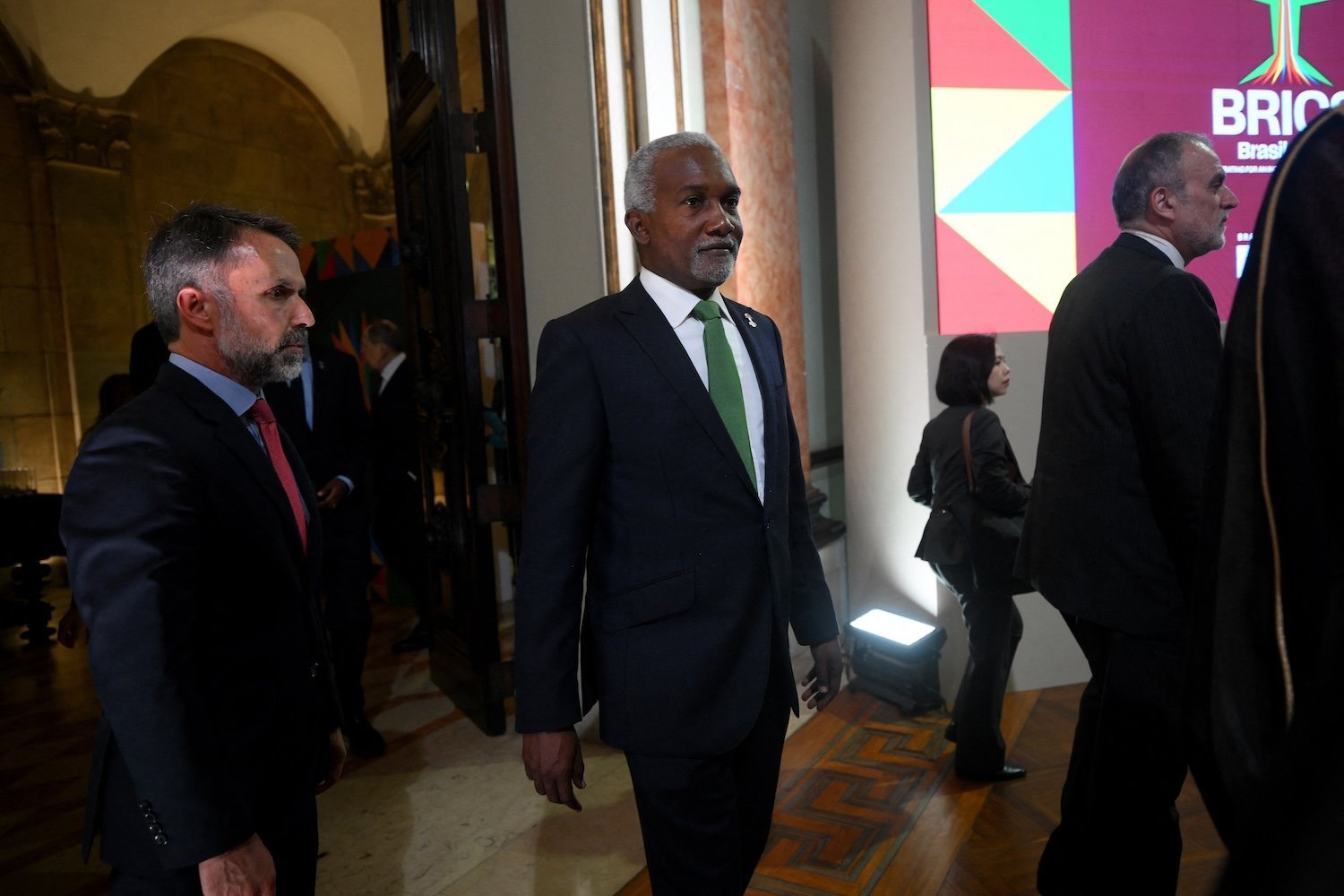

As Eswatini becomes the second African country after South Sudan to accept third-country migrants deported by the United States, Nigeria is charting a sharply different course. Africa’s most populous nation has rejected Washington’s immigration policy, with Nigerian Foreign Minister Yusuf Tuggar bluntly stating in early July that the country has “enough problems of our own” and will not cave to U.S. pressure to take in deportees with no ties to Nigeria.
Nigeria’s stance is not just about immigration. It is a broader rejection of the transactional logic that has long shaped U.S.-Africa relations. Nigeria isn’t just defending borders—it is defending its sovereignty.
As Eswatini becomes the second African country after South Sudan to accept third-country migrants deported by the United States, Nigeria is charting a sharply different course. Africa’s most populous nation has rejected Washington’s immigration policy, with Nigerian Foreign Minister Yusuf Tuggar bluntly stating in early July that the country has “enough problems of our own” and will not cave to U.S. pressure to take in deportees with no ties to Nigeria.
Nigeria’s stance is not just about immigration. It is a broader rejection of the transactional logic that has long shaped U.S.-Africa relations. Nigeria isn’t just defending borders—it is defending its sovereignty.
This quiet but consequential standoff comes as U.S. President Donald Trump revives his controversial policy of third-country deportations, which he introduced on a smaller scale in Latin America during his first term. Now, his administration is expanding those efforts and actively courting African nations—a shift signaled at Trump’s mini-summit with African leaders at the White in July, where he alluded to progress on such deals without offering details.
The U.S. move reflects a broader trend in Western policy of outsourcing border enforcement through diplomatic pressure and economic incentives. The United Kingdom’s now-defunct asylum deal with Rwanda and the European Union’s recent proposal to offshore asylum-seekers both follow this pattern.
Now, the United States is following suit—dangling aid, suggesting improved trade terms, and hinting at relaxed visa restrictions in exchange for third-country deportation agreements with African states. With the African Growth and Opportunity Act set to expire in September and recent aid cuts already in play, Washington’s pressure may sway some African governments. Nigeria, however, has drawn a clear line: It will not become a dumping ground for migrants.
Nigeria’s decision is grounded in both principle and pragmatism. With more than 230 million people, the country is already buckling under significant pressures, such as rising food insecurity, high youth unemployment, insurgencies in the north, and mounting economic strain. Its prisons are overcrowded, with occupancy at 137 percent. Taking in U.S. deportees would further stretch already fragile institutions and divert scarce resources from urgent domestic needs.
Moreover, the deportation proposal clashes directly with Nigeria’s foreign-policy framework anchored in the “4Ds”: democracy, development, demography, and diaspora. This strategy envisions Nigeria as a continental leader, one that shapes its international partnerships around sovereignty and reform. A third-country deportation deal not only fails to support those goals—it actively undermines them.
This defiance is not without risk. In an international system where many sovereign states have compromised values for aid or short-term advantage, Nigeria’s rejection could strain bilateral relations with the United States and jeopardize future cooperation. The timing is especially sensitive. Nigeria’s recent entry into BRICS as a partner country puts it in direct conflict with new U.S. tariffs targeting member states, which are set to take effect in August—an escalation that could further destabilize trade and diplomatic ties amid economic uncertainty.
Nonetheless, Nigeria’s firm refusal is part of a wider reckoning across the global south. For too long, African states have been expected to absorb the downstream burdens of Western crisis management and implement decisions made in faraway capitals, often in return for donor assistance. In the 1980s and 1990s, for instance, structural adjustment programs imposed by Western financial institutions gutted African economies in the name of reform. After 9/11, the continent was once again instrumentalized—repurposed as a frontier for counterterrorism and migration control, with African states pressed to host foreign military bases, detain migrants, and police borders on behalf of wealthier nations.
But those dynamics are shifting. A growing number of countries in Africa are no longer willing to act as subcontractors for Western policy. South Africa, for instance, has largely resisted U.S. pressure over its trade and foreign-policy alignments, maintaining its ties with Russia and Iran, even as it tries to secure a trade deal with the United States.
Today, Nigeria is drawing a new line in the sand. Its vision of sovereignty is not just about territorial control. It is about policy autonomy, diplomatic dignity, and reciprocal partnerships. Saying no is no longer just subversive. It is strategic.
Nigeria’s position also exposes a blind spot in U.S. foreign policy. Nigeria is a regional heavyweight: In 2024, its bilateral trade with the United States neared $10 billion, making it one of Washington’s top African partners. Nigeria plays a pivotal role in regional peacekeeping, counterterrorism, and global energy supply. It also wields influence within the African Union and the United Nations, where it consistently champions reform in global governance. Yet Washington risks underestimating the cost—economically, diplomatically, and strategically—of alienating such a critical partner, especially as global competitors rush to fill the void.
To be sure, Washington is not unaware of Nigeria’s importance. In April, Trump’s Africa advisor, Massad Boulos, met with Nigerian President Bola Ahmed Tinubu in Paris to discuss enhanced cooperation on trade, security, and peacebuilding. But such efforts are undermined when diplomacy is reduced to dealmaking that serves domestic optics at the expense of mutual respect.
As Nigeria asserts its independence, other powers are watching. China, Russia, Turkey, Qatar, Saudi Arabia, and the United Arab Emirates are all expanding their footprint across Africa through infrastructure, investment, and diplomacy that eschew the conditionality, moralizing, and top-down reform demands associated with Western paternalism. These alternatives come with risks—particularly around debt and governance—but they resonate because they treat African countries as equals, not instruments.
By contrast, Trump-era foreign policy remains locked in a zero-sum, transactional model. When incentives are laced with coercion and expectations of compliance, trust evaporates. Nigeria’s refusal to comply may well reverberate across the continent, especially among states already reassessing their strategic alignments. Whether this will spark a coordinated African stance remains uncertain. But amid growing frustration over extractive trade terms, multilateral double standards, and the externalization of migration policy, the political conditions for a shift are emerging.
For the United States, Nigeria’s defiance should be a wake-up call. If Washington wants resilient partnerships in Africa, it must move beyond conditionality and toward genuine collaboration. The rules of global cooperation are changing, and the era in which power alone could secure compliance is waning. Partnership—not pressure—is the new currency of diplomacy.