

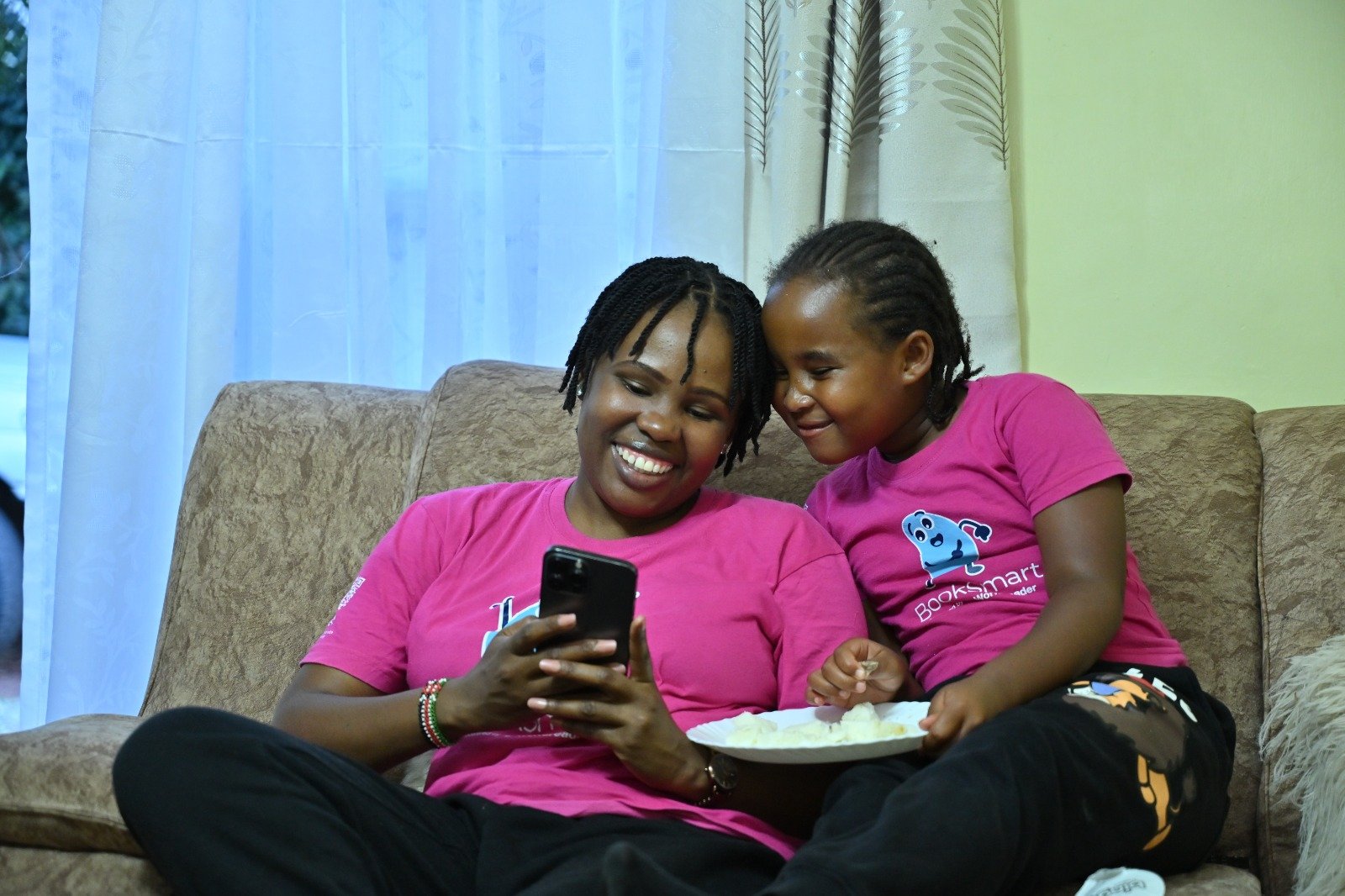
What Kenya Is Teaching the World About Families Reading Together
A Longstanding Partnership with Kenya
Worldreader has reached more than 22 million people across 100 countries. Yet Kenya holds a special place in our journey.
We began working here in 2010. At the time, we distributed thousands of e-readers to students. That early effort helped shape our global approach to digital literacy.
Today, we support tens of thousands of Kenyan families through our BookSmart app. In addition, our five-year Get Kenya Reading initiative has gained national momentum.
The campaign launched last year in partnership with publishers, government leaders, literacy advocates, and Safaricom. A recent YouTube video about the initiative surpassed one million views.
As a result, Kenya is building a national movement around family reading.
Literacy as a Development Issue
Kenya’s leaders face a global challenge. Too many children start school without foundational literacy or social-emotional skills.
Limited access to books drives this gap. Low reading frequency and resource constraints make it worse. Consequently, inequality begins long before children enter the classroom.
However, there is reason for optimism.
In Kenya, Worldreader works alongside government, private-sector, and community partners. Together, we demonstrate that early literacy requires more than classroom reform. It demands coordinated investment in families.
Early literacy is not only an education issue. It is also a development priority. When governments invest early and deliberately, they strengthen long-term economic and social outcomes.
Why Early Reading Matters
Nearly 90 percent of brain development occurs before age five. Therefore, the early years shape lifelong learning and opportunity.
Regular family reading improves school readiness. It also strengthens resilience and long-term economic prospects.
When systems delay intervention until primary school, they miss this critical window. As a result, remediation becomes more expensive and less effective.
Children who read at home arrive at school better prepared. They persist academically. Moreover, they develop social-emotional skills that support workforce readiness.
In contrast, when large numbers of children lack these foundations, inequality deepens early. Addressing it later costs far more.
For this reason, early literacy is preventive investment in human capital.

What Kenya Is Teaching the World About Families Reading Together
Digital Models and Cost-Effective Scale
Family reading is also highly cost-effective.


Digital delivery models now allow governments to reach families at national scale. Compared to traditional programs, these models cost a fraction of the price. At the same time, they produce measurable gains in school readiness.
Therefore, digital family libraries are emerging as public goods. Governments increasingly treat them as shared national infrastructure. This approach ensures inclusion, especially for families excluded from print resources.
The Role of Government and Multilateral Partners
Sustainable scale comes from public systems. It does not come from isolated pilots.
Across several countries, governments now embed digital reading platforms within national strategies. Meanwhile, multilateral institutions support this shift.
The World Bank, UNICEF, the OECD, and the Asian Development Bank recognize digital family reading as a response to learning poverty. Importantly, they validate models that combine evidence, equity, and reach.
As a result, literacy initiatives are moving from small projects to system-level solutions.
Lessons from Public-Sector Partnerships
Global experience reveals consistent lessons.
First, partnerships work best when embedded in existing systems. Second, they must rely on evidence. Third, they should span sectors from the start.
Mobile-first delivery lowers access barriers. It leverages platforms people already trust. Consequently, countries can achieve national reach without heavy infrastructure investment.
Embedding literacy tools within trusted systems increases uptake and long-term sustainability. In addition, blended financing reduces dependence on any single funding source.
Another critical insight is this: families are not passive beneficiaries. Parents and caregivers drive early learning. Therefore, policies must equip them with practical daily tools.
Why Kenya’s Model Matters
Kenya offers a powerful example.
The country has long paired innovation with scale. M-PESA, for instance, reshaped global thinking on financial inclusion. It reached the majority of adults nationwide.
Now, Kenya is applying that systems-based approach to early literacy. Family reading is being integrated into platforms that already reach millions.
I have seen repeatedly that scale follows systems. Effective partnerships embed literacy within trusted infrastructure. They align local leadership, government, private sector, and civil society.
Together, these actors can accelerate progress.
A Generational Investment
Literacy intersects with health, social protection, digital access, and productivity. Therefore, early investment delivers compounding returns.
Countries that invest early and invest collectively expand opportunity across generations.
At Worldreader, we are proud to partner with Kenya in this work. The lessons emerging here can inform global efforts to ensure that more families read together.
Mark Castellino is a Board Member of Worldreader and a global development executive with more than 26 years of experience in public-sector partnerships and institutional growth. He also serves on the boards of the Alliance to End Hunger, the Basic Education Coalition, and the Society for International Development.
By Mark Castellino,
Worldreader Board Member and Global Development Executive



