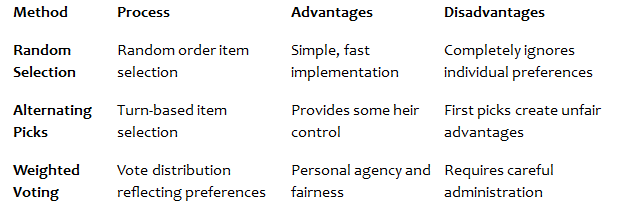
Estate planning professionals and families face significant challenges when dividing tangible personal property—artwork, jewelry, family heirlooms, and collectibles—among multiple heirs. Traditional methods like random selection or alternating picks often create resentment and fail to consider the emotional value heirs place on specific items.
The weighted voting system offers a revolutionary solution that promotes fairness, transparency, and family harmony during estate settlement. This comprehensive guide explores how this innovative approach transforms estate asset distribution.
What Is a Weighted Voting System for Estate Planning?
A weighted voting system allocates each beneficiary an equal number of votes proportional to the total number of items being distributed. Each heir strategically assigns their votes to items based on personal preference and emotional attachment.
Key Features of Weighted Voting Systems:
-
Equal voting power for all beneficiaries
-
Preference-based allocation reflecting individual desires
-
Transparent process visible to all parties
-
Flexible vote distribution allowing concentration on priority items
Step-by-Step Estate Asset Distribution Process
Phase 1: Preparation and Inventory
-
Professional appraisal of all tangible personal property;
-
Complete inventory with detailed descriptions and values; and
-
Allocate votes based on the total number of items.
Phase 2: Voting Implementation
Each beneficiary receives votes equal to the number of items (e.g., 15 items = 15 votes per heir) and can distribute votes however they choose—placing all votes on one coveted item or spreading across multiple desired objects.
Phase 3: Asset Assignment and Equalization
Items are assigned to the recipient with the highest vote, with predetermined tiebreaker procedures in place for tied votes. Unclaimed items can be sold with proceeds distributed to equalize each beneficiary’s total inheritance value.
Why Weighted Voting Outperforms Traditional Estate Distribution Methods
Comparison of Estate Asset Distribution Methods
Benefits of Weighted Voting for Estate Planning
1. Authentic Preference Expression. Heirs indicate not only desired items but the intensity of their preferences, significantly reducing post-distribution resentment and regret.
2. Enhanced Transparency and Fairness. Universal understanding of rules and visible outcomes creates both actual and perceived fairness in the distribution process.
3. Value Equalization Mechanisms. Undervalued, unclaimed items can be sold with proceeds distributed to balance each heir’s total inheritance value.
4. Increased Satisfaction and Dispute Prevention. Granting decision-making power in the distribution process typically results in higher satisfaction levels and fewer future family conflicts.
The Future of Fair Estate Distribution
Weighted voting systems minimize random chance while maximizing each heir’s ability to secure personally meaningful items, ensuring estate distributions are efficient, fair, and perceived as legitimate by all parties. Families implementing this method are significantly more likely to preserve both equitable outcomes and positive family relationships, establishing weighted voting as a best practice in modern estate planning.
For estate planning professionals seeking to offer clients superior asset distribution solutions, weighted voting systems represent the evolution from traditional methods toward preference-based, transparent, and family-preserving approaches to inheritance distribution.