• Business
  • Markets
  • Politics
  • Crypto
  • Finance
  • Intelligence
    • Policy Intelligence
    • Security Intelligence
    • Economic Intelligence
    • Fashion Intelligence
  • Energy
  • Technology
  • Taxes
  • Creator Economy
  • Wealth Management
  • LBNN Blueprints
  • Business
  • Markets
  • Politics
  • Crypto
  • Finance
  • Intelligence
    • Policy Intelligence
    • Security Intelligence
    • Economic Intelligence
    • Fashion Intelligence
  • Energy
  • Technology
  • Taxes
  • Creator Economy
  • Wealth Management
  • LBNN Blueprints

‘We Are Not Programmed to Die,’ Says Nobel Laureate Venki Ramakrishnan

Simon Osuji by Simon Osuji
April 16, 2025
in Artificial Intelligence
0
‘We Are Not Programmed to Die,’ Says Nobel Laureate Venki Ramakrishnan
0
SHARES
2
VIEWS
Share on FacebookShare on Twitter


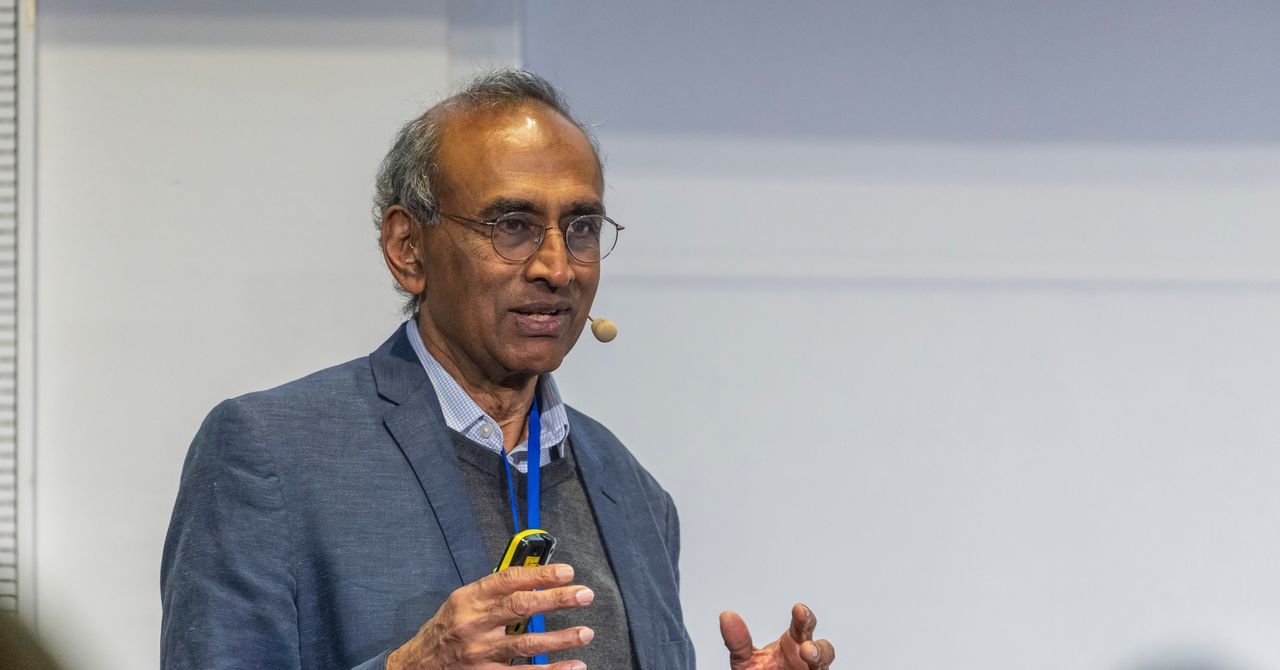
Venkatraman Ramakrishnan, the man of death. Although this does not sound like a good moniker, it is: Ramakrishnan is one of the world’s most eminent scientists in the fields of structural biology and cellular processes related to aging and death. He was awarded the Nobel Prize in Chemistry in 2009 for his discovery of the structure of the ribosome, a crucial cellular machine responsible for gene expression.

In addition to being a leading researcher, Ramakrishnan is also a prolific author. After the enormous success of The Gene Machine, a memoir in which he recounts his human and scientific journey, he published the mighty Why We Die, a book—as its name suggests—dedicated precisely to illustrating the dynamics that regulate aging and which, progressively and inexorably, lead to death.

Ramakrishnan was recently in Italy, in Milan, where he gave a lecture at the second edition of the Milan Longevity Summit, the most important Italian event dedicated to longevity and psycho-physical well-being, organized by BrainCircle Italia. It was an opportunity to meet him and ask him a few questions. This interview has been edited for clarity and length.

WIRED: Professor Ramakrishnan, the crucial question in your book is why we die. But exactly what is death?

Venki Ramakrishnan: By death, we mean the irreversible loss of the ability to function as a coherent individual. It is the result of the failure of a critical system or apparatus, for example, heart, brain, lung, or kidney failure. In this sense there is an apparent paradox: When our organism, as a whole, is alive, millions of cells within us are constantly dying, and we do not even realize it. On the other hand, at the time of death, most of the cells in our bodies are still alive, and entire organs are still functioning and can be donated to people in need of transplantation. But at that point the body has lost the ability to function as a whole. In this sense, it is therefore important to distinguish between cell death and death of the individual.

Speaking of death and aging, you say in your most recent book that you “wanted to offer an objective look at our current understanding of the two phenomena.” What was the biggest surprise or most deeply held belief that you had to reconsider while writing and researching this work?

There have been several surprises, actually. One is that death, contrary to what one might think, is not programmed by our genes. Evolution does not care how long we live, but merely selects the ability to pass on our genes, a process known as “fitness” in evolutionary biology. Thus, the traits that are selected are those that help us survive childhood and reproduce. And it is these traits, later in life, that cause aging and decline.

Another curious finding was the fact that aging is not simply due to wear and tear on cells. Wear and tear happens constantly in all living things, yet different species have very different lifespans. Instead, lifespan is the result of a balance between the expenditure of resources needed to keep the organism functioning and repairing it and those needed to make it grow, mature, and keep it healthy until it reproduces and nurtures offspring.




Source link

Related posts

OpenClaw Users Are Allegedly Bypassing Anti-Bot Systems

OpenClaw Users Are Allegedly Bypassing Anti-Bot Systems

February 25, 2026
AI Math Benchmarks: AI’s Growing Capabilities

AI Math Benchmarks: AI’s Growing Capabilities

February 25, 2026
Previous Post

CGI and Fathom develop digital twin for offshore wind

Next Post

EfD Nigeria seeks review of Fisheries Act, underscores need for institutional framework – EnviroNews

Next Post
EfD Nigeria seeks review of Fisheries Act, underscores need for institutional framework – EnviroNews

EfD Nigeria seeks review of Fisheries Act, underscores need for institutional framework - EnviroNews

Leave a Reply Cancel reply

Your email address will not be published. Required fields are marked *

RECOMMENDED NEWS

Scientists uncover new molecular targets for cardiovascular regulation

Scientists uncover new molecular targets for cardiovascular regulation

3 years ago
Memory Devices: An Exhibition By Cheikh Ndiaye

Memory Devices: An Exhibition By Cheikh Ndiaye

3 years ago
18 SME Owners Graduate from the NCBA-Strathmore Business School Enterprise Development Programme

18 SME Owners Graduate from the NCBA-Strathmore Business School Enterprise Development Programme

2 years ago
Bitcoin Remains a ‘Store of Value’ During Inflation Concerns

Here’s How You Can Buy Bitcoin in Dubai Using Cash or an ATM

2 years ago

POPULAR NEWS

  • Ghana to build three oil refineries, five petrochemical plants in energy sector overhaul

    Ghana to build three oil refineries, five petrochemical plants in energy sector overhaul

    0 shares
    Share 0 Tweet 0
  • The world’s top 10 most valuable car brands in 2025

    0 shares
    Share 0 Tweet 0
  • Top 10 African countries with the highest GDP per capita in 2025

    0 shares
    Share 0 Tweet 0
  • Global ranking of Top 5 smartphone brands in Q3, 2024

    0 shares
    Share 0 Tweet 0
  • When Will SHIB Reach $1? Here’s What ChatGPT Says

    0 shares
    Share 0 Tweet 0

Get strategic intelligence you won’t find anywhere else. Subscribe to the Limitless Beliefs Newsletter for monthly insights on overlooked business opportunities across Africa.

Subscription Form

© 2026 LBNN – All rights reserved.

Privacy Policy | About Us | Contact

Tiktok Youtube Telegram Instagram Linkedin X-twitter
No Result
View All Result
  • Home
  • Business
  • Politics
  • Markets
  • Crypto
  • Economics
    • Manufacturing
    • Real Estate
    • Infrastructure
  • Finance
  • Energy
  • Creator Economy
  • Wealth Management
  • Taxes
  • Telecoms
  • Military & Defense
  • Careers
  • Technology
  • Artificial Intelligence
  • Investigative journalism
  • Art & Culture
  • LBNN Blueprints
  • Quizzes
    • Enneagram quiz
  • Fashion Intelligence

© 2023 LBNN - All rights reserved.