

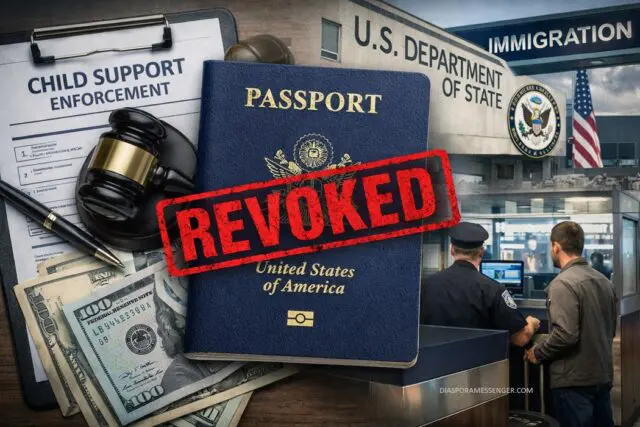
In a major policy shift with far-reaching implications for American families at home and abroad, the United States government has announced it will proactively revoke passports for parents who owe significant child support arrears. The expanded enforcement measures were unveiled in early February 2026 and mark a tougher stance on delinquent child support obligations.
What Changed in February 2026?
Under the updated Passport Denial Program, the U.S. Department of State will no longer wait for parents to apply for a new passport or renewal before taking action.
– Advertisement –
Instead, using data shared by the U.S. Department of Health and Human Services (HHS), the State Department can now cancel valid passports already in circulation for parents who owe child support beyond the legal threshold.
Previously, enforcement was largely reactive. Parents could continue traveling internationally unless they triggered a review by applying for consular services. That loophole is now closed.
Who Is Affected?
Federal law allows passport denial or revocation for anyone who owes more than $2,500 in past-due child support. However, the first phase of the new policy targets a narrower, high-priority group.
Initial enforcement focus includes:
- About 500 parents nationwide
- Each owing more than $100,000 in unpaid child support
- Identified as high-risk for continued non-payment
Officials have confirmed that once the system is fully operational, the program may expand to include thousands more parents with lower arrears.
What Happens If a Passport Is Revoked While Abroad?
Parents who are already outside the United States when their passport is revoked will not be stranded permanently. According to government guidance:
- They may be issued a restricted, one-time travel document
- The document allows return travel to the United States only
- It cannot be used for tourism, business, or onward international travel
Once back in the U.S., normal passport privileges remain suspended until the child support issue is resolved.
Why the Government Is Tightening Enforcement
Child support enforcement agencies argue that international travel privileges should not take priority over financial responsibilities to children. By moving to proactive revocation, officials aim to:
- Increase compliance with court-ordered support
- Reduce long-term child poverty
- Close enforcement gaps for parents living or working abroad
The policy also reflects growing coordination between federal agencies and state child support offices.
How to Prevent or Resolve Passport Revocation
Parents at risk of losing their passport can still take action. Key steps include:
1. Pay Down Arrears
Reducing child support debt below the $2,500 threshold can restore eligibility.
2. Set Up a Payment Agreement
Many state agencies allow structured repayment plans that can halt enforcement actions.
3. Contact Your State Child Support Agency
Only state agencies can certify compliance to the federal government.
4. Request a Review if There Is an Error
Mistaken identity or outdated records can sometimes trigger enforcement incorrectly.
5. Seek Legal Advice
Family law or immigration attorneys can help navigate appeals or compliance options.
What This Means for Parents and the Diaspora
For parents living abroad, working overseas, or frequently traveling for business, the new policy is a serious warning. A valid passport is no longer guaranteed if child support obligations are ignored.
The message from U.S. authorities is clear: child support enforcement now travels beyond state lines and across borders.


Related
– Advertisement –


