

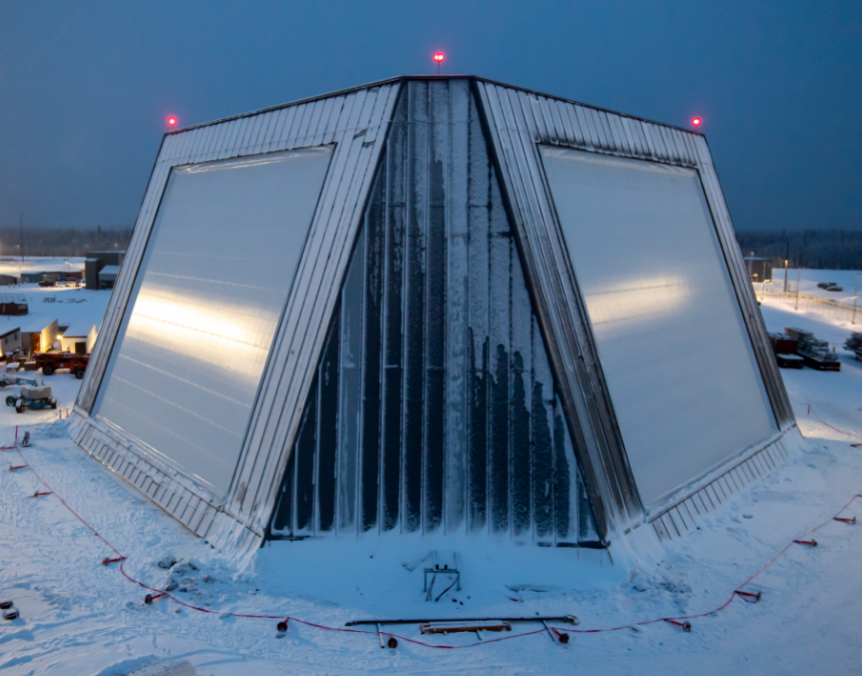

The US Missile Defense Agency has successfully conducted its first flight test of the Long Range Discrimination Radar (LRDR) at the Clear Space Force Station in Alaska, around two years after its original schedule.
In the Flight Test Other-26a (FTX-26a), the LRDR and the Upgraded Early Warning Radar tracked a live intercontinental ballistic missile (ICBM) representative target that traveled over 2,000 kilometers (1,243 miles) off Alaska’s southern coast.
Both radars relayed sensor data to the Ground-Based Midcourse Defense system and the Command and Control Battle Management and Communications (C2BMC) system for a simulated engagement.
Initial results show that the test met mission objectives, validating key radar functions and supporting the LRDR’s upcoming operational assessment before its full integration into the US missile defense architecture.
“This was a key test in the development of the LRDR system and its integration into the C2BMC network,” said MDA Director Lt. Gen. Heath Collins.
Apart from detecting, tracking, and discriminating ballistic missile threats, the multi-mission radar also supports space domain awareness.
“LRDR will provide USNORTHCOM and the United States Space Force with the ability to precisely track ballistic missile threats as well as other space objects, advancing our ability to deter adversaries and bolster our homeland missile defense.”
The LRDR
In 2015, the US contracted Lockheed Martin to develop the LRDR for enhanced protection against ICBM threats from adversaries like North Korea.
The active electronically scanned array radar provides persistent surveillance and tracking, as well as discrimination capability between lethal warheads from decoys and non-threat objects.
It operates in the S-band frequency and uses gallium nitride (GaN) technology for high power and efficiency, allowing continuous operation, even during maintenance.
Initial operational capability was targeted for 2021, with full operational capability expected by 2023.
However, the program faced delays, including the COVID-19 pandemic in 2020 and a canceled flight test in August 2023 due to an anomaly with the missile target.


