

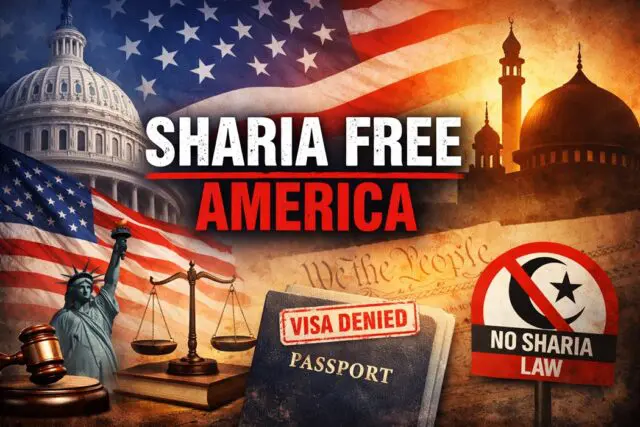
A new political movement known as “Sharia Free America” is gaining traction in the United States, fueled by legislation introduced in late 2025 aimed at preventing any perceived influence of Islamic law (Sharia) within the American legal system.
Supporters argue the effort is about protecting the U.S. Constitution, while critics warn the proposals could discriminate against Muslims and immigrants and violate civil liberties. The debate has now reached Congress and state legislatures, marking a renewed chapter in America’s long-running culture and religious freedom discussions.
What Is “Sharia Free America”?
The Sharia Free America movement is a political and legal initiative focused on:
- Blocking the recognition of Islamic law in U.S. courts
- Preventing foreign religious legal systems from influencing U.S. law
- Limiting immigration tied to religious legal adherence
Advocates say the movement exists to protect constitutional supremacy, while opponents say it targets a religious group rather than addressing real legal threats.
Major Federal Bills Introduced in 2025
H.R. 5722 – Sponsored by Rep. Chip Roy (Texas)
This bill proposes to:
- Deny visas and U.S. entry to any foreign national who is found to “adhere to Sharia law”
- Revoke immigration status for current residents deemed to follow Sharia
- Expand the grounds for inadmissibility under U.S. immigration law
Civil rights groups argue the language is overly broad and risks punishing people based solely on religious belief rather than criminal conduct.
Constitutional Defense Against Sharia Act
Sponsored by Rep. Randy Fine (Florida) and Sen. Tommy Tuberville (Alabama)
This bill seeks to:
- Prohibit U.S. courts from enforcing or recognizing Sharia law
- Block any legal ruling that conflicts with constitutional rights
- Prevent public agencies from applying religious legal standards
Supporters claim the law would stop “foreign legal systems” from entering U.S. jurisprudence. Legal experts counter that U.S. courts already reject any law that conflicts with the Constitution, making the bill legally redundant.
Formation of the Sharia Free America Caucus
In December 2025, Representatives Chip Roy and Keith Self formed the Sharia Free America Caucus in the U.S. House of Representatives.
The caucus says its mission is to:
“Defend the U.S. Constitution from the existential threat posed by Sharia influence.”
The group plans to coordinate legislation, public messaging, and oversight hearings.
State-Level Efforts: ALAC Laws
Across the U.S., several states have previously passed or proposed laws known as:
American Laws for American Courts (ALAC)
These statutes:
- Prevent courts from applying foreign or religious law
- Require that all rulings align with the U.S. Constitution
- Are often framed as general protections, not religion-specific
However, critics say these laws disproportionately target Muslims and have no documented legal necessity, since U.S. courts already operate under constitutional supremacy.
Legal and Human Rights Concerns
Organizations such as the ACLU, CAIR, and Human Rights Watch argue that:
- The bills violate the First Amendment’s freedom of religion
- They risk religious profiling
- They could encourage Islamophobia and discrimination
Legal scholars note that Sharia has no legal authority in U.S. courts, and personal religious practices—such as marriage contracts or business ethics—are already governed by state and federal law.
Political Impact Going into 2026
The issue is expected to become a major talking point ahead of the 2026 midterm elections, especially among conservative voters focused on immigration, national security, and religious freedom.
For diaspora communities—especially Muslim immigrants—the debate raises serious concerns about civil rights, inclusion, and legal protection in the United States.
Conclusion
While supporters of Sharia Free America say they are defending constitutional values, critics argue the movement risks undermining the very freedoms it claims to protect. As Congress debates these proposals, the U.S. faces a defining moment over religious liberty, immigration policy, and constitutional law.




