– Advertisement –
For 70-year-old farmer Danjuma Dauda, the Yangokuchi forest is more than just another patch of land. It embodies memory, heritage, and refuge.
“I miss the bountifulness of mango trees,” he said, recalling childhood days in the forest. “We used to run into the forest for mangoes. There were countless trees heavy with fruit.”
Yangokuchi forest, also known as the Saimami forest, in the Rubochi ward of Kuje Area Council of the Federal Capital Territory (FCT), Nigeria, once provided both cultural identity and economic lifeline to nearby communities. It sheltered ancestors fleeing enemy invasions and later supported generations of farmers like Mr. Dauda.
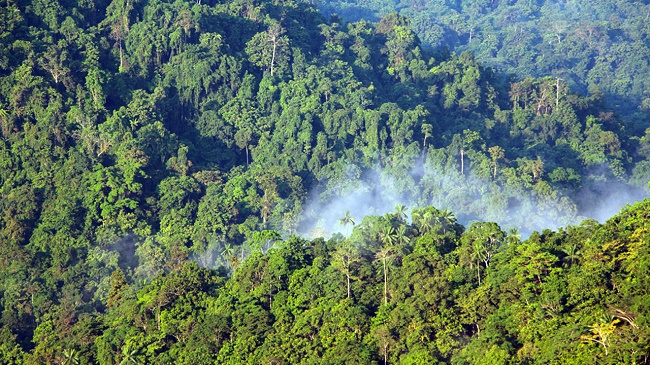
Now, the forest stands on the brink of depletion, stripped by unregulated, unchecked logging that local elders say has turned a communal sanctuary into open land.
Based on a reporting trip and interviews in September 2025, Dataphyte uncovered how poor enforcement and global timber demand are rapidly eroding one of Abuja’s few remaining natural forests, with little sign of replanting or accountability.
“When I was a child, there were countless trees, including iroko, mahogany, and others,” Mr Dauda said. “They gave shade to crops like yams. When yams are shielded, they sprout better. Now the land is bare.”
He said the deforestation has affected his yields, yet the loggers continue unchecked. “Before, they sought permission from the community, but now they just go in. If you question them, they ask if you planted the trees,” he added.
Villagers across Saimami Ubo share his frustration.
Forest losses mounting
According to data from Global Forest Watch, the FCT lost about 1,760 hectares of natural forest in 2024, part of a continuing trend driven by illegal logging, farming, and development expansion. Nationwide, annual government revenue losses from illegal logging are estimated at US$191 million to $383 million.
Illegal logging in Nigeria has grown into a profitable underground economy. Organised middlemen recruit local villagers, finance cutting operations, and move hardwoods along hidden trails toward markets or export points, often beyond the eyes of regulators.
The community lost more than its trees
Yangokuchi forest was once rich in biodiversity, with medicinal and economic species such as Gmelina arborea, Khaya ivorensis (mahogany), and Milicia excelsa (iroko). These trees provided food, medicine, and materials for building and fuel. But now, there are only stumps and farmland, Dataphyte found.
“20 to 30 years ago, we had mahogany and iroko everywhere,” Mr Dauda lamented. “Now they are gone. When you confront the operators (loggers), they ask if you’re the one who planted them.”
A logger, who declined to be named because of their illegal work, confirmed that hardwoods fetch a quick profit. “If you find iroko or mahogany, you can make up to N500,000 a day. One tree gives more than a hundred timbers,” he said.
“The mahogany tree is highly sought after, and whenever there’s a market demand, these operators pursue it relentlessly,” Ibrahim Kwali, a resident of Rubochi, told Dataphyte.
The attraction is not just local. Global demand fuels much of the exploitation. Mahogany’s market value is projected to rise from US$1.3 to 1.5 billion in 2024 to 2025 to over US$2.7 billion by 2033, driven largely by the luxury furniture and flooring industries across North America, Europe, and Asia. While there are no precise figures for iroko, it remains one of the most sought-after export species.
Even once-common species like ogbono (Irvingia gabonensis) have vanished. “We used to have ogbono trees everywhere, but there’s none left,” said another resident of Rubochi. “No replanting; once the trees mature, they cut them all.”
Laws ignored, oversight absent
Nigeria’s National Environmental (Forest Sector) Regulations of 2009 mandate reforestation and environmental rehabilitation by anyone harvesting forest resources. State forestry ministries and the National Environmental Standards and Regulations Enforcement Agency (NESREA) are also supposed to enforce compliance.
In practice, those rules are widely ignored. “No one is replanting,” admitted Danladi Appa, a self-described licensed logger. “Some of these trees take over 30 years to grow. How do you replant that?” He said his group pays N30,000 a year to unnamed government officials who issue a “receipt” to operate, but he could not produce the document when asked. Other loggers encountered during our reporting also did not present a licence when asked.
Community members say forest guards rarely visit. The nearest government forestry office is miles away, leaving only vigilante groups to monitor occasional logging trucks.
One vigilante member, who asked to remain unnamed to avoid retaliation from loggers, told Dataphyte his team lacks legal authority to act. “We only try to help the community,” he said.When contacted, NESREA spokesperson Amaka Ejiofor asked for written questions about the agency’s enforcement of forest regulations. An email was sent, but as of the pubication of this report, no response had been received.
By Popoola Ademola