By Dennis LC Weng and Jarad Jeter
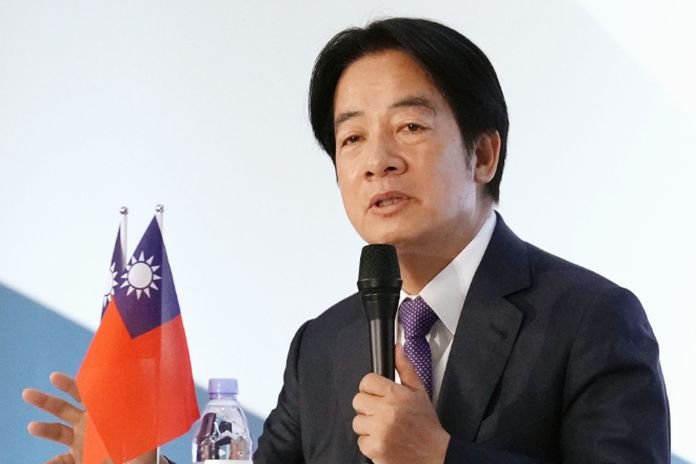
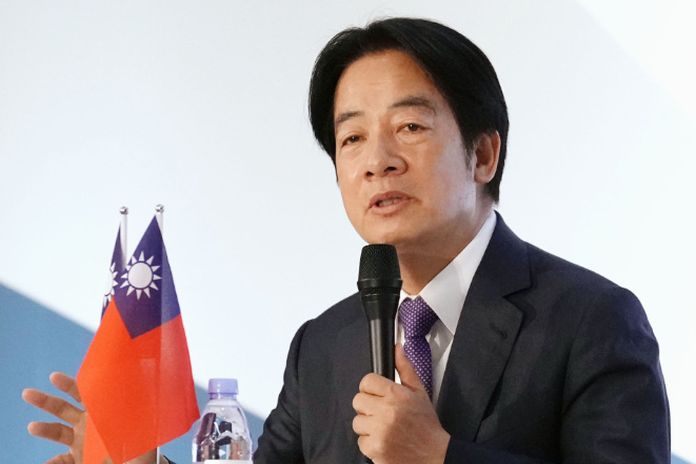
Taiwan’s 2024 presidential election does not simply signal a change in leadership. It represents a pivotal moment in the island’s assertion of its political identity and its strategic importance on the international stage. The elevation of vice president Lai Ching-te to the presidency, in open defiance of Beijing’s stern warnings, broadcasts Taiwan’s resolve and its people’s steadfast commitment to democracy.
While much analysis will inevitably concentrate on the consequences of Taiwan’s election for the delicate interplay between the United States, China and Taiwan, such discussions can overshadow the genuine aspirations of the Taiwanese people. The Western narrative filtered through the prism of strategic interests and security concerns often neglects the nuanced fabric of Taiwan’s society, its economic vibrancy and the robust democracy that underpins its national identity.
The West’s preoccupation with military concerns and geopolitical manoeuvring risks downplaying the very aspects of Taiwanese society that are most vital to its people. And these are the factors that profoundly shape Beijing’s approach towards Taiwan. The increased focus on military issues raises questions about the depth of Western commitment to Taiwan’s people and their future and suggests Taiwan may need to carve its own path, potentially including engaging with Beijing.
The United States must grapple with Taiwan’s geopolitical significance. Yet there is often a lack of understanding of Taiwan’s inherent worth and its potential to influence global politics, particularly in the context of US–China strategic competition.
It is imperative that policy discourse transcends a one-dimensional view and acknowledges the multifaceted nature of Taiwan’s role in the world. This role is defined not just by Taiwan’s geopolitical significance, but also by its cultural uniqueness, technological prowess and democratic values. These attributes are not mere footnotes in the narrative of great power competition. They are central to understanding the island’s place in a rapidly changing world and the various paths it may pursue.
Taiwan’s dominion over a significant portion of the global semiconductor industry is a case in point, underscoring its strategic economic influence. The island’s near-monopolistic command over certain parts of the semiconductor supply chain is not simply a matter of market dynamics – it is a critical pillar in the global economy. Any significant interruption in Taiwan’s semiconductor supply chain would have far-reaching consequences, potentially precipitating cascading failures across numerous industries worldwide.
Unlike other commodities, where supply can be diversified or replaced by alternative sources, Taiwan’s semiconductor production is irreplaceable in the short term. Other nations building their domestic production would face protracted timelines and would likely struggle to match Taiwan’s quality standards.
In the context of escalating US–China strategic competition, Taiwan often emerges as a focal point of potential conflict, a perception amplified by Western narratives. The Western portrayal of the presidential election – which simplistically casts the Democratic Progressive Party’s plurality victory as a defeat for Beijing – has the unintended consequence of alienating those in Taiwan who did not support the incumbent party.
Former US president Donald Trump’s comments indicating that US commitment to Taiwan could wane with changes in US leadership might drive segments of the Taiwanese population to view rapprochement with China as a more stable option. In navigating these complex dynamics, it is essential for the United States and Western allies to engage with Taiwan in a manner that transcends the binary of conflict versus abandonment.
Taiwan’s significance extends beyond its economic importance. As the sole democracy in the Chinese cultural sphere, Taiwan stands as a living refutation of the Chinese Communist Party’s narrative that democracy is an alien construct unsuited to Chinese civilisation. Taiwan’s vibrant democracy is a testament to the compatibility of democratic governance with Chinese cultural values, challenging the Chinese Communist Party’s assertion and offering a different model of Chinese society and politics.
Yet the global perception of Taiwan is often overshadowed by the spectre of a potential Chinese military incursion. Despite the Democratic Progressive Party’s re-election and the tensions such an event suggests, cross-strait relations may not be as precarious as they appear. The Pentagon’s annual report on China’s military capabilities suggests China is not yet primed for large-scale military operations.
Though the regional military dynamics are worrisome and the anticipation of a cross-Strait conflict in the next decade is not only prevalent in Taiwan, but also in the United States and Pacific Islands, analysts argue that an immediate conflict is not on the horizon. While vigilance is paramount, the repetitive cycle of framing Taiwan solely as a potential conflict zone may contribute to a self-fulfilling prophecy.
Views of Taiwan through the binary lens of being either a constant flashpoint or a fully sovereign state indistinct from any other nation are overly simplistic. Taiwan’s unique situation warrants a nuanced approach that recognises both its geopolitical sensitivity and its intrinsic value.
Taiwan is not a strategic pawn or a prospective theatre of war – it is an island nation with a profound influence on global commerce and the only traditional Mandarin-speaking democracy.
To pigeonhole Taiwan as the next battleground among great powers does a disservice to its rich culture and its dynamic role in the world. Recognising and engaging with Taiwan in its entirety allows for a more comprehensive and constructive international dialogue – one that respects Taiwan’s contributions and acknowledges its right to self-determination and cultural expression.
Dennis LC Weng is Associate Professor of Political Science at Sam Houston State University and Founding Chief Executive Officer of the Asia Pacific Peace Research Institute.
Jarad Jeter is a Master’s student at National Chengchi University and Research Associate at the Asia Pacific Peace Research Institute.