– Advertisement –
Coinciding with the International Day of Soils, the meeting marking the halfway point between the United Nations land conferences in Riyadh and Ulaanbaatar came to a close in Panama on Friday, December 5, 2025, after five days of engaged dialogue on progress in addressing the global loss of fertile soils, land degradation and drought.
The 197 parties convening at the 23rd session of the Committee for the Review of the Implementation of the Convention (CRIC23) to the United Nations Convention to Combat Desertification (UNCCD) prepared the groundwork for the upcoming land conference that will take place in Mongolia in 2026, where nations will be called to protect the world’s precious land and water resources as the global demand for food and energy continues to soar.
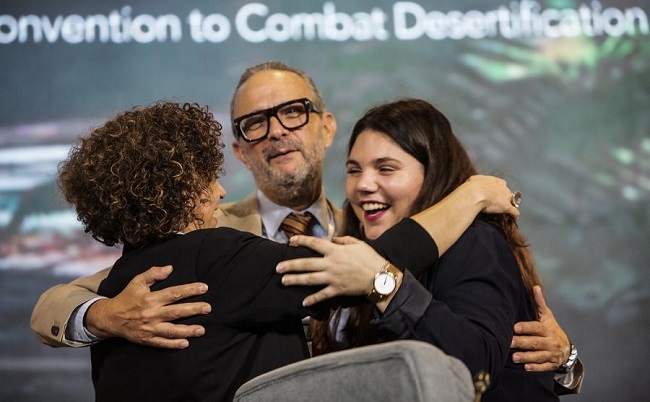
As part of the road from Riyadh to Ulaanbator, delegates and non-state actors exchanged on how to advance the Action Agenda that emerged from COP16, including the Riyadh Global Drought Resilience Partnership and the Drought Resilience Investment Facility. At the center of discussions was how best to leverage new cooperation and financial frameworks to mobilize private and bilateral funding for land and drought action on the ground.
Additionally, they laid the foundation for the resumption of the negotiations of a global drought framework at the 17th Conference of the Parties (COP17), which will take place in August 2026. The Tafa’ul process, the first of three informal and voluntary dialogues on the matter led by the COP16 presidency, made progress in building the trust between the Parties ahead of the talks in Mongolia.
CRIC23 also saw progress in the operationalisation of the Riyadh Global Drought Resilience Partnership, which approved its governance system and presented an action plan to support around 70 countries in reducing their vulnerability to one of the world’s most deadly and costly hazards.
Other highlights were the meeting of the Gender Caucus, created at COP15 in Abidjan and included in the official agenda for the first time this year as a space for shaping gender-responsive land policy; the Youth
Caucus, and the first official meeting of the Indigenous Peoples Caucus, created at COP16, which called for meaningful involvement in land and drought policy and programmes at the multilateral and national levels.
During CRIC23, parties assessed progress on issues like capacity building, reporting, gender, land tenure and the implementation of voluntary Land Degradation Neutrality (LDN) targets.
UNCCD Executive Secretary, Yasmine Fouad, underscored the power of multilateralism and, speaking on behalf of the UNCCD Secretariat, reaffirmed the determination to help countries translate political commitments into clear outcomes for people and the planet: “National drought and land degradation neutrality plans without finance remain words on paper. Our mission now is to unlock financing and investments for protection, restoration and resilience, including from the private sector, so countries can deliver real change on the ground. From Panama to Ulaanbaatar, we must keep the momentum and ensure that commitments translate into action.”
Indigenous and women’s voices
Participants in the first meeting of the Indigenous Peoples Caucus emphasized their role as land stewards. Together, representatives from around the world called for a say in decision making, for a recognition of their millennial wisdom, and for access to finance. Meanwhile, work is underway to convene the first Local Communities Caucus, created at COP16.
“Indigenous peoples gathered here know what we want from COP17,” said Hindou Oumarou Ibrahim, Coordinator of the Association for Indigenous Women and Peoples of Chad (AFPAT). “We want to be heard in the process – not as observers, but as participants. We want to have direct access to finance to implement COP17 decisions in our territories. We want our ancestral knowledge to be integrated into science discussions. Indigenous people are not a box to check. We are an essential voice in ensuring that the land will continue sustaining humanity in the years to come.”
The Women Caucus brought attention to the leadership of Indigenous women in sustainable land management and the gendered impacts of sand and dust storms with a view to informing gender-responsive recommendations emerging from UNCCD processes. Additionally, women from developing countries hit by drought received negotiation training in preparation for COP17 through the Women Delegates Fund (WDF) – a step forward since women represented only 33 per cent of delegates at the last CRIC session.
All meetings were supported by UN Volunteers, who will also facilitate COP17 as the world marks the 2026 the International Year of Volunteers for Sustainable Development (IVY 2026) to recognise their contributions.
Small islands, vast rangelands
A new UNCCD information brief highlighted that every inch of land is vital for the survival of Small Islands Developing States (SIDS), which are facing growing impacts from drought and the loss of arable land. The SIDS’ land area affected by at least six months of extreme drought per year has increased to 17 per cent in the 2014–2023, up from 2 per cent between 1961–1970.
Meanwhile, urbanisation, unsustainable agriculture and extractive industries are fueling land degradation in some of the world’s smallest, more isolated and poorest territories, which are among the most vulnerable to climate change.
Another brief revealed that restoring rangelands delivers some of the strongest returns of any ecosystem investment, with benefits reaching up to $35 for every dollar invested, according to preliminary findings of a global cost–benefit analysis by the Economics of Land Degradation (ELD) Initiative.
Both reports will be presented in full at COP16 in Mongolia, coinciding with the International Year on Rangelands and Pastoralists (IYRP) and as SIDS are coming together to speak with a unified voice in the UNCCD process about their unique challenges and opportunities.
From Riyadh to Mongolia
In December 2024, at COP16 in Riyadh, parties adopted the first major decision on agricultural lands; emphasised the need to engage the private sector through the Business4Land initiative; and mobilised billions for land and drought action in the world’s most vulnerable countries. That legacy is being carried onwards to COP17.
For example, the gathering in Panama advanced the FAO-led consultation to develop guidance on COP’s landmark decision on avoiding, reducing and reversing land and soil degradation of agricultural lands. The document, which will target decision-makers and practitioners, will offer nations context-specific pathways to addressing the loss of fertile land – crucial to achieve LDN goals, since around 60 per cent of degradation occurs in agricultural lands.
Osama Faqeeha, Deputy Minister of Environment, Water and Agriculture of the Kingdom of Saudi Arabia, UNCCD COP16 Presidency, said: “As UN Secretary-General António Guterres said, ‘We live on land and we live off land, but we treat it like dirt.’ It is high time we value it for what it is worth. CRIC23 has been an opportunity to maintain the momentum for land and drought on the road from Riyadh to Ulaanbaatar, and to align efforts on innovation and finance for present and future generations.”
Mr. Batmunkh Dondovdorj, Special Advisor to the Minister and Chairman of upcoming COP17 Presidency National Office, declared: “Looking ahead, our goal as the incoming Presidency is to help deliver a COP that is inclusive, balanced, scientifically informed, and oriented toward practical solutions.
“A COP that reflects regional diversity, strengthens cooperation across sectors, brings together governments, scientists, youth, women, Indigenous Peoples, communities, and partners, and advances tangible progress toward land degradation neutrality and drought resilience.”