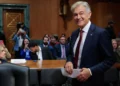
In the light of worsening financial support for peacekeeping from the wider international community, United Nations (UN) Secretary-General Antonio Guterres has it the world body’s ‘blue helmets’ are a clear demonstration of multilateral action in maintaining, achieving and sustaining peace.
He spoke at the UN Peacekeeping Ministerial in Munich, Germany, this week where around a thousand delegates, among them South African Defence and Military Veterans Minister, Angie Motshekga, deliberated on ways and means to improve the international peacekeeping model.
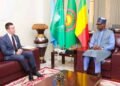

Guterres told delegates including ministers from 130 countries peacekeepers remain key to helping countries move from conflict to peace.
Despite the proven value of peacekeeping missions in ensuring durable peace in countless countries from Cambodia to Liberia and Timor Leste, Guterres warned current challenges make this task harder.
“We are now facing the highest number of conflicts since the founding of the UN and record numbers of people fleeing across borders in search of safety and refuge,” he said, before alluding to additional obstacles caused by an absence of political support for peacekeeping mandates.
Delegates heard the UN peacekeeping budget, which runs on a July to June 12 month cycle, presently has unpaid arrears totalling $2.7 billion.
To counter this and in the face of “dramatic financial constraints” now affecting the entire UN, Guterres made known an urgent review of operations to inspire a new “fit for the future” peacekeeping model.
In coming years, “a clear exit strategy” for peacekeepers will be key, he said, as well as working with member states and the Security Council (SC) to ensure new mandates “are prioritised and achievable with the resources available.”
Other clues about what UN peacekeeping 2.0 could look like post-reform came from missions the UN chief referred to during his speech in Germany.
Active missions such as UNFIL in Lebanon have shown it is possible to adapt to today’s challenges while ensuring peace and delivering aid, Guterres noted.
In a nod to MINUSCA in the Central African Republic (CAR), he highlighted its work in protecting civilians and “assisting the government to extend its reach beyond the capital where people are in desperate need.”
In the Democratic Republic of Congo (DRC), despite ongoing fighting there, MONUSCO peacekeepers remain in the field and protect vulnerable populations, according to the UN chief.
Ahead of member states announcing peacekeeping financial pledges for peacekeeping on Wednesday, Guterres pointed out the overall budget for UN missions was only 0.5% of global military spending.
The UN chief’s push to streamline the global body comes a day after his call to push ahead with major efficiency improvements and cost-cutting in response to the chronic liquidity crisis caused by member states falling into arrears.
Important as the structural reforms are – with potential staff downsizing of up to 20% – they are not the answer to the failure of some countries to pay the world body to fulfil mandates given it by them, Guterres said.
Information from the UN Controller to the General Assembly’s Fifth Committee (Administrative and Budgetary), shows $1.8 billion received against a $3.5 billion regular budget assessment for the current year – a shortfall of almost 50%.
Unpaid assessments on 30 April amounted to $2.4 billion, with the United States (US) owing about $1.5 billion, China $597 million, Russia $72 million, Saudi Arabia $42 million, Mexico $38 million and Venezuela $38 million. An additional $137 million has yet to be paid by other member states.
For International Tribunals, total contributions outstanding totalled $79 million on 30 April.