Uganda’s military has taken a notable step forward in enhancing its ground capabilities with the introduction of the MCAV-20 armoured vehicle, produced in the United Arab Emirates by Calidus. This development places the Uganda People’s Defence Force among a select group of African armed forces that have adopted this versatile platform, reflecting broader trends in regional defence procurement and international partnerships. The announcement came through the completion of a specialised training programme for drivers, marking the vehicle’s formal integration into Ugandan operations and underscoring the force’s commitment to modernising its motorised units.
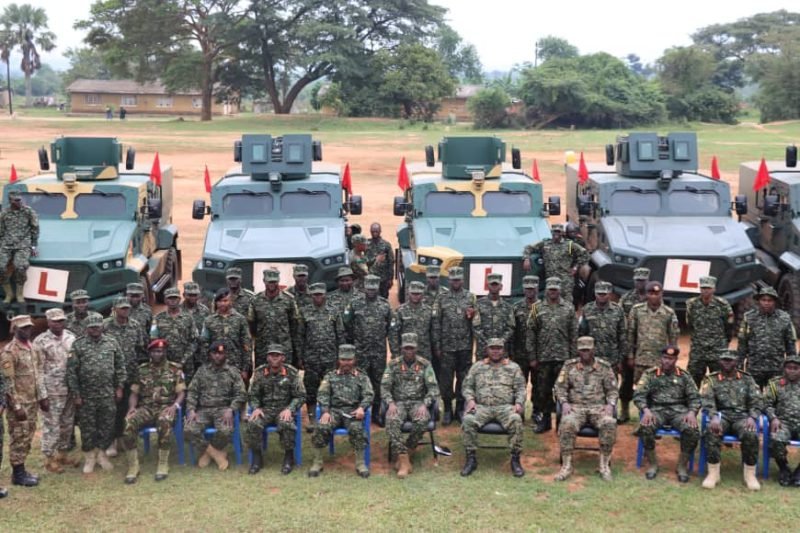
The Uganda People’s Defence Force revealed its acquisition during a graduation ceremony on 22 August 2025, where the Motorised Infantry Division celebrated the passing out of its first group of Multi-Role Combat Armoured Vehicle-20 operators. This cohort consisted of 78 soldiers, among them four women, selected from both the Motorised Infantry Division and the Special Forces Command. Their six-month course covered a comprehensive curriculum designed to equip them with the expertise needed for handling the MCAV-20 in demanding conditions. Colonel Esibio Omaria, the Division Operations and Training Officer, outlined the programme’s foundation on five core elements: offensive and defensive driving techniques, basic vehicle maintenance procedures, methods for crossing obstacles, and skills in navigating varied terrain. He emphasised that the graduates had mastered assertive driving manoeuvres, enabling them to dominate roadways, suppress potential barriers, disrupt adversarial vehicles, and implement tactics for neutralising threats or safely extracting high-value individuals during direct engagements. Such training ensures that operators can maximise the vehicle’s potential in both conventional and asymmetric warfare scenarios, where rapid mobility and protection prove essential.
Major General Charles Byanyima, commander of the Motorised Infantry Division, commended the Chief of Defence Forces, General Muhoozi Kainerugaba, for his direct involvement in overseeing modifications to the vehicles. These adjustments, tailored to Ugandan operational needs, have reportedly boosted their effectiveness in the field. At the event, observers noted at least five MCAV-20 units on display, though the exact number procured remains undisclosed. This opacity is not uncommon in defence acquisitions, where strategic details often stay classified to maintain operational security. The ceremony not only highlighted the new assets but also served as a morale booster for the troops, demonstrating the leadership’s investment in advanced equipment and professional development.
The Motorised Infantry Division itself represents a relatively fresh evolution within the Uganda People’s Defence Force structure. Public references to this formation first appeared in October 2024, suggesting it builds upon the earlier Motorised Infantry Brigade, which operated from the Nakasongola Cantonment as recently as 2022, according to analyses from Janes. This expansion aligns with Uganda’s broader efforts to strengthen its land forces, particularly in response to regional instabilities such as insurgencies in neighbouring countries and the need for robust internal security. The division’s focus on motorised elements allows for quicker deployment and sustained mobility, crucial in a nation with diverse landscapes ranging from dense forests to open savannas.
The MCAV-20, launched by Abu Dhabi-based Calidus in February 2021, stands out as a multi-role 4×4 platform engineered for tactical flexibility. Powered by a 6.7-litre Cummins diesel engine delivering up to 330 horsepower, it achieves a top speed of around 110 kilometres per hour and boasts an operational range exceeding 800 kilometres on a single tank. Weighing between seven and nine tonnes, the vehicle incorporates ballistic protection against small arms fire and shrapnel, alongside defences against landmines and improvised explosive devices, meeting STANAG Level 2 standards in some configurations. Its ‘smart hull design’ facilitates the mounting of various turrets and weapon systems, including remote-controlled stations for 7.62mm machine guns, 30mm cannons, or 40mm grenade launchers, making it adaptable for roles from reconnaissance to fire support. Crew capacity typically includes a driver, commander, and gunner, with space for additional troops or equipment, enhancing its utility in patrol, convoy protection, and rapid response missions.
Calidus, a subsidiary of the Edge Group in the UAE, has positioned the MCAV-20 as part of a lineup that includes the LRV-20 lightweight 4×4 reconnaissance vehicle and the heavier Al Wahash 8×8 infantry fighting vehicle, the latter developed in collaboration with South Africa’s ADG Mobility. This diversification reflects the UAE’s ambition to become a key exporter of defence technology, leveraging partnerships with established firms to produce cost-effective solutions tailored for emerging markets. The MCAV-20’s design draws on proven concepts from vehicles like the French VBL or South African Ratel, but incorporates modern electronics for improved situational awareness, such as optional night vision and communication suites.
Uganda joins an expanding list of African operators for the MCAV-20, becoming the eighth known user. Other nations include Benin, Chad, the Democratic Republic of Congo, Sudan, Ethiopia, Mauritania, and Mozambique, each integrating the vehicle into their forces amid distinct security challenges.
In Ethiopia, for instance, the National Defence Force received dozens of units in 2024, likely to bolster operations in conflict zones like Tigray, where mobility across rugged terrain aids in countering rebel groups. Mozambique has deployed the MCAV-20 in its northern provinces to combat Islamic State-linked insurgents, with vehicles spotted during Revolution Day parades in 2025, equipped for anti-ambush roles. Chad’s forces, supplied by the UAE in 2023, utilise them for border patrols against Boko Haram threats, capitalising on the vehicle’s endurance in arid environments.
In the Democratic Republic of Congo, the Republican Guard confirmed operations in 2023, employing the MCAV-20 against M23 rebels in the east, where its mine resistance has proven vital amid frequent roadside attacks. Sudan’s armed forces acquired units during their 2023 clashes with the Rapid Support Forces, using them for urban warfare in Khartoum, where the smart hull allowed quick adaptations for mounted weapons. Benin’s army incorporated the vehicle in 2025 alongside other platforms like the Cayman 4×4, enhancing capabilities against jihadist incursions from the Sahel. Mauritania, though less publicised, has integrated it into desert operations, while the pattern across these adopters illustrates the MCAV-20’s appeal for armies facing non-state actors in resource-constrained settings.
This acquisition ties into deepening military ties between Uganda and the UAE. In July 2025, Lieutenant General Issa Saif al-Mazrouei, chief of staff of the UAE Armed Forces, visited Uganda and engaged in talks with General Kainerugaba, who is also the son of President Yoweri Museveni.
The discussions centred on a forthcoming memorandum of understanding aimed at expanding cooperation in areas like joint training, technology transfer, and equipment supply. Earlier, in June 2024, the Uganda People’s Defence Force acknowledged receiving unspecified training support from Global Security Services Group, a firm closely aligned with the Emirati government, and extended thanks to its CEO, Mohammad Hamdan Alzaabi.
These interactions build on a history of collaboration, including Uganda’s involvement in UAE-hosted security conferences and mutual support in regional stability efforts, such as countering extremism in East Africa. The UAE’s strategy in the region involves not just arms sales but also economic investments, with agreements signed in May 2025 covering transport, diplomatic training, visa exemptions, and joint development projects. For Uganda, this partnership provides access to advanced hardware without the strings often attached to Western suppliers, while the UAE gains a foothold in East African markets and influence in African Union missions, as seen in their solidarity following a Ugandan helicopter crash in Somalia in July 2025.
The integration of the MCAV-20 into Uganda’s arsenal arrives at a time when the nation continues to address security concerns, including threats from groups like the Allied Democratic Forces operating from bases in the Democratic Republic of Congo. Uganda’s military interventions, such as Operation Shujaa launched in 2021, have relied on armoured mobility to conduct cross-border pursuits, and the MCAV-20’s features align well with such demands. Its lighter weight compared to heavier platforms like the South African Casspir allows for easier transport by air or road, while the protection levels offer a balance between survivability and speed. Modifications guided by General Kainerugaba may include enhancements to communications or weapon interfaces, customised for Ugandan doctrine that emphasises special forces integration.
Beyond the immediate tactical benefits, this move supports Uganda’s push towards self-reliance in defence manufacturing. In April 2025, the country opened its first public armoured vehicle showroom at the Nakasongola factory, a joint venture between the National Enterprises Corporation and Streit Group, producing vehicles for both military and civilian use. While the MCAV-20 is imported, exposure to such technology could inform local designs, fostering knowledge transfer through training programmes. The inclusion of female soldiers in the driver cohort also signals progress in gender integration within the force, aligning with global trends in military inclusivity.
Social media reactions to the acquisition have been positive, with posts on X highlighting the training milestone and the vehicle’s addition to Uganda’s inventory. One account noted the UPDF’s emergence as a new operator, linking it to broader African adoption patterns. Another shared images from the ceremony, emphasising the specialised skills acquired. These online discussions reflect public interest in military advancements, often framing them as steps towards national strength.
As African militaries grapple with evolving threats from terrorism to resource conflicts, vehicles like the MCAV-20 provide a pragmatic solution: affordable, adaptable, and battle-tested in similar environments. For Uganda, this acquisition not only bolsters operational readiness but also cements ties with a rising defence power in the UAE, potentially opening doors to further collaborations. While the full extent of the fleet remains under wraps, the trained operators now stand ready to deploy, ensuring the investment translates into enhanced security for the nation and its interests abroad.