

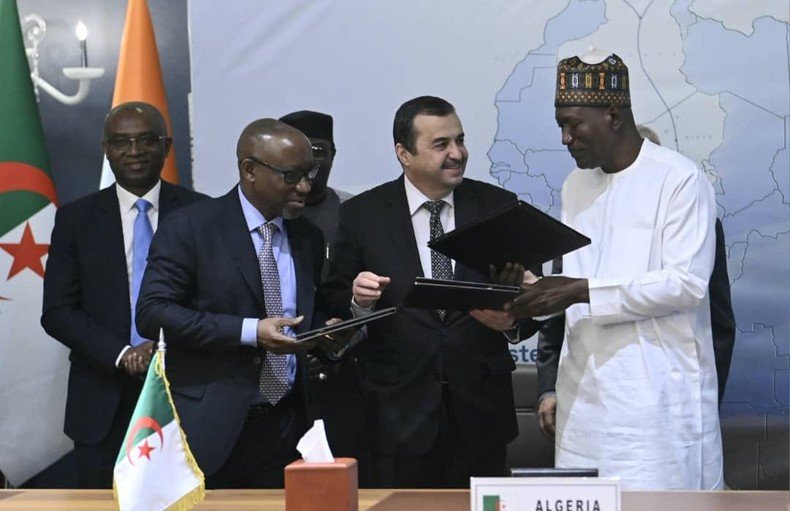
Algeria, Africa’s third-largest oil producer, is moving forward with the Trans-Sahara Gas Pipeline, a 4,100-kilometre project designed to supply natural gas from the continent to Europe.
According to the official Algerian news agency, the visit focuses on technical and operational details ahead of the pipeline’s operational launch immediately after Ramadan.
Analysts note that decades of delays were caused by financing, security, and cross-border regulatory hurdles, despite earlier studies confirming the pipeline’s technical and economic feasibility.
$13bn, 4,100km pipeline to deliver 30 billion cubic meters of gas annually
Algerian President Abdelmadjid Tebboune has confirmed that Sonatrach will lead construction, highlighting the company’s position as one of the world’s largest gas operators.
The 4,100km pipeline is expected to transport up to 30 billion cubic meters of gas annually, providing Europe with an alternative to Russian energy. Algeria exported 54 billion cubic meters in 2021, primarily to Italy and Spain, and the pipeline could expand these flows significantly.
For Nigeria and Niger, the project is a strategic opportunity to integrate regional energy infrastructure and secure revenues from gas exports. Analysts say it could enhance energy security, strengthen economic ties between West and North Africa, and elevate the region’s role in global energy markets.
With technical oversight now underway, the long-stalled trans-Sahara pipeline appears closer than ever to reality. The collaboration between Nigeria, Niger, and Algeria could finally deliver a decades-old vision of a West-to-North Africa gas corridor, reshaping regional energy dynamics and opening new markets for African gas.


