
• Business
  • Markets
  • Politics
  • Crypto
  • Finance
  • Intelligence
    • Policy Intelligence
    • Security Intelligence
    • Economic Intelligence
    • Fashion Intelligence
  • Energy
  • Technology
  • Taxes
  • Creator Economy
  • Wealth Management
  • LBNN Blueprints
  • Business
  • Markets
  • Politics
  • Crypto
  • Finance
  • Intelligence
    • Policy Intelligence
    • Security Intelligence
    • Economic Intelligence
    • Fashion Intelligence
  • Energy
  • Technology
  • Taxes
  • Creator Economy
  • Wealth Management
  • LBNN Blueprints

Toward affective computing that works for everyone

Simon Osuji by Simon Osuji
September 25, 2023
in Artificial Intelligence
0
Toward affective computing that works for everyone
0
SHARES
1
VIEWS
Share on FacebookShare on Twitter


Toward affective computing that works for everyone
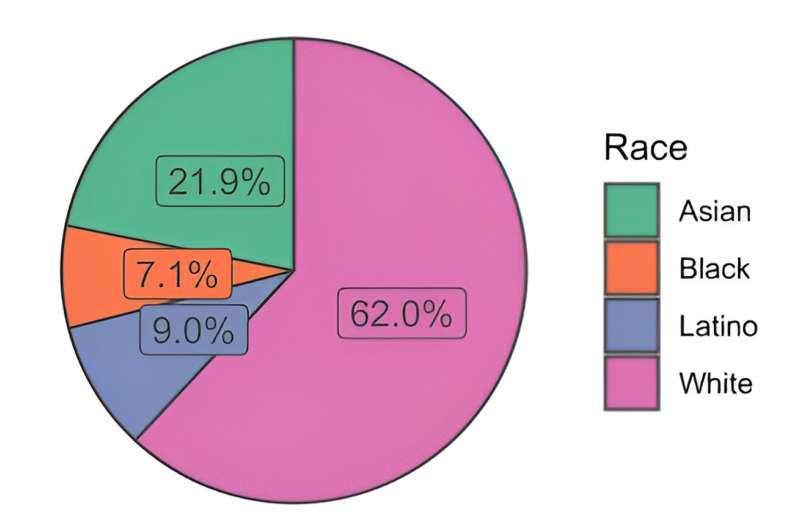
Some groups are highly underrepresented. Credit: arXiv (2023). DOI: 10.48550/arxiv.2309.10780

Diversity and inclusion are critical aspects of the responsible development of artificial intelligence (AI) technologies, including affective computing. Affective computing, which focuses on recognizing, interpreting, and responding to human emotions, can revolutionize various domains, such as health care, education, and human-machine interaction. Capturing subjective states through technical means is challenging, though, and errors can occur, as seen with lie detectors not working adequately or gender classifier systems misgendering users.

Related posts

A New AI Math Startup Just Cracked 4 Previously Unsolved Problems

A New AI Math Startup Just Cracked 4 Previously Unsolved Problems

February 5, 2026
Netflix Says if the HBO Merger Makes It Too Expensive, You Can Always Cancel

Netflix Says if the HBO Merger Makes It Too Expensive, You Can Always Cancel

February 5, 2026

If used for ulterior decision-making processes, such inferences could have disastrous consequences for people, the impacts of which may vary depending on the context of an application, i.e., flagging innocent people as potential criminals in border control or detrimentally affecting vulnerable groups in mental health care.

Following this line of thought, Tessa Verhoef from the Creative Intelligence Lab at Leiden University and Eduard Fosch-Villaronga from eLaw—Center for Law and Digital Technologies have written an article posted on the arXiv preprint server highlighting that systems trained on the datasets currently available and used most widely may not work equally well for everyone and will likely have racial biases, biases against users with (mental) health problems, and age biases because they derive from limited samples that do not fully represent societal diversity.

Verhoef and Fosch-Villaronga presented the paper entitled “Towards affective computing that works for everyone” at the conference Affective Computing + Intelligent Interaction (ACII ’23) that was held at the Massachusetts Institute of Technology (MIT) Media Lab Sept. 10–13. The annual Conference of the Association for the Advancement of Affective Computing (AAAC) is the premier international forum for research on affective and multimodal human-machine interaction and systems.

In their paper, they argue that missing diversity, equity, and inclusion elements in affective computing datasets directly affect the accuracy and fairness of emotion recognition algorithms across different groups.

The researchers conducted a literature review revealing how affective computing systems may work differently for different groups due to, for instance, mental health conditions impacting facial expressions and speech or age-related changes in facial appearance and health. To do so, they analyzed existing affective computing datasets and highlighted a disconcerting lack of diversity in current affective computing datasets regarding race, sex/gender, age, and (mental) health representation.

By emphasizing the need for more inclusive sampling strategies and standardized documentation of demographic factors in datasets, the researchers provide recommendations and call for greater attention to inclusivity and consideration of societal consequences in affective computing research to promote ethical and accurate outcomes in this emerging field.

More information:
Tessa Verhoef et al, Towards affective computing that works for everyone, arXiv (2023). DOI: 10.48550/arxiv.2309.10780

Journal information:
arXiv

Provided by
Leiden University

Citation:
Toward affective computing that works for everyone (2023, September 25)
retrieved 25 September 2023
from https://techxplore.com/news/2023-09-affective.html

This document is subject to copyright. Apart from any fair dealing for the purpose of private study or research, no
part may be reproduced without the written permission. The content is provided for information purposes only.




Source link

Previous Post

‘Nobody has lost their job because of what we do,’ says CEO of film industry AI tool

Next Post

Terra Developers Hosts TERRApy 3.0 to Empower Real Estate Practitioners

Next Post
Terra Developers Hosts TERRApy 3.0 to Empower Real Estate Practitioners

Terra Developers Hosts TERRApy 3.0 to Empower Real Estate Practitioners

Leave a Reply Cancel reply

Your email address will not be published. Required fields are marked *

RECOMMENDED NEWS

ACA Foundation launches Ethical Living Project 2.0 for 2025 – Investment Management in Africa

ACA Foundation launches Ethical Living Project 2.0 for 2025 – Investment Management in Africa

11 months ago
3 Best Floodlight Security Cameras (2026), Tested and Reviewed

3 Best Floodlight Security Cameras (2026), Tested and Reviewed

3 days ago
Uganda’s Population Increase: Key Census Findings

Uganda’s Population Increase: Key Census Findings

2 years ago
African NOCs Strengthen Cooperation With Multi-Deals Signed

African NOCs Strengthen Cooperation With Multi-Deals Signed

2 years ago

POPULAR NEWS

  • Ghana to build three oil refineries, five petrochemical plants in energy sector overhaul

    Ghana to build three oil refineries, five petrochemical plants in energy sector overhaul

    0 shares
    Share 0 Tweet 0
  • The world’s top 10 most valuable car brands in 2025

    0 shares
    Share 0 Tweet 0
  • Top 10 African countries with the highest GDP per capita in 2025

    0 shares
    Share 0 Tweet 0
  • Global ranking of Top 5 smartphone brands in Q3, 2024

    0 shares
    Share 0 Tweet 0
  • When Will SHIB Reach $1? Here’s What ChatGPT Says

    0 shares
    Share 0 Tweet 0

Get strategic intelligence you won’t find anywhere else. Subscribe to the Limitless Beliefs Newsletter for monthly insights on overlooked business opportunities across Africa.

Subscription Form

© 2026 LBNN – All rights reserved.

Privacy Policy | About Us | Contact

Tiktok Youtube Telegram Instagram Linkedin X-twitter
No Result
View All Result
  • Home
  • Business
  • Politics
  • Markets
  • Crypto
  • Economics
    • Manufacturing
    • Real Estate
    • Infrastructure
  • Finance
  • Energy
  • Creator Economy
  • Wealth Management
  • Taxes
  • Telecoms
  • Military & Defense
  • Careers
  • Technology
  • Artificial Intelligence
  • Investigative journalism
  • Art & Culture
  • LBNN Blueprints
  • Quizzes
    • Enneagram quiz
  • Fashion Intelligence

© 2023 LBNN - All rights reserved.