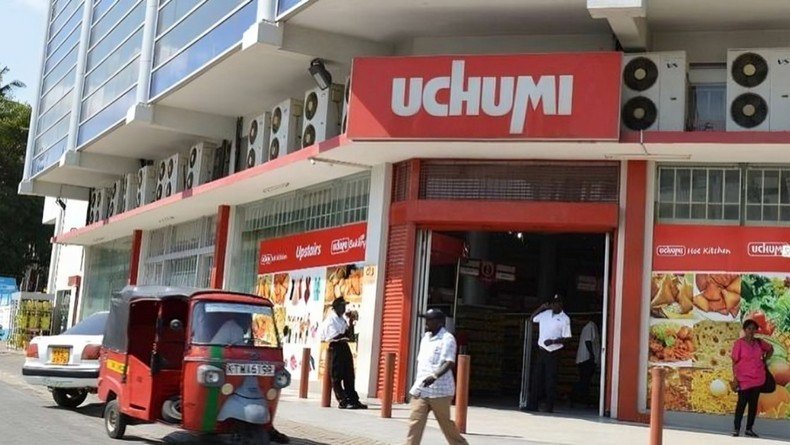
As reported by The Star, the case has drawn widespread attention, especially given Ngao’s role as the head of a major retail business.
Ngao is charged with conspiracy to commit a felony under section 393 of the Penal Code; the second count accuses him outright of stealing, under section 268(1) read with section 275.
He, jointly with others not named in court, allegedly took the extractor fan, valued at KSh 135,000, which converts to roughly $1,046 using the current exchange rate of about KSh 129.25 to the dollar.
The legal drama comes amid a rising feud between Ngao and Hotspot’s proprietor, Maalim Hassan, who has leased 6,500 square feet on the ground floor of the Lang’ata Hyper branch since July 2023.
Their relationship soured months later when, in December of that year, Hassan was given just three days to vacate.
Worse still, Uchumi allegedly accused him of owing over KSh 12 million in unpaid rent, sums he insists are entirely fictitious.
Court documents, including an injunction, partly restrain “[the defendants]… from … forcefully removing, evicting or relocating the plaintiff and their business … in any way interfering with the plaintiff’s quiet possession of … 6,500 square feet … pending inter partes hearing …”
The order names not only Uchumi but also its subsidiaries, tenants, agents, and even its CEO.
Another tenant, Dominic Mwangi, has also taken Uchumi to court. He claims he was unlawfully evicted from the same Lang’ata branch, where he ran a liquor store and a gas‐supply business. Mwangi is seeking KSh 4.5 million (around $34,800) in compensation.
According to his lawsuit, Uchumi breached a court order issued on 8 May, which barred the retailer from subleasing while eviction proceedings were unresolved.
Adding to the tension, the new occupant of that space is China Square, a household-goods retailer. The business reportedly paid KSh 600 million (about $4.65 million) to occupy the strategic Lang’ata Road location.
Meanwhile, Uchumi, once a leading supermarket chain, has been struggling financially. Its decline has been linked to poor management, debt build-up, and an overly ambitious expansion strategy that drained cash flow. As part of its recovery drive, the company is reportedly selling land to pay off creditors.
In May this year, Uchumi also lost a long-running court fight over land with the Kenya Defence Forces. A High Court ruled that the military could take over a prime 17-acre parcel in Kasarani, a significant blow to its recovery plans.