

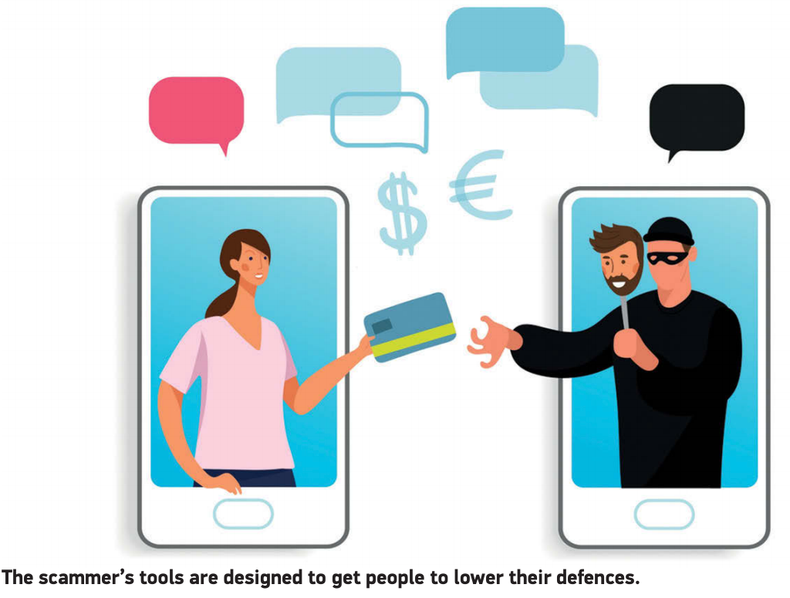
Here’s a breakdown of the top 10 countries most affected by scams based on average loss per victim:
| Rank | Country | Average Loss (USD) |
|---|---|---|
|
1 |
United States |
$3,500 |
|
2 |
Denmark |
$3,100 |
|
3 |
Switzerland |
$3,000 |
|
4 |
Sweden |
$2,700 |
|
5 |
South Korea |
$2,700 |
|
6 |
Singapore |
$2,400 |
|
7 |
Japan |
$2,300 |
|
8 |
United Arab Emirates |
$2,200 |
|
9 |
Canada |
$1,900 |
|
10 |
New Zealand |
$1,900 |
These figures point to a staggering global trend, with scammers increasingly targeting individuals in developed nations using sophisticated digital tactics.

Africa’s growing involvement in global scam networks
While African countries do not appear on the list in terms of monetary loss, Africa’s involvement in the scam economy is increasingly being spotlighted — not as victims, but often as the source of the perpetrators.
Criminal syndicates in countries such as Nigeria, Ghana, and South Africa have gained notoriety for orchestrating romance scams, investment frauds, and phishing schemes, many of which target unsuspecting victims in wealthier nations listed above.
The Technology Behind the Fraud
Many of these schemes rely on social engineering, impersonation, and cryptocurrency, making them difficult to trace. Africans involved in such operations often exploit weak cyber laws, lack of enforcement, and high unemployment to build elaborate online fraud businesses.
In recent years, Interpol and local cybercrime units have launched crackdowns on internet fraud gangs, with notable arrests in Lagos, Accra, and Johannesburg. Yet, experts warn that these are merely the tip of the iceberg.
Calls for Regulation and Global Cooperation
Cybercrime is not confined by borders, and the Global Anti-Scam Alliance has urged all countries — especially those with emerging digital economies — to implement stricter cyber laws, data protection policies, and digital literacy campaigns.
The organisation emphasises the need for a unified international response to stem the tide of scam-related losses, protect victims, and hold perpetrators accountable — regardless of where they operate.


