

In 2018, an Indigenous woman identified as C.M. and her 5-year-old son crossed the U.S.-Mexico border near San Luis, Arizona, seeking asylum. C.M., a Maya Mam native to Guatemala, told the border agents who apprehended her that she was fleeing life-threatening violence. But instead of asylum, the U.S. government — under secret policies enacted by the Trump administration — forcibly separated the pair. C.M. was sent to two detention centers in Arizona and then Nevada while her son, who spoke only Mam, was taken to a facility in New York. After 76 days and threats of deportation they were reunited. Traumatized by the experience, C.M. and four other parents affected by the policy sued in 2019 and last July reached a settlement with the Biden administration.
The family separation policy ended in summer 2018, but Indigenous immigrants, asylum seekers and advocates are bracing for similar policies during Donald Trump’s second administration. Trump has promised to end birthright citizenship, restrict protections for refugees and asylum seekers and carry out mass deportations. Indigenous people from Central and South America are often forced to leave home because of persecution and conflict over their land, desired by governments and corporations. When they seek asylum at the U.S.-Mexico Border, however, they are caught in the teeth of the U.S. immigration system, which does not recognize their diverse identities, language needs or unique rights. “The ways in which the Trump administration truly impacted Indigenous peoples has not been adequately documented or quantified, but we believe that it was a large-scale human rights violation,” said Juanita Cabrera Lopez, who is Maya Mam and executive director of the International Mayan League, a D.C.-based Indigenous-led nonprofit.

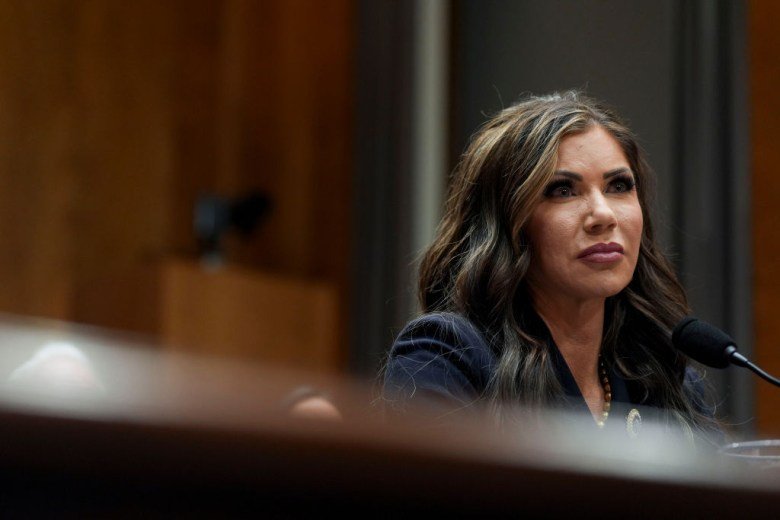
On Monday, South Dakota Gov. Kristi Noem — Trump’s nominee to lead the Department of Homeland Security — passed her Senate hearing easily on a bipartisan vote. Noem, who has a record of deeply anti-immigrant rhetoric, was banned from all nine reservations in South Dakota after she claimed — without any evidence — that tribal nations were working with drug cartels, which the tribes vehemently deny. This antagonistic relationship with tribal nations could be a harbinger of what’s to come with her oversight of Homeland Security, where she will have broad authority to waive federal laws meant to protect tribal sites, and where a lack of adequate policies, interpretation and understanding of international Indigenous rights has already brought harm and even death to Indigenous immigrants and families.
“WE HAVE TO UNDERSTAND that this is about power,” said Kaxh Mura’l, who is Maya Ixil, in an interview in Spanish with High Country News. Mura’l came to the U.S. fleeing persecution in Guatemala, where he was actively involved in protecting his community from an international mining company pursuing barite, a mineral used to extract oil and gas. Transnational corporations, hydropower companies and the Guatemalan government have committed human rights abuses against Indigenous communities there in order to acquire more land and resources. “(Guatemala’s) system of justice is persecuting the community leaders, is persecuting the ones that are defending their territories,” Mura’l said.
In 2019, Mura’l made the arduous journey from his ancestral lands and requested asylum at a bridge crossing connecting Juarez, Mexico, to El Paso, Texas. Under the Trump administration’s “Remain in Mexico” policy, however, he was forced to wait for two years there in unsafe conditions while his petition was reviewed, spending much of the COVID-19 pandemic in crowded detention facilities.
Mura’l’s reasons for immigrating, which echo those of many other Indigenous people from Central and South America, stem from a long history of U.S. political intervention. The U.S. helped remove Guatemala’s democratically elected president in 1954, for example, and backed military leaders who committed genocide against Indigenous Mayans. “The reason why many of us (are) living in the United States is because of the genocide that we experienced in Guatemala. And the U.S. contributed to that genocide economically, logistically, and that is what led to our forced removal,” said Emil’ Keme, who is Ki’che’ Maya and a professor of English and Indigenous studies at Emory University. Indigenous people on both sides of the border can relate to the experience of displacement and the struggle for language preservation and cultural continuity: “We’re fighting for our right to exist, both in the North and the South.”
Stories like C.M. and Mura’l’s draw attention to an issue that is difficult to track owing to the lack of federal data; the U.S. tracks language use in its immigration court system but does not keep data on who identifies as Indigenous. The number of Indigenous language speakers is likely an undercount because officials assume that Central American immigrants use Spanish as their first language. (Some may speak Spanish, but as a second or third language). Data from a study published in 2020 showed that, over a five-year period, 20% of adult immigrants at the Casas Alitas shelter in Tucson, Arizona, were Indigenous language speakers, primarily from Guatemala and Mexico. From 2017 to 2019, the shelter documented 29 unique Indigenous languages.

Organizations like the International Mayan League and National Congress of American Indians say that the lack of adequate Indigenous language services at the border violates multiple international laws and standards. They have urged Homeland Security to create an Indigenous language advisory committee and to consult with Indigenous people — including tribal nations in the Borderlands — on border issues. NCAI called out the family separation policy in 2018, stating that “the U.S. has a history of intentional and unjust imprisonment of Indigenous families and forced separation of Indigenous children,” and that the policy “represents history repeating itself.”


EFFORTS TO EXPAND language access or Indigenous consultation at the border did not gain traction under President Joe Biden and are unlikely to under Noem, who has a record of not consulting tribal nations in South Dakota on policies that affect them. During the pandemic, she threatened to sue tribes that closed their reservation borders to protect their communities, something that is their right as sovereign nations. In the past two years, Noem has repeatedly accused tribes and tribal members of drug activity and involvement with “Mexican cartels” without ever providing any evidence.
When Oglala Sioux President Frank Star Comes Out banned Noem from the Pine Ridge Reservation last year, he also rejected the notion that Indigenous people who immigrate to the U.S. are criminals. The Oglala Sioux, he said, “believe that many of the people coming to the Southern border of the United States in search of jobs and a better life are Indian people from such places as El Salvador, Guatemala and Mexico and don’t deserve to be dehumanized and mistreated.”
If Noem is confirmed, her tenure is likely to impact tribal communities that are bisected by the U.S.-Mexico border, said Danielle Oxendine Molliver (Lumbee), a community defense attorney at Legal Rights Center, adding that she fears Noem could be “vengeful.” There are dozens of tribal nations in the U.S. Borderlands, and many have related communities across the border. The Department of Homeland Security has the ability to waive federal laws meant to protect tribes’ cultural, sacred and burial sites, which is exactly what it did to expedite building the border wall during Trump’s previous term. Dozens of federal laws were waived in border states, including the Native American Graves Protection and Repatriation Act and the American Indian Religious Freedom Act. The Biden administration did the same in 2023 in Texas.

Lorena E. Brady, policy and program manager with the International Mayan League, said that Noem will also make asylum harder for immigrants and pursue deportations of whole families. “She’s just a flat-out racist,” Brady said. “We very much stand in solidarity with our North Native relatives who have banished her from their lands and from their nations.”
But these issues go beyond any single administration, said Cabrera Lopez of the International Mayan League; many of them are structural and global. Any lasting change will require sustained solidarity. “Regardless of where we are, we have inherent rights as Indigenous peoples,” Cabrera Lopez said. “Whether we’re in the United States, whether we’re in Guatemala, (or) we’re crossing borders, we have the right to exist as an Indigenous person, and all the rights that stem from that.”
HCN editorial fellow Natalia Mesa and CARU Language Services contributed Spanish translation, interpretation and fact checking for this piece.


