

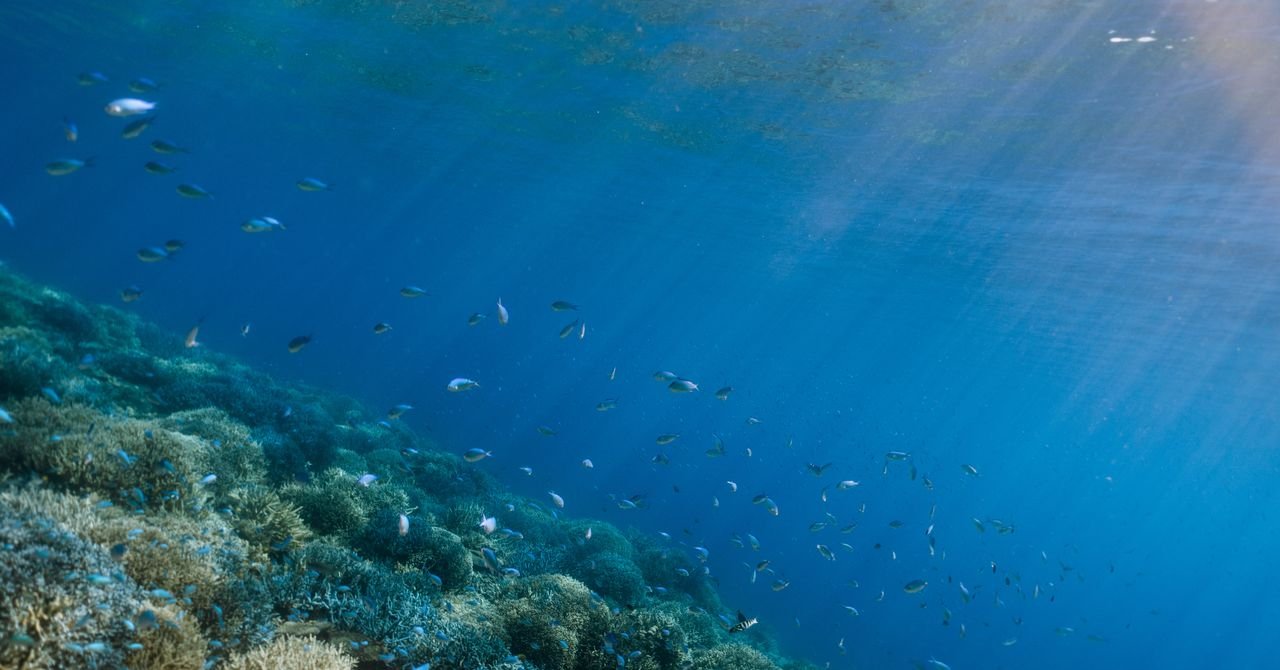
For life on Earth, the oceans are essential. Not only do they supply us with food and resources, they also play a big role in maintaining a stable climate: between one-quarter to one-third of all CO2 emitted by humans, which would otherwise stay in the atmosphere to further intensify climate change, is captured and stored by the sea.
But the oceans are in trouble. Already facing an onslaught of human pressures—including overfishing, pollution, rising temperatures, and acidification—the world’s seas could see the burden placed on them double over the next couple of decades. This would have huge negative consequences for biodiversity as well as for humans around the world.
An international team, led by the National Center for Ecosystem Analysis and Synthesis (NCEAS) at the University of California, Santa Barbara, has modeled how the pressure placed on the world’s oceans could change in the future. Their analysis projects that by around 2050, the cumulative pressure on the oceans could increase 2.2- to 2.6-fold compared to today. The most rapid increases in impact will occur near the equator, at the poles, and in coastal areas.
“Our cumulative impact on the oceans, which is already substantial, is going to double by 2050—in just 25 years,” Ben Halpern, marine ecologist and director of NCEAS, explained in a university statement. “It’s sobering. And it’s unexpected, not because impacts will be increasing—that is not surprising—but because they will be increasing so much, so fast.”
Halpern and his team, in cooperation with Nelson Mandela University in South Africa, integrated 17 datasets from around the world to create a comprehensive global model of the extent and intensity of the impacts of human activities on the ocean. Past studies have often dealt with the impacts of specific activities in isolation; the current study integrates these activities to more clearly highlight the future vision of the marine environment.
What emerges is a picture of further deterioration in already heavily impacted areas, such as coastal waters, as well as rapidly expanding impacts across the high seas, which have been relatively stable until now. In equatorial regions, the impact of human activities could increase nearly three-fold between the 2040s and 2050s.
Specific major impacts include rising sea temperatures, declining marine resources due to fishing, rising sea levels, acidification of seawater (which is a consequence of CO2 dissolving in the sea), and algal blooms due to the influx of nutrients that flow into the ocean, principally from farms. While these burdens are each serious in isolation, their combined effects could exceed the resilience of ecosystems and lead to irreversible losses.
Researchers warn that this cumulative impact will then hit society—for instance, by lowering food supplies, killing off jobs in tourism and fishing, flooding low-lying lands, and destroying coral reefs that protect coastlines from storm surges and tsunamis. There will be direct impacts on human livelihoods and economies, leading to regional economic instability, Halpern said.
Developing countries and small island nations in particular do not have the economic wherewithal to take adaptation measures, despite their often heavy dependence on marine resources. The cumulative effects will therefore appear unevenly across countries. Oceanic change is not just an environmental issue; it is an issue that concerns the stability of the international community as a whole.
However, the projections of this study are only possibilities; such a future does not have to arrive. Reducing greenhouse gas emissions to lessen climate change and ocean acidification, systematically managing fisheries resources, avoiding coastal pollution, and preserving coastal mangroves and salt marshes may help to mitigate the deterioration. There is still room to minimize the impact.
This story originally appeared on WIRED Japan and has been translated from Japanese.


