In September, the U.S. State Department issued the “America First Global Health Strategy.” The document denounces the long-established practice of using foreign aid to fund U.S.-based nongovernmental organizations (NGOs) to deliver health services in low-income countries, arguing that this practice is wasteful and promotes these countries’ dependency on aid. Surprisingly, the strategy calls for a pivot to directly funding poor countries’ governments, many of which have long been accused of corruption and ineffectiveness. In December, U.S. Secretary of State Marco Rubio signed the first agreement under the new strategy—a deal with Kenya to combat infectious diseases.
Many aid experts and foreign governments have advocated for some version of this shift. The old model of funneling aid through NGOs and private contractors saved hundreds of millions of lives and helped untold others prosper, but by bypassing national governments, it undermined their efforts to build up their own public health systems and wean themselves off aid. In 2024, only of the U.S. Agency for International Development’s (USAID’s) multibillion-dollar budget went directly to foreign governments, while nearly 90 percent went to large U.S. and international contractors and NGOs.
In September, the U.S. State Department issued the “America First Global Health Strategy.” The document denounces the long-established practice of using foreign aid to fund U.S.-based nongovernmental organizations (NGOs) to deliver health services in low-income countries, arguing that this practice is wasteful and promotes these countries’ dependency on aid. Surprisingly, the strategy calls for a pivot to directly funding poor countries’ governments, many of which have long been accused of corruption and ineffectiveness. In December, U.S. Secretary of State Marco Rubio signed the first agreement under the new strategy—a deal with Kenya to combat infectious diseases.
Many aid experts and foreign governments have advocated for some version of this shift. The old model of funneling aid through NGOs and private contractors saved hundreds of millions of lives and helped untold others prosper, but by bypassing national governments, it undermined their efforts to build up their own public health systems and wean themselves off aid. In 2024, only of the U.S. Agency for International Development’s (USAID’s) multibillion-dollar budget went directly to foreign governments, while nearly 90 percent went to large U.S. and international contractors and NGOs.
If the State Department were to redirect just a portion of foreign aid funding, it would represent billions of dollars to help these countries strengthen their health care systems themselves. The agreement with Kenya includes an unprecedented $1.6 billion in direct U.S. aid over five years. Aid to foreign governments of this magnitude has not existed in recent decades—except to national security priorities such as Egypt, Israel, Jordan, and Ukraine.
The shift to direct aid is in line with reforms that we pushed for as career staff at USAID under both Democratic and Republican administrations for many years, and such a move would be welcome in other sectors of foreign aid beyond public health. The new Global Health Strategy represents an extraordinary opportunity to not only fund lifesaving work but also build up sustainable government capacity that is less dependent on outside assistance.

However, promising policy does not ensure successful implementation.
In the months since the Trump administration shut down USAID and the State Department took over its functions, there have been numerous reports of health systems breakdowns, loss of medical services, and increased morbidity and death, along with projections of more dire consequences if aid programs are not restored or replaced.
This is unsurprising: Even if the department desired to maintain lifesaving services as USAID was shuttered, it lacked the systems to do so. USAID was fundamentally a contracting and grant-making agency, and the State Department does not have the staff and required systems to spend and oversee billions in grant and contract funding all over the world each year. The department seems to have recognized this when it quickly rehired 800 former USAID career officials as temporary staff to help restart some of the grants. This level of staffing represents only a fraction of USAID’s former staff of 14,000 people.
This is all the more concerning because the State Department aims to sign new agreements with the largest recipient countries by the end of this month and begin implementation in April 2026.
Completely reorienting the U.S. foreign aid program—the largest in the world—is a formidable undertaking, even under normal circumstances. Doing so immediately after gutting Washington’s foreign aid expertise and systems is all the more daunting.
Based on our extensive experience in government-to-government work at USAID’s Global Health Bureau and Africa Bureau, where we supported numerous countries in the development of bilateral agreements and programs, we see three major risks for the new policy, as well as some potential fixes.

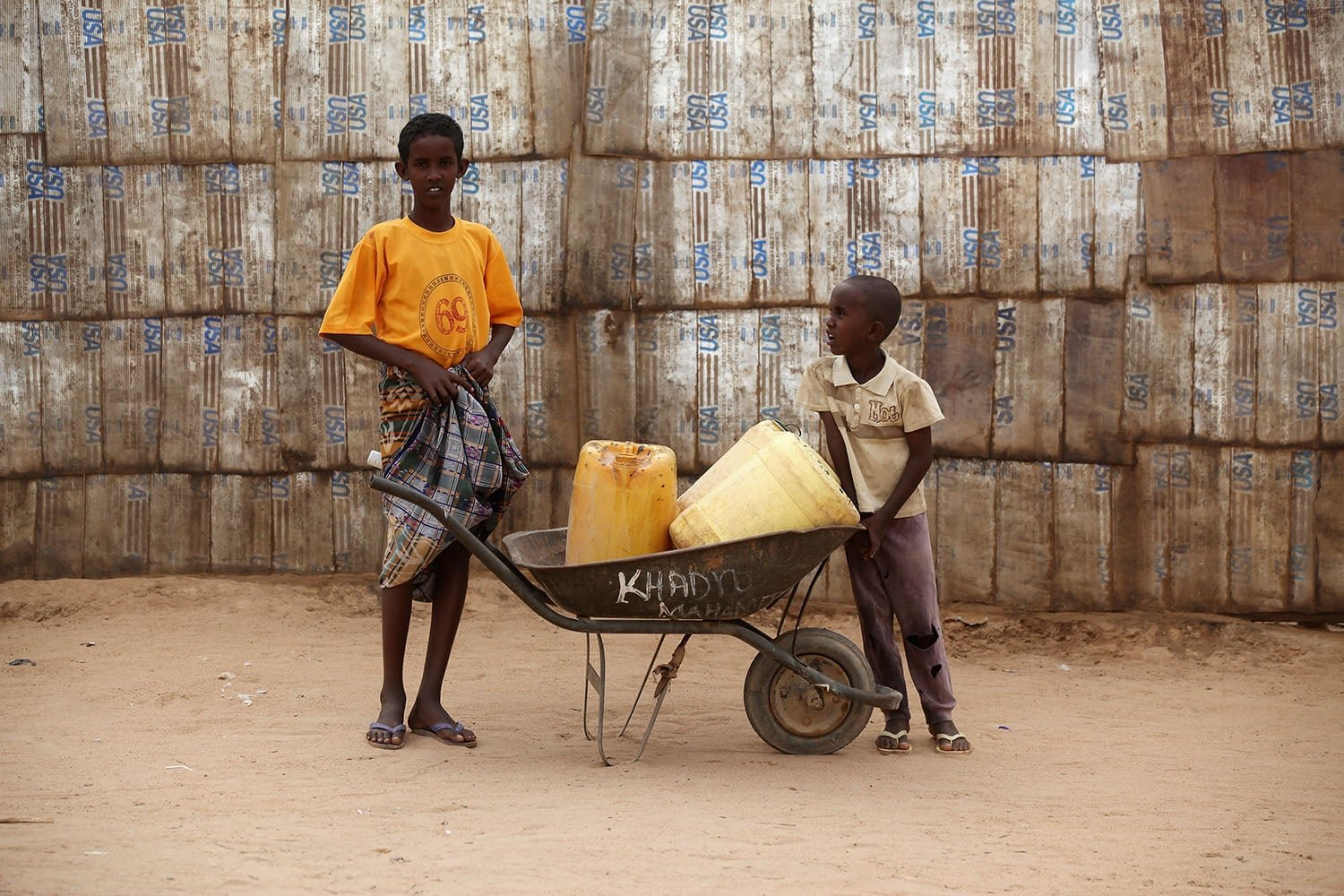
Refugee children push a wheelbarrow of water containers past a wall made from used USAID tins in a camp in Kenya on July 20, 2011.Oli Scarff/Getty Images
The most alarming risk is backsliding in global health progress—especially in ending HIV—for which U.S. aid was long celebrated. Many recipient countries already had fragile health systems, and the overnight elimination of aid programs was a massive blow (although some portions have recently been restarted).
As breakdowns continue and treatments are rationed, more people will get sick and die. There is also a rising risk of new, drug-resistant disease strains developing and making treatment more difficult and expensive, both abroad and in the United States. Less monitoring of disease outbreaks could let Ebola, mpox, and other potential pandemics grow and spread more rapidly, hitting the United States faster and without warning.
Restarting the flow of funds is crucial, but shifting implementation from U.S.-based NGOs to foreign governments is far more complex than just moving money. These investments are not easily absorbed. In Kenya, for example, the five-year grant is more than the government’s entire annual health budget of roughly $1 billion. Developing countries can and should take on the work formerly done by NGOs, but doing so requires hiring potentially hundreds of new staff, expanding their systems, upgrading physical infrastructure, and more. Building these capacities takes planning and time. Without adequate support through the transition, gaps in service delivery will continue at a moment when there is little room for error.
To reduce these risks, the State Department should ensure adequate time and resources for this massive transition. In the short term, this includes continued service provision from NGOs to minimize gaps. It may also mean delaying implementation to allow sufficient planning with partner governments, including strong monitoring systems to ensure that the new programs deliver lifesaving services.
Local private sector actors, as well as faith-based and community-based organizations, should also be consulted. These organizations—which know local needs and constraints and can often reach into communities and geographic regions that the public sector cannot—should be funded as key implementing partners by either their own countries or the U.S. government.
The United States should also allow partner governments and local stakeholders to shape program components. The new State Department strategy focuses on infectious diseases while omitting areas such as family planning, nutrition, maternal care, and child health. Public health systems function best with an integrated approach, and countries should be able to include the elements that they determine to be essential to achieving health goals.

A doctor registers patients at a hospital’s maternity unit in Ghazni, Afghanistan, on Aug. 27.Elise Blanchard/Getty Images
The second major risk of the new global health strategy is increased waste, fraud, and inefficiency. Moving too quickly and without sufficient oversight will create opportunities for corruption, especially where U.S. and partner government systems are not yet equipped to safeguard aid. In many recipient countries, public financial management is weak, and corruption is common. We have seen procurement kickbacks, ghost workers, and the theft of drugs and other goods.
To ensure that funds are used as intended, both the U.S. and recipient governments need adequate staffing and preparation for risk management. No funds should be disbursed and no project should start without a risk assessment and risk management plan. This not only reduces corruption risk but also anticipates challenges—including outdated staffing policies or burdensome approval processes—thus helping to avoid costly delays. It also supports compliance with U.S. risk management policy.
Similarly, no funds should be released without strong oversight plans on both the U.S. and local government sides. Anyone who has worked on government-to-government programs will tell you that they are more staff-intensive than making a grant to an NGO. For major recipients of health aid, some former USAID country offices had more than 100 staffers, plus headquarters support. These positions were all eliminated this year, with perhaps one or two people rehired by the local U.S. embassies on a short-term basis—far too few for the work ahead.

A terminated federal worker leaves the offices of the U.S. Agency for International Development in Washington on Feb. 28. Bryan Dozier/Middle East Images/AFP via Getty Images
The State Department needs more staff to ensure that U.S. funds are used effectively. U.S. embassies should hire full-time, in-country staff to negotiate and work closely with the local government, conduct site visits, audit financial transactions, and verify health results. Additional Washington staff should develop standard guidance and provide support to embassies. By reducing the risk of waste and fraud, these hires would pay for themselves in more effective programs. If staffing freezes make this initially impossible, then the department should temporarily engage experienced organizations to aid in this transition.
Finally, the strategy’s shift to direct government aid risks reinforcing the dependency that it aims to fix. USAID and the Centers for Disease Control and Prevention—another federal agency that gives global health aid—have made this mistake before by placing funds in private accounts rather than recipient government systems, hiring workers outside the civil service, and building U.S.-controlled data systems rather than local capacity. These parallel structures launch quickly and offer more control, but they make long-term ownership by partner governments virtually impossible.
The new State Department strategy commendably supports local data tracking and encourages the transition of U.S. funded healthcare workers to governments. But it does not mention the use of official financial channels and does not elaborate on how to integrate staff into the local civil service. Without involving these countries’ finance ministries, programs will never enter routine budget planning or receive domestic funding. And without hiring through partner government systems, it is very unlikely that staff will be absorbed when aid ends, even if the partner government initially agrees to do soagrees.
Using a country’s own system is not always easy; it can require lengthy negotiations and raise sensitive questions around budgets and civil service reform. Yet these discussions can drive needed reforms, including the modernization of budgeting, payment, and human resource systems, thereby improving transparency and reducing corruption. Strengthening these systems is what helps low-income countries become effective partners to the United States in areas such as trade and national security. It is not flashy or fast, but it is development diplomacy at its best.
All programs should use official government systems, including government accounts and hiring processes. Negotiations should include finance ministries and plan for integrating aid-funded programs into national budget and civil service planning, codified in written agreements. If the immediate use of national systems is not possible, agreements should include specific timelines and plans for doing so. Data privacy concerns, such as those raised in Kenya, should also be addressed up front.
The State Department can address these risks if it chooses to. But given current staffing levels, ambitious timelines, and the abandonment of established aid systems, this is difficult to imagine. Congress can also add guardrails in the next appropriations law, such as requiring risk assessments and management plans, the use of official bank accounts and civil service systems, and minimum staffing for planning and oversight. Existing law includes requirements for direct government aid—such as basic capacities to fight corruption and support civil society—but these rules allow wide interpretation, and it will be telling how the State Department chooses to meet and report on them.
The shuttering of USAID and contraction of foreign aid funds resulted in the needless deaths of hundreds of thousands of vulnerable people. Will the administration now add to that legacy by replacing one flawed system with another? Let’s hope that it takes the time and effort to build the strong, smart aid system that this new strategy makes possible—one that earns support for years to come. This opportunity may not come again.