

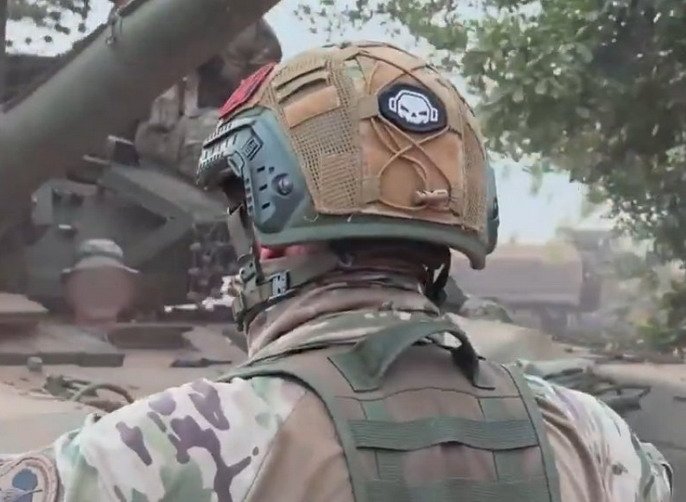

On 6 June 2025, private military company Wagner announced they would be withdrawing from Mali. “Mission accomplished”, declared the mercenary group via Telegram. For people who knew why the group were invited into the country, the announcement was odd, to say the least.
Wagner was invited by Mali’s junta, which had carried out consecutive coups in 2020 and 2021 before expelling French troops in 2022. The new authorities argued they “had no choice but to seek other partners” in the form of the Wagner group. So if Wagner announces that the mission is accomplished, does that mean the insurgency in Mali has been eliminated?
Well, that wasn’t the case; in fact, the situation had only gotten worse after Wagner’s deployment in late 2021. Instead of reducing violence, attacks against civilians surged: militant Islamist violence against civilians increased by nearly 280 per cent, and operations involving Wagner and the army were linked to hundreds of civilian deaths in places like Moura. Forbidden Stories published an investigation documenting how Wagner had operated six secret prisons across Mali, where hundreds of civilians were detained, tortured, and disappeared between 2022 and 2024.
Why France had to Go
In 2013, Mali was facing an impending rapid Jihadist advancement on its capital, Bamako, so the interim government made an official request to France to prevent a likely takeover of the capital. Operation Serval was then initiated. By mid‐2014, French and allied forces had retaken key northern towns and broken up most organised jihadist control, allowing Paris to terminate Serval on 15 July 2014, but instead of fully withdrawing from the region, France decided to reorganise its presence into a new, longer-term Sahel mission termed Operation Barkhane, and before long, what started as a temporary intervention became indistinguishable from power projection. Sentiment against France in the region shifted, as the presence of their troops became a reminder of colonial subjugation more than counterterrorism.
Over the nine years Barkhane lasted, violence spread across the region as Jihadists adapted to the new norm and expanded accordingly. Civilian casualties also mounted, France carried out controversial airstrikes, and Malians believed French forces prioritised strategic interests, such as access to resources, over protecting local communities, so after Colonel Assimi Goïta led both coups in 2020 and 2021, the new junta capitalised on genuine anti-French anger to demand a full withdrawal of Barkhane troops. France completed its withdrawal in August 2022.
The Wagner Promise vs. Reality
France wasn’t the only force pushed out; also in the country was the United Nations Multidimensional Integrated Stabilization Mission in Mali (MINUSMA), the UN’s 2013–2023 peacekeeping mission in Mali, with roughly 15,000 personnel tasked with stabilising the north, protecting civilians, and supporting the peace process and elections. The junta revoked consent also for their presence, forcing a withdrawal in 2023. The exit of these forces created a vacuum, a major security and human-right monitoring gap, one which Wagner was supposed to fill, but Malians soon found out this was not the case. Wagner is a proxy for Moscow’s hybrid warfare, offering security, propaganda, and repression in exchange for mining concessions, arms contracts, and diplomatic leverage against the West.
Between 2022 and 2024, Forbidden Stories identified six Wagner-linked detention sites: Bapho, Nampala, Sévaré, Sofara, Kidal, and Niafunké, often inside former UN bases or camps shared with Mali’s army (FAMa). Detainees describe metal shipping containers used as cells in 45 degree Celsius heat, beatings, cigarette burns, forced labour, near-starvation rations and “Russian music” blasted during interrogations to break prisoners psychologically.
The primary victims of these horrific experiences were usually civilians branded as “terrorist sympathisers”: Fulani herders, Tuareg townspeople, drivers, shopkeepers, aid staff, and medical assistants picked up at checkpoints or during joint sweeps. Local rights groups such as CSP-DPA have documented hundreds of enforced disappearance while stressing that the real figures may be higher as families are too afraid to report. CD-DPA’s Boubacar Ould Hamadi, a Malian Tuareg political and civil society figure said: “These disappearances and the abuses committed by FAMa and Wagner, enabled and directed by Russia, are part of a deliberate strategy to sow terror and force populations into exile.” The best explanation for this event, in my view, is that torture is not a by‐product but part of Wagner’s operating model: it is used to terrorise communities into submission, secure the junta’s grip on power, and open space for Russian political and economic influence in the region. Analyses show Wagner’s contracts are really about keeping juntas in power; targeting civilians and stigmatised groups as a way to crush any potential opposition under the label of “terrorist sympathizers.”
A 2025 Global Initiative on Transnational Organised Crime (GI‐TOC) report shows Wagner arrived under-armed. They then went on to systematically divert weapons that were legally destined for Mali’s army, using them as its own arsenal. GI-TOC analyst Julia Stanyard notes they “found that the Wagner Group was making systematic use of military goods and equipment that were intended for Mali’s armed forces,” which clearly violates the Arms Trade Treaty (ATT), of which Mali is a signatory.
Wagner practices terror as a scalable blueprint; reports describe a “blueprint for state capture” perfected in the Central African Republic (CAR): massacres, torture, enforced disappearances, that Wagner then exports to new theatres like Mali because it reliably secures access to resources and deepens local dependence on Russian support.
The Rebrand: Africa Corps Enters the Field
After the announcement of withdrawal and the stain from the reports on atrocities, a new group was formed, Africa Corps. “Russia does not lose ground, but on the contrary, continues to support Bamako now at a more fundamental level,” said a statement by Africa Corps, but upon closer look, it turns out a large percent of Africa Corps personnel in Mali are ex‐Wagner, meaning the core manpower and field commanders barely changed, it is basically Wagner under new management and a new logo, created so Moscow can keep the Mali and CAR project going, expanding presence in Burkina Faso, Libya, Niger and Sudan, while distancing itself from Wagner’s defeats, atrocities, and Prigozhin’s (Wagner’s late leader) mutiny.
Moscow and Bamako describe Africa Corps as a more “professional” advisory and training mission, with less direct combat and tighter state control than Wagner. In practice, human rights groups and Sahel researchers report continuity: the same joint operations with FAMa, similar patterns of killings and disappearances of civilians, and continued opaque use of Malian bases and equipment. Investigations into arms diversion say Africa Corps inherits Wagner’s access to Malian stockpiles and captured materiel, but now with heavier integration of drones and other systems supplied under state‐to‐state deals. One analyst summed up Moscow’s logic: significant losses and scandals are pushed onto deniable “companies”, while any successes are claimed by Russia’s Ministry of Defence, making Africa Corps a corporate restructuring, not a moral reset.
Why this matters to Nigeria and the Sahel
Nigeria has a front-row seat to a dangerous experiment next door: three neighbouring juntas have swapped French and UN forces for Russian mercenaries, and the result so far is more chaos, not less. JNIM and Islamic State affiliates are expanding their range in Mali, Burkina Faso, and Niger. Analysts warn that pressure in the central Sahel will push some fighters, arms and tactics south into coastal and Gulf of Guinea states. Arms‐flow mapping already shows Sahel–Nigeria trafficking corridors strengthening, while militants experiment with commercial drones and complex raids that resemble Sahel playbooks.
We are already at a vulnerable position with overlapping insurgencies and banditry, Boko Haram, ISWAP, and criminal gangs, which create similar emergency pressure for quick security fixes. The West, though now more vocal on our situation, also isn’t providing as much support or provides very little with restrictions, fuelling political frustration and pan‐African calls to “look East” for less conditional support. In that context, a Russian‐style Private Military Company (PMC) can be sold as a shortcut, especially if domestic reform stalls, echoing the Malian argument that “sovereignty” means swapping one external patron for another.
Conclusions
Mali’s sovereignty demand was legitimate. France’s presence had become untenable; colonial baggage, military failure, and genuine popular opposition made the expulsion necessary. But sovereignty is a starting point, not an endpoint. Expelling one foreign force without building systems to govern the next creates a vacuum that can be filled by something worse. Wagner promised what France couldn’t deliver. Instead, they delivered systematic torture, weapons theft, military defeat, and a security situation that’s objectively more dangerous than when they arrived. For the Sahel and potentially Nigeria, the lesson is to pursue sovereignty, but with an accountability framework; if not, we just change our masters, not gain freedom. To leaders in the region, what does independence and sovereignty really mean if decisions simply move from Paris to Moscow?
Babatunde Fatai works at the intersection of emerging technologies, strategy, innovation and defence in Africa. He writes about emerging tech, defence-tech policy, dual-use technology, venture capital dynamics, and the systems that shape how innovation succeeds or fails on the continent.
He can be found on YouTube, Substack, LinkedIn, and X.


