
Events in the Middle East during February and March 2026 again disrupted the flows of shipping trade to the eastern and western spheres of the international system.
Given that the global economy is maritime based and rests on secure and predictable flows of goods by sea, the armed attacks on Iran and their maritime spillovers sharply underlined the vulnerability of global maritime trade and its value, which is embedded in safe and predictable deliveries of goods in the interconnected global system.
Although armed attacks caught much of the attention, a more subtle development was playing out as shipping lines and insurers again contemplated the convenience of the Cape sea route around the southern tip of Africa.
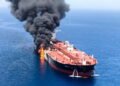
Following the Israeli and US armed attacks on Iran, Tehran closed the Strait of Hormuz. The impact was severe disruption to global trade.
Military hostilities and insurance risk suspensions added to uncertainty and bottle-necked carriers inside and outside the Persian Gulf. This high-risk scenario again escalated the importance of the Cape sea route as a convenient alternative should hostilities widen. Iran, for example, also fired missiles towards Cyprus in the eastern Mediterranean while a US submarine sank an Iranian naval frigate in the Indian Ocean south of Sri Lanka.
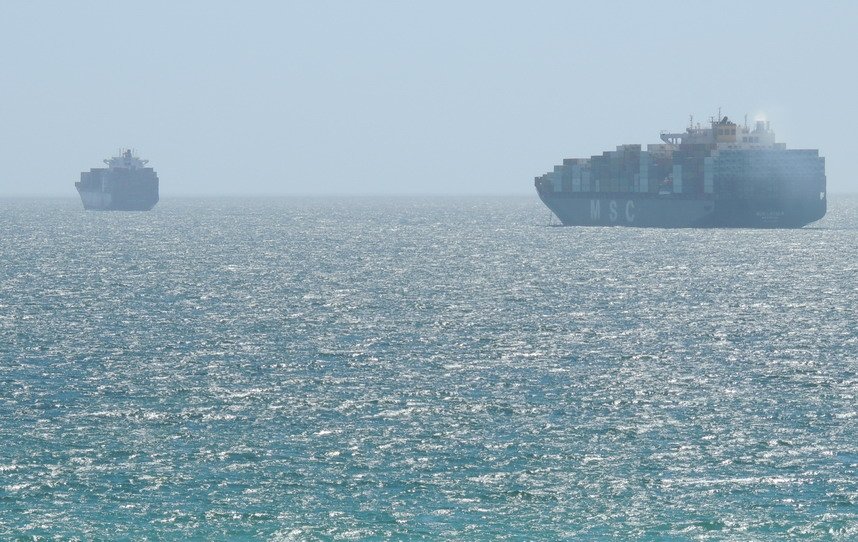
Based on a widening of the conflict, it is possible that the events of March 2026 could mark a turning point in how the Cape sea route is seen. Dangerous confrontations that force shipping companies to sail along the route are increasing in frequency. Instead of simply being the standing default for diverting risks to global shipping in the north-western Indian Ocean, the route is rapidly becoming the new normal for shipping flows.
I have studied maritime security events off Africa for more than 15 years, and it appears to me that the constant re-routing now calls for less ad hoc decision-making about risks and opportunities. It calls for a rethink about how the route is viewed and managed. For example, it is in the interests of shipping companies, crews and stakeholders to ensure a safe alternative route around Africa that can also guarantee a good standard of shipping and delivery of goods.
That requires paying close attention to the risks associated with the route, and how they can be mitigated.
African countries, and particularly South Africa with its Atlantic and Indian Ocean ports and service hubs, must become partners in ensuring a sea route of choice amid a shifting and insecure global security landscape with its maritime spillovers.
The Cape route’s value in history
Until the inauguration of the Suez Canal in November 1869, the Cape sea route was the only viable route for maritime traffic sailing between the Atlantic and Indian Oceans and onwards to the Pacific Ocean.
The Suez Canal shortened the distance for shipping, but it wasn’t a perfect solution. In 1956, 1967 and 1973, Arab-Israeli Wars caused lengthy shutdowns of the Suez Canal.
After the 1967 war, the canal remained closed for about eight years, trapping commercial vessels in its waters. Later developments also disrupted shipping through the Suez Canal and the Red Sea.
Around 2008, sea piracy resurfaced as a dangerous threat to commercial shipping off the Horn of Africa. The arrival in 2008 of an international armada of an estimated 30-40 naval vessels operating under UN Resolution 1816 contained the threat. The intervention prevented the route through the Gulf of Aden and Suez Canal from becoming a piracy haven.
But shipping remained vulnerable and despite the naval deployment, shipping companies intermittently diverted large flows past the Cape.
During March 2021 the container vessel Ever Given blocked the Suez Canal for several days due to a combination of climatic conditions and human failure. This incident demonstrated that war and armed conflict are not the only risks to shipping in this region. Again, some shipping was diverted around South Africa.
By 2024, in solidarity with the Palestinian cause, the Houthi rebel movement in Yemen began attacking selected commercial vessels passing through the southern Red Sea. Extensive attacks with missiles, drones and unmanned seaborne vessels again rerouted ships southward around the Cape of Good Hope.
This rerouting persisted for most of 2024. Shipping companies had to choose between:
risking Houthi missiles and drones
being escorted by naval vessels from the US, the UK and the EU
taking the Cape sea route.
It is estimated that as much as 66% of shipping sailed south along the Cape sea route at its height.
The Cape sea route 2026: the risks
Duration, costs, services and sea conditions add up to a different risk repertoire along the Cape route.
One risk is the extra loss of containers; sea conditions can be very rough around the tip of Africa. This carries heavy financial and environmental costs.
A second risk relates to support along the route, which adds up to 15 days to a journey. For example, there are limited deep sea salvaging capabilities on the route. South Africa used to be a salvage hub, but has abandoned those capabilities.
A third set of risks are those that ships face if they enter an African harbour for unplanned reasons. There they stand exposed to dysfunctional service delivery and port inefficiencies.
All require implementing risk mitigation plans.
What needs to be done
The first plan should be extensive cooperation between African governments, their maritime agencies, and shipping companies. This remains the gold standard for building maritime security to contain non-traditional and non-naval threats along the route.
For example, there needs to be international cooperation for modernisation and port service delivery. These range from bunkering services to salvage assistance to collaboration on search and rescue services.
Responses do not solely depend on naval interventions. However, naval cooperation and roping in coast guards remain critical. This requires that African maritime agencies become better organised to secure the route to support safe global trade, including trade with Africa.
Derisking cannot be a solely South African responsibility. Maritime safety and security are about cooperation and partnerships. For the Cape sea route this implies African partnerships as well, intra-continental and with other international partners.
Written by Francois Vreÿ, Research Coordinator, Security Institute for Governance and Leadership in Africa, Stellenbosch University.
Republished with permission from The Conversation. The original article can be found here.