
• Business
  • Markets
  • Politics
  • Crypto
  • Finance
  • Intelligence
    • Policy Intelligence
    • Security Intelligence
    • Economic Intelligence
    • Fashion Intelligence
  • Energy
  • Technology
  • Taxes
  • Creator Economy
  • Wealth Management
  • LBNN Blueprints
  • Business
  • Markets
  • Politics
  • Crypto
  • Finance
  • Intelligence
    • Policy Intelligence
    • Security Intelligence
    • Economic Intelligence
    • Fashion Intelligence
  • Energy
  • Technology
  • Taxes
  • Creator Economy
  • Wealth Management
  • LBNN Blueprints

The farther the walk, the fatter the deer, study finds

Simon Osuji by Simon Osuji
February 23, 2026
in Investigative journalism
0
The farther the walk, the fatter the deer, study finds
0
SHARES
1
VIEWS
Share on FacebookShare on Twitter

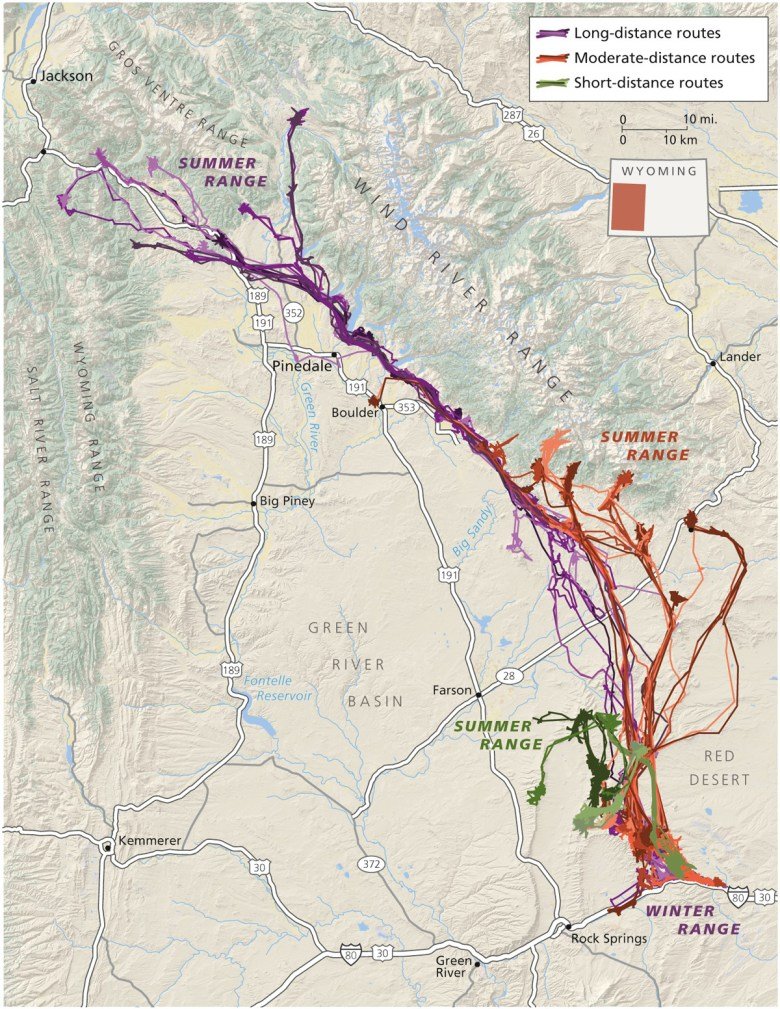
Every winter, thousands of mule deer eke out a living in southwest Wyoming’s Red Desert, a vast, rolling, sagebrush-covered landscape. Come spring, some of the deer in the Sublette herd will stay put, just as their mothers, grandmothers and generations before them did. Others will wander about 70 miles into nearby foothills. And the rest will head out on an ungulate odyssey, follow greener pastures up to 150 miles into the mountains, stopping for munchies along the way.

Now, a team of researchers at the University of Wyoming and Wyoming Game and Fish Department have conclusively determined that the deer who walk the farthest end up the fattest and live the longest. The farther they walk, the more calories they find as they reach lush mountain meadows teeming with high-protein groceries. And because they get fatter, they carry more fawns to term.

“The migrating mule deer are the engine” for the whole population, said Anna Ortega, lead author on a recent paper published in the journal Current Biology. “If you sever that migration, you will have far fewer animals.”

The conclusion is another remarkable finding from an even more remarkable study, one that required researchers to use helicopters to capture and study hundreds of deer every spring and fall for nearly a decade. The scientists measured the animals’ fat levels and pregnancies and followed them in the fall to document their fawns’ survival rates.

Related posts

Skimo is hot, in hot times

Skimo is hot, in hot times

February 20, 2026
How community organizers are amplifying Oregon’s Black music history

How community organizers are amplifying Oregon’s Black music history

February 20, 2026
Short (<50 km)-, moderate (50–150 km)-, and long (>150 km)-distance migration routes for adult female mule deer originating from a common winter range in western Wyoming. Credit: Hall Sawyer, Arthur D. Middleton, Matthew M. Hayes, Matthew J. Kauffman and Kevin L. Monteith

It’s scientific evidence backing up what many in the region already knew: This ability to surf the green wave, as the researchers call it — following good food as it creeps up into the mountains over the spring and summer — is critical to mule deer survival, said Brandon Scurlock, a Wyoming Game and Fish wildlife biologist who wasn’t involved in the paper. But reaching that conclusion scientifically required a lot of work — year after year of studying the same herd, following them through hard winters and dry summers.

“Long-distance migrants have a lot of risk associated with them, with fences, vehicles and predator assemblages,” said Scurlock, who helps manage the Sublette herd. “But is the risk worth it? It seems like it is.”

Mule deer cross a wildlife-friendly fence during fall migration in the Green River Basin in western Wyoming.
Tanner Warder/Wyoming Cooperative Fish and Wildlife Research Unit

At some point, the herd likely flourished using all three strategies, said Matt Kauffman, a U.S. Geological Survey researcher at the Cooperative Fish and Wildlife Unit at the University of Wyoming, who started the study. When early and harsh winters hit the mountains, the long-distance migrants may have had a hard time making their way back to the desert in the fall. During those years, the deer that stayed in the desert likely fared better. But now, only the medium- and long-distance migrants are thriving, as climate change makes the West hotter and dryer. The changing climate means there’s less food in the desert year-round, and, likely as a result, the desert-dwelling portion of the herd is dwindling; it may even blink out in the next 50 years.

Mule deer — unlike elk or pronghorn, which can wander based on food and weather conditions — tend to stick to the path they were born into. “Mule deer are really hard-wired,” Kauffman said. “They’re not like, ‘How are conditions this year? Is this a good year to stay or go?’ They have a strategy and do the strategy.” That means the desert residents are unlikely to decide to become long-distance migrants, he said.

As a result, it’s vitally important to keep pathways open so deer can continue accessing green pastures and better food. The Sublette deer migration received some protection under a 2020 executive order, but threats persist, said Joey Faigl, co-founder and president of the Muley Fanatic Foundation based in southwest Wyoming. 

“There are so many things they face every year. It can either be housing or oil and gas or highway crossings,” he said. “There is always going to be something. And if people stop fighting for them, populations will continue to decline.”

Spread the word. News organizations can pick-up quality news, essays and feature stories for free.

Creative Commons License

Republish our articles for free, online or in print, under a Creative Commons license.

Source link

Previous Post

AI for Cybersecurity: Promise, Practice, and Pitfalls

Next Post

Tanzania’s Kishapu 150 megawatts solar plant goes live

Next Post
Tanzania’s Kishapu 150 megawatts solar plant goes live

Tanzania's Kishapu 150 megawatts solar plant goes live

Leave a Reply Cancel reply

Your email address will not be published. Required fields are marked *

RECOMMENDED NEWS

The Navy’s latest sea base is drone-ready

The Navy’s latest sea base is drone-ready

2 years ago
China’s nascent railgun is just the tip of its shipboard R&D

China’s nascent railgun is just the tip of its shipboard R&D

2 years ago
Terns drug shows potential to challenge Novartis’ blockbuster leukemia treatment

Terns drug shows potential to challenge Novartis’ blockbuster leukemia treatment

3 months ago
Private and Secure Web Search Engines: DuckDuckGo, Brave, Kagi, Startpage

Private and Secure Web Search Engines: DuckDuckGo, Brave, Kagi, Startpage

2 years ago

POPULAR NEWS

  • Ghana to build three oil refineries, five petrochemical plants in energy sector overhaul

    Ghana to build three oil refineries, five petrochemical plants in energy sector overhaul

    0 shares
    Share 0 Tweet 0
  • The world’s top 10 most valuable car brands in 2025

    0 shares
    Share 0 Tweet 0
  • Top 10 African countries with the highest GDP per capita in 2025

    0 shares
    Share 0 Tweet 0
  • Global ranking of Top 5 smartphone brands in Q3, 2024

    0 shares
    Share 0 Tweet 0
  • When Will SHIB Reach $1? Here’s What ChatGPT Says

    0 shares
    Share 0 Tweet 0

Get strategic intelligence you won’t find anywhere else. Subscribe to the Limitless Beliefs Newsletter for monthly insights on overlooked business opportunities across Africa.

Subscription Form

© 2026 LBNN – All rights reserved.

Privacy Policy | About Us | Contact

Tiktok Youtube Telegram Instagram Linkedin X-twitter
No Result
View All Result
  • Home
  • Business
  • Politics
  • Markets
  • Crypto
  • Economics
    • Manufacturing
    • Real Estate
    • Infrastructure
  • Finance
  • Energy
  • Creator Economy
  • Wealth Management
  • Taxes
  • Telecoms
  • Military & Defense
  • Careers
  • Technology
  • Artificial Intelligence
  • Investigative journalism
  • Art & Culture
  • LBNN Blueprints
  • Quizzes
    • Enneagram quiz
  • Fashion Intelligence

© 2023 LBNN - All rights reserved.
