

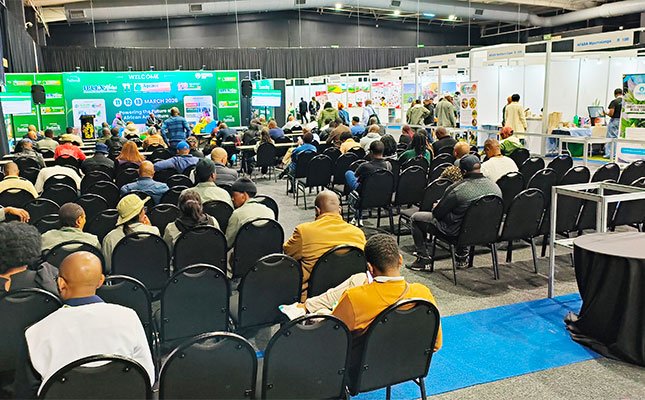
On its second day, the 11th Agritec Africa International Exhibition & Conference, held from 11 to 13 March at Johannesburg’s Gallagher Convention Centre, focused on supply chain optimisation, smart farming technologies, and the future of South Africa’s livestock industry.
– ADVERTISEMENT –
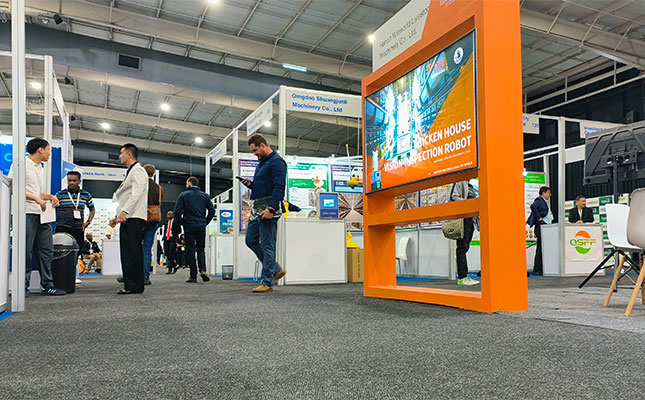
Exhibition stands from companies representing several countries, notably China and India, showcased new technologies used in industries such as poultry production, irrigation, and agro-processing, reinforcing many of the themes discussed during the day’s panel sessions.
Rethinking agricultural supply chains
The first session explored ways to improve supply chains by balancing import reliance with local production, strengthening dealer networks, and improving logistics to ensure the smooth movement of agricultural inputs and produce.
Speaking on the panel, Megan Wilson, founder and director of Truth Black Agrihouse, said that while smallholder producers often have limited access to markets, many subsistence farmers remain excluded from supply chains due to a lack of knowledge and support.
“The supply chain concept is still largely the domain of the commercial farmer,” she added.
Wilson proposed the establishment of local agricultural hubs in rural areas, where farmers could access support services related to production, logistics, and market access.
“I think the conversation we should be having must centre on support for smallholder and subsistence farmers.”
The panel also highlighted inefficiencies in the current system, where produce is often transported from rural production areas to large urban markets or processing plants, only to be shipped back to the regions where it was originally produced.
According to Karmini Pillay-Rangan, director of Pulse Afrika, strategically located satellite processing plants closer to production areas could help address this inefficiency.
Panellists agreed that limited access to supply chains remains a major obstacle for smaller producers, contributing to the widely cited estimate that around 40% of agricultural produce never reaches consumers.
Technology adoption still slow
The second session focused on precision agriculture, automation, and artificial intelligence, and how these technologies can drive productivity across commercial and emerging farming enterprises.
Dimpho Xaba, farmer and chairperson of Youth in Agricultural and Rural Development (YARD), said the adoption of agricultural technologies remains slow, even though modern tools are increasingly essential for productivity.
To encourage greater interest in agriculture among young people, YARD has introduced training programmes that teach the youth to operate drones used in agricultural monitoring.
“Everyone wants to fly drones,” Xaba said, explaining that the technology helps demonstrate that agriculture can be an innovative and exciting sector.
He also highlighted the importance of soil moisture sensors, which help farmers determine when irrigation is required, reducing water wastage and improving crop management.
However, he noted that South Africa still lags behind countries such as China in adopting agricultural technologies, adding that farmers must identify technologies suited to their specific operations to improve productivity.
Technology and water management
Prof Sylvester Mpandeli, senior research manager for water use at the Water Research Commission (WRC), spoke about how technological innovation can support more efficient water use in agriculture.
Among the innovations developed through WRC projects are hydroponic production systems, which can significantly reduce water consumption compared with traditional methods. Mpandeli added that technologies that improve water efficiency will be critical for long-term food security.
Water governance also remains a key challenge. Dr Patrick Hlabela, specialist scientist and head of the climate change unit at the Department of Water and Sanitation (DWS), addressed concerns about the slow pace of water licence approvals.
He explained that allocating water resources requires balancing limited supplies with competing demands across multiple sectors, making the licensing process complex. However, he added that the DWS is working on strategies to accelerate application processing and reduce backlogs.
Bridging the gap between research and farmers
Panellists agreed that one of the major barriers to technology adoption is affordability, particularly for small-scale farmers.
Many producers still rely on outdated irrigation systems, such as poorly calibrated sprinklers, which leads to inefficient water use.
Xaba also highlighted the gap between agricultural research and practical farming applications, noting that government processes and regulations can sometimes delay the rollout of urgently needed innovations.
Hlabela stressed that agricultural technologies must be designed with the end user in mind. “Researchers must first understand the problems farmers face before developing technologies,” he said, adding that these must also be affordable and accessible.
He added that farmers may find it easier to access funding when they organise themselves into cooperatives or associations rather than applying individually.
Biosecurity and traceability in livestock
The final session of the day focused on livestock production, with particular attention paid to biosecurity, traceability, and disease control.
Reginald Themeli, founding director of Thuso Enviro and Agric Development, highlighted the importance of livestock traceability systems that use identification methods such as ear tags to store animal health and movement data.
These systems allow veterinarians, auctions, and extension officers to track livestock health and vaccination records, which is essential for managing diseases such as foot-and-mouth disease.
“Effective traceability and biosecurity systems are essential for protecting the livestock industry,” Themeli said.
Andrew Aphane, chairperson of the North West branch of the African Farmers’ Association of South Africa, noted that Africa has enormous agricultural potential.
“Africa represents around 60% of the world’s arable land. If the continent can transform agriculture through technology, it could significantly influence global food production,” he said.
Poultry production challenges
Fortunate Shivambu, CEO of Pholopheto Enterprise, spoke about the challenges that small-scale poultry producers face.
She said that one of the most critical requirements for operating small hatcheries is maintaining stable temperature control, but many farmers struggle to implement the necessary technologies due to limited space and resources.
Incorrect vaccination practices also contribute to high poultry mortality rates, Shivambu said, noting that new vaccination technologies could simplify administration and help reduce disease outbreaks.
She said that proper record-keeping and biosecurity remain essential for maintaining healthy flocks.
Strengthening farmer support systems
Panellists also raised concerns about the declining capacity of agricultural extension services, with Aphane noting that many farmers receive little technical support.
“In some cases, farmers do not even know who their extension officers are,” he said, pointing out that many agriculture graduates remain unemployed and could potentially be integrated into the extension system.
He also highlighted several structural challenges that farmers face, including difficulties in accessing water licences, limited rural infrastructure, and declining research capacity at the Agricultural Research Council.
Themeli argued that the problem is not necessarily a lack of agricultural policies but rather poor implementation: “There is no need to design new policies if we cannot implement the ones we already have.”
In closing, Aphane encouraged farmers to join organised agricultural bodies so they can speak with a stronger collective voice when engaging with government and policymakers.


