

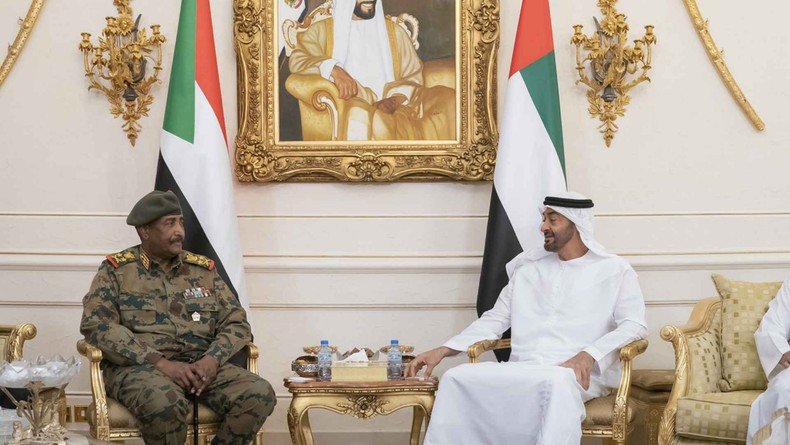
The proposed deal comes as Sudan remains locked in a civil war between the Sudanese Armed Forces (SAF) and the paramilitary Rapid Support Forces (RSF), a conflict that erupted in April 2023 and has since triggered one of the world’s gravest humanitarian emergencies.


Military push amid humanitarian strain
The planned acquisition comes weeks before the United States led an international effort to mobilise aid for Sudan, with donor pledges expected to total about $1.5 billion, including a $500 million commitment from the United Arab Emirates (UAE).
According to Military Africa, the arms deal includes 10 Karakoram-8 (K-8) light attack aircraft, more than 200 unmanned aerial vehicles, and upgraded air defence systems, reflecting Khartoum’s efforts to regain air superiority after months of contested control of the skies.
The K-8 aircraft, jointly developed by Pakistan and China, serves as both an advanced trainer and a light combat platform. Its lower operating costs compared with high-end fighter jets make it suitable for sustained close air support operations.
Beyond light attack aircraft and unmanned systems, the deal could also include more advanced assets. Sources said this may involve Super Mushshak primary trainer aircraft and the JF-17 Thunder multirole fighter.
Drones reshape the battlefield
The drone package is expected to be one of the most consequential elements of the agreement.
With more than 200 units under consideration, the SAF appears intent on countering the RSF’s effective deployment of small, agile drones that have challenged the army’s conventional advantages.
Regional tensions and funding questions
However, it remains unclear how Sudan will fund the acquisition after nearly two years of war battered the economy, triggering mass displacement, food shortages, currency weakness and declining state revenues.
Saudi Arabia’s close defense relationship with Pakistan may have helped facilitate the deal, following recent agreements with Sudan that include a $10 million water infrastructure grant and plans to refine Sudanese gold.
Meanwhile, war-torn Sudan has accused the United Arab Emirates of supplying the Rapid Support Forces (RSF), a claim that Abu Dhabi denies.
United Nations experts and some U.S. lawmakers have previously described the allegations as credible.
The UAE maintains that its involvement is strictly humanitarian, citing more than $4.24 billion in assistance to Sudan over the past decade, including nearly $800 million since the conflict began.
The procurement also highlights Pakistan’s expanding role as a defence exporter across Africa and the Middle East, as governments facing rising security threats increasingly seek cost-effective military partnerships.


