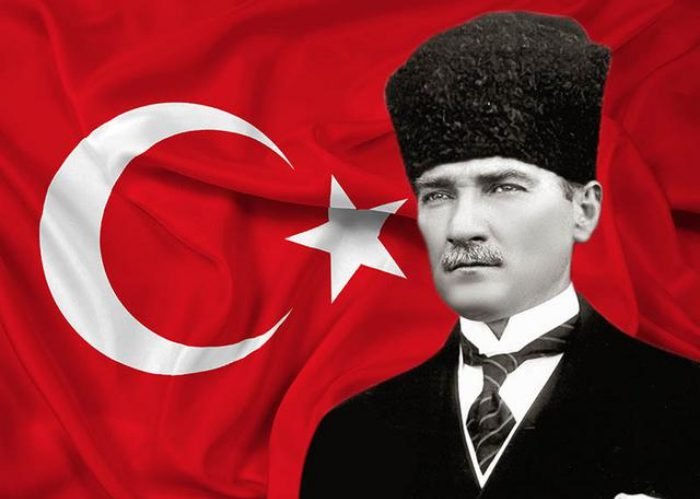
In a rapidly changing global system marked by multipolarity and intensifying competition among major powers, Türkiye has skilfully positioned itself as a dynamic middle power by employing a realpolitik approach. This positioning stands out in contrast to regional escalations through the ‘Türkiye Century Foreign Policy’ approach. Realpolitik is a pragmatic and interest-driven approach to international relations that prioritises national interests over ideological constraints. [1]At the core of this approach is the vision of ‘Peace at Home, Peace in the World’ put forward by Mustafa Kemal Atatürk, the founding leader of the Republic of Türkiye, which serves as an important driving force. [2]
Over the past two decades, Türkiye has transformed its foreign policy, expanding its influence in Africa through calculated diplomacy, economic engagement, and strategic alliances. In terms of the factors influencing Turkish foreign policy and the dynamics behind the paradigm shift, structural changes in the global economic system at the international level are decisive in shaping Turkey’s relations with the rest of the world.[3] The modest trade volume of 5.4 billion dollars in 2003 has risen to over 25 billion dollars by 2023.
Türkiye’s footprint in Africa includes infrastructure projects, defence exports such as Bayraktar TB2 unmanned aerial vehicles, and diplomatic initiatives such as mediation in the conflicts in Somalia and Ethiopia. This rise presents an intriguing case study for African countries grappling with their own challenges, from dependence on foreign aid and investment to internal instability and regional competition. Unlike traditional powers with a colonial legacy, Türkiye’s non-colonial history and flexible, multifaceted foreign policy align with Africa’s aspirations for sovereignty and self-determination. This analysis examines Türkiye’s realistic policy strategies (strategic diplomacy, economic pragmatism, and opportunistic partnerships) and explains how African states can adapt these lessons to strengthen their geopolitical influence, increase their economic resilience, and consolidate their regional leadership. However, overcoming structural constraints such as weak institutions and fragmented regional coordination, and capitalising on opportunities such as South-South cooperation, are necessary to implement Türkiye’s model. This article examines these dynamics by offering actionable insights for African policymakers seeking to succeed in a complex, multipolar world.
Türkiye’s foreign policy is an example of realistic politics, skilfully navigating global power dynamics while advancing its regional goals, and providing a model for African states caught up in the vortex of competition between major powers.[4] While maintaining strategic ties with the United States, Russia, China, and the European Union without fully aligning with any of them, Türkiye gains economic, military, and diplomatic advantages such as NATO membership, energy agreements with Russia, and Chinese investments, while also expanding its influence in Africa. The number of African embassies in Türkiye has increased from 12 in 2002 to 44 in 2023, demonstrating Türkiye’s calculated approach to building soft power through cultural institutes, humanitarian aid, and conflict mediation, particularly in Somalia and Ethiopia.[5] For African countries forced to choose sides in global competitions, Türkiye’s multifaceted diplomacy offers a model for maximising external partnerships while preserving sovereignty.
As a result of Türkiye’s unsuccessful attempts to join the European Union (EU) after 2000, Türkiye turned its attention to Africa, particularly the Rising South. It has made significant progress in its efforts to re-strengthen historical and economic-political ties in the face of major powers. The underlying rationale behind this initiative has been transformed into a motivational framework by Türkiye’s current government through the ‘Heartland Geography’ narrative. This narrative has emerged as a functional element for public diplomacy within a rational framework, and Türkiye-Africa relations have shown a trend toward advancement and deepening. Türkiye is collaborating with a wide range of actors, including state institutions, private sector companies, and faith-based groups, to expand its influence. In addition to 44 embassies, Turkey-based foundations, companies, and associations are active in Africa in cultural, educational, trade, defence, energy, and many other areas.
Türkiye’s regional and organisational competence, together with its historical diplomatic experience, has been reflected in its mediation efforts between Ethiopia and Somalia in the context of security and defence cooperation activities in Africa. However, Türkiye’s NATO experience and mobility can lead to the creation of a security architecture based on joint defence and defence industry cooperation with African actors, particularly in the context of combating coups, maintaining law and order in the face of internal unrest, and fighting terrorism. As a hypothesis, African states with coastlines could emerge as providers of resources and strategies for joint maritime defence and scientific research activities. On the other hand, African actors’ contributions to public and foreign policy development at various levels, based on their perspectives of freedom and democracy in the continental context, could be effective in the internal structures of African states. The South-South relationship between Turkey and Africa can be considered of vital importance in terms of strengthening identity and system dynamics in the South.
Based on this foundation, African countries and Turkey can explore joint ventures in emerging areas such as digital governance, renewable energy and health security.[6] By jointly developing e-government platforms tailored to local administrative capacities, Turkey can export its expertise in the field of digital public services, while its African partners can provide contextual information and user feedback to ensure that technology transfers are both effective and sustainable. Similarly, collaborating on solar and wind energy projects with Turkish engineering firms, leveraging Africa’s regulatory frameworks, can accelerate the transition to clean energy .[7]
In the defence sector, beyond traditional support and cooperation missions, Turkey’s growing defence industry exports offer opportunities for localised assembly and maintenance facilities in Africa. In this context, alongside Turkey’s defence industry exports, local defence industry facilities can be established in Africa through cooperation between state and private companies. Such arrangements not only increase operational readiness but also promote workforce development by training local technicians in logistics, weapons production, and quality assurance. In practice, this can be seen as an updated version of the policy put forward by the Soviet Union to achieve mutual benefit in Africa. This defence-industry cooperation model can be tailored to the security needs of each country; for example, it reflects a rational alignment between Turkey’s production capacities and Africa’s demand profiles, such as coastal patrol vessels for coastal states or rapid response boats for lake regions.
Furthermore, Turkey’s multifaceted approach to migration and diaspora engagement demonstrates how soft power tools can be finely tuned to the capacities of partners. Through scholarship programmes, vocational training centres, and language exchange initiatives, Turkish institutions can support the mobility of African youth while also developing long-term human relations. At the same time, joint initiatives on migration management, such as capacity building for border agencies and integration support for returnees, enable African governments to design systems that respect human rights norms and local resource constraints.
Finally, in the areas of climate resilience and food security, Turkey’s agricultural extension methodologies developed in semi-arid Anatolian regions can be adapted to the Sahel or Horn of Africa contexts.[8] By combining the expertise of Turkish agricultural experts in drought-resistant crops with the local knowledge of African research stations, partners can create pilot programmes for water collection, soil conservation and post-harvest storage. This scientific diplomacy approach demonstrates how rational diplomacy transforms Turkey’s strengths into concrete capacity enhancements for African states and ensures that each project aligns with national development plans and absorption capacities. [9]
Economic Pragmatism: Leveraging Trade and Investment for Sovereignty
Türkiye’s economic pragmatism, particularly its rapid expansion of trade with Africa, underscores the importance of diversifying economic partnerships to reduce dependency on traditional powers. By prioritizing sectors like construction, textiles, and technology, Türkiye has positioned itself as a reliable supplier of goods and services tailored to African markets. African states can emulate this by identifying niche sectors where they hold comparative advantages—such as agribusiness, critical minerals, or renewable energy—and building trade networks with emerging economies like Türkiye, India, or Brazil.
To replicate Türkiye’s success, African policymakers should focus on creating enabling environments for private sector collaboration. This includes streamlining regulatory frameworks, reducing trade barriers, and investing in logistics infrastructure like ports and railways to facilitate intra-African trade. For example, Türkiye’s investments in African infrastructure, such as hospitals and airports, demonstrate how public-private partnerships can drive economic growth while addressing local needs. African states could adopt similar models, leveraging regional economic communities like ECOWAS or SADC to pool resources and negotiate favorable trade agreements with external partners.
In order to fully benefit from Turkey’s realpolitik model, African countries must address structural issues such as weak regional coordination and governance deficiencies. The African Continental Free Trade Area (AfCFTA) reflects Turkey’s diversified trade strategy and provides a platform for developing intra-African trade and reducing dependence on external markets. By harmonising standards and investing in cross-border infrastructure, African countries can form a united economic bloc capable of negotiating on equal terms with global powers.
Additionally, African leaders should prioritise South-South cooperation frameworks, as exemplified in Turkey-Africa summits, to share best practices and align development goals. These summits can evolve into permanent forums for policy coordination, enabling African states to collectively address issues such as climate change, migration, and cyber security. By emulating Turkey’s ability to balance partnerships with rival global powers, African states can maximise economic and diplomatic opportunities while preserving their sovereignty.
[1] Synopsis of the Turkish foreign policy. (n.d.). Retrieved from Republic of Türkiye Ministry of Foreign Affairs: https://www.mfa.gov.tr/synopsis-of-the-turkish-foreign-policy.en.mfa
[2] Gönlübol, M. (1992). Peace at the Homeland Peace at the World. Journal of Atatürk Research Center, 15-16.
[3] Esenbel, S. (2013, October 4). Turkey’s Changing Foreign Policy Stance: Getting Closer to Asia? Retrieved from Middle East Institute: https://www.mei.edu/publications/turkeys-changing-foreign-policy-stance-getting-closer-asia
[4] Yeşiltaş, M. (2025, Jun 20). Daily Sabah. Retrieved from Türkiye’s foreign and security policies in 2025: https://www.dailysabah.com/opinion/columns/turkiyes-foreign-and-security-policies-in-2025
[5] Fabricius, P. (2024, November 01). Deciphering Türkiye’s Africa policy. ISS Africa: https://issafrica.org/iss-today/deciphering-tuerkiye-s-africa-policy adresinden alındı
[6] Kurnaz, S. Ç. (2024). Türkiye’nin E-Devlet Olgunluk Düzeyi: BM E-Devlet Gelişmişlik Endeksi Üzerinden Bir Değerlendirme. Yönetim Bilimleri Dergisi, 1443.
[7] Uslu, S. (2015). Turkey’s Energy Diversification Strategy in Sub-Saharan Africa. Insight Turkey, 101-115. Insight Turkey. adresinden alındı
[8] Köse, M. A. (2012). Agricultural Policies Reforms and Their Implications on Rural Development: Turkey and EU. Ankara Avrupa Çalışmaları Dergisi, 75-98.
[9] Aziz ALİ SARA, A., & Dellal, İ. (2018). Türkiye’nin Afrika Ülkeleri ile Tarım Ürünleri Ticareti. TEAD, 46-57.