In the early hours of 21 June 2025, the United States executed a high-stakes precision strike against three Iranian nuclear facilities in a mission dubbed Operation Midnight Hammer. This was not just another air operation—it was a historic moment in strategic aviation.
Seven B-2 Spirit stealth bombers were deployed from the US mainland in what is now confirmed to be the largest operational use of the aircraft in its history. Speaking the next morning at the Pentagon, US Secretary of Defence Pete Hegseth remarked, “This mission demonstrates the unmatched reach, coordination, and capability of the United States military… No other military in the world could have done this.”

Rarely seen in combat, the B-2 bomber has long been regarded as a strategic asset for deterrence and rapid global strike. With very few ever built and each valued upwards of $2 billion, the aircraft is employed only under the most sensitive operational conditions. That the B-2 was chosen for this strike reflects the severity of the targets involved, according to the US.
The aircraft departed from Whiteman Air Force Base in Missouri and flew a round trip of over 22 000 kilometres with multiple aerial refuellings. According to Joint Chiefs Chairman General Caine, the mission was “planned and executed across multiple domains and theatres with coordination that reflects our ability to project power globally with speed and precision at the time and place of our nation’s choosing.”
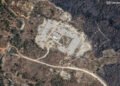
The bombers dropped 14 GBU-57 Massive Ordnance Penetrators—30 000-pound bunker-busting bombs—on fortified nuclear infrastructure targets in Fordow, Natanz, and Isfahan. This marked the first-ever operational use of the GBU-57. Simultaneously, a US Navy submarine launched over two dozen Tomahawk cruise missiles to suppress Iranian surface systems. “Iran’s fighters did not fly,” said General Caine. “It appears that Iran’s surface-to-air missile systems did not see us throughout the mission. We retained the element of surprise.”
The B-2’s airframe—a flying wing design pioneered by Jack Northrop—features an ultra-low radar cross-section, radar-absorbent materials, flush seams, and hidden engines, allowing it to slip through even the densest air defences. Its infrared and acoustic signatures are minimized by internal engine placement and cooling exhaust structures. In total, more than 125 US aircraft supported the strike package, including refuelling tankers, ISR platforms, escort fighters, cyber and space assets, and logistical airlift.
While the airstrike was focused on Iranian nuclear capabilities, the implications of such a deployment extend beyond the Middle East. For African defence professionals and maritime security stakeholders, the strategic reach of this operation highlights a set of global ripple effects. The Strait of Hormuz and the Bab el-Mandeb Strait—critical arteries for African and global maritime trade—are geographically and economically tied to any military escalation in the Gulf region. Disruptions in these waterways, whether through retaliation, proxy escalation, or naval blockades, could have a direct effect on African ports, shipping lanes, and naval patrol missions, particularly along the Red Sea.
US officials emphasised that the strike was narrowly focused. “This mission was not about regime change,” Secretary Hegseth stated. “It was a focused, powerful, and clear mission on the destruction of Iranian nuclear capabilities.” Nonetheless, US forces in Iraq, Syria, and the Gulf were placed on heightened alert, and Chairman Caine confirmed that “General Kurilla elevated force protection measures across the region.”
The operation also showcased the depth of military partnerships and global integration. US assets across five combatant commands—including EUCOM, STRATCOM, CYBERCOM, and CENTCOM—worked in a synchronised strike package that included space-based surveillance, cyber suppression, fifth-generation fighters, and strategic bombers. Such operations raise practical questions for African states working to enhance their own joint and regional military cooperation. The level of integration seen in this mission illustrates the interoperability of platforms, shared protocols, and integrated air defence command structures.
Even more notably, the mission was conducted without forward basing in theatre. As Hegseth pointed out at Sunday’s Pentagon press briefing, “Planes flew from the middle of America… completely undetected over three of [Iran’s] most highly sensitive sites, and we were able to destroy nuclear capabilities.” The ability to project force across continents without relying on regional airbases is a critical lesson for African defence planning, especially as regional militaries build out long-range ISR and precision capabilities.
The B-2’s role in the strike may also represent a turning point in its operational legacy. With the introduction of the B-21 Raider—a more cost-efficient and modular sixth-generation stealth bomber—the B-2 may be approaching the final chapters of its combat life. That makes this deployment not only operationally significant but historically symbolic. It was the culmination of a strategic platform designed to achieve deep penetration in contested airspace, and a reminder that even older-generation assets, when maintained and modernised, can still deliver decisive impact.
The broader geopolitical consequences of the strike will continue to unfold, but the airpower lesson is already clear. The B-2’s mission demonstrated how the fusion of stealth, precision, and coordination can achieve overwhelming effects with minimal footprint and no battlefield presence. For African defence institutions focused on capacity-building, air defence resilience, and maritime protection, the technical execution of Operation Midnight Hammer may offer insights into what modern conflict—and modern deterrence—can look like.
Pearl Matibe is a Washington, DC-based geopolitical analyst and correspondent with expertise in foreign policy and international security, regularly covering the Pentagon and White House. Follow her on X (Twitter): @PearlMatibe.