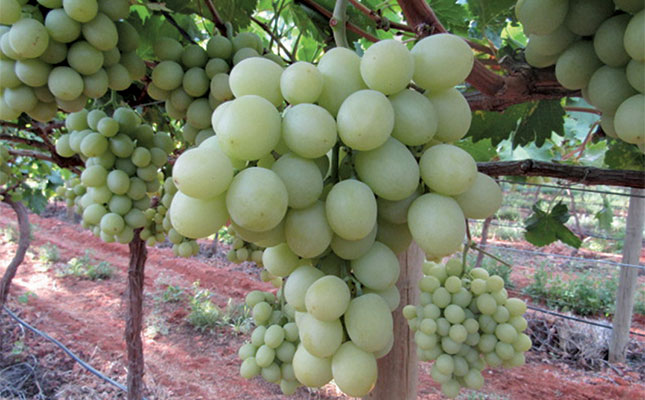
The export protocol allowing South African table grapes to be shipped to the Republic of Korea (South Korea) was finalised late last month, paving the way for exports to begin in the 2026/27 season.


– ADVERTISEMENT –
More than two decades of negotiations over phytosanitary and food safety conditions finally paid off for South Africa when South Korea notified local authorities on 23 January that it had opened its market to fresh South African table grapes.
“The industry looks forward to shipping the first consignment during the 2026/27 season, once the remaining administrative and oversight processes have been finalised,” the South African Table Grape Industry (SATI) said in a statement.
“This achievement marks a significant milestone for the industry and is the culmination of more than 20 years of constructive engagement and close collaboration between government and industry stakeholders,” it continued.
“We have been working consistently to expand market access opportunities for South African table grapes, and we are delighted with this positive development,” Mecia Petersen, CEO of SATI, said in the statement.
“The South Korean market presents new opportunities for growers and exporters. With access now secured, we look forward to building a presence for South African table grapes in [South Korea],” she added.
In a separate statement, the Department of Agriculture (DoA) said market access followed a physical field verification visit by South Korean representatives in February 2025.
“This field verification visit led to the conclusion of the [South Korea’s] phytosanitary import requirements,” it explained.
The next step in the process will be for growers, exporters, and packhouses to register with the DoA to obtain the necessary production unit and packhouse codes.
“Growers of registered production units must implement good agricultural practices, which must include orchard sanitation, use of integrated pest management, or adequate control measures to ensure that [South Korea’s] identified quarantine pests of fresh table grapes are eliminated during the production period,” the DoA said.
The sanitary and phytosanitary (SPS) protocols have been published on the DoA’s website.
A long process
Speaking to Farmer’s Weekly, Wolfe Braude, manager of the Agbiz Fruit Desk, said it is not unusual for SPS protocols to take a decade or longer to be concluded.
“These protocols take years to finalise because information has to be exchanged between both countries, and scientists from both countries have to be satisfied. The process can take over a decade to get right and be approved.
“It’s not because of a lack of willingness on either government’s part; it’s a very intensive process that can be easily derailed. If the paperwork is incorrect, information is missing, or additional details are requested, each additional requirement can easily add months onto the process,” he explained.
Braude added that South Korea’s appeal as a trading partner extends beyond table grapes.
“[Agbiz] did a cross-sectoral analysis on potential markets, and South Korea consistently popped up as a good trade match for South Africa in terms of what we produce, what they produce, the risks they pose, and the risks we pose to them.
“South Africa wants a partner it can export primary and value-added goods to and one that will not harm its manufacturing sector,” he said.
Key appointments
According to Braude, there is significant cause for optimism regarding South Africa’s access to agricultural export markets, after National Treasury agreed late last year to allocate two additional plant health positions within the DoA.
“This is something the industry has been pushing for a while, because processing that type of paperwork is labour-intensive, and the unit needed extra staff.
“Our reasoning is that if we are to become a more trade-oriented nation, we need to strengthen and resource the state’s trade machinery. For agriculture, that means supporting the plant and animal health colleagues in the DoA, as well as agri attachés in all key markets,” he said.
Braude added that key units within the Department of Trade, Industry and Competition also remain severely understaffed, namely its trade negotiation, promotion, and facilitation units, as well as commercial attachés in the embassies of key markets.
“The return on investment for capacitating and filling these posts is incredible. For the millions of rands spent on additional employees, the return in terms of market access runs into the billions and supports government’s stated goal of significantly expanding trade relations,” he concluded.
Get trusted farming news from Farmers Weekly in Google Top Stories.
➕ Add Farmers Weekly to Google
✔ Takes 10 seconds · ✔ Remove anytime