

South African agriculture generated R341 million in daily foreign exchange in 2025, surpassing the combined daily earnings of gold and platinum mining. But AgriSA’s latest trade report shows that this success is fragile and increasingly dependent on external factors and policy support.
– ADVERTISEMENT –
The AgriSA Agriculture Annual Trade Report 2025, released last week, includes an analysis of South Africa’s agricultural trade between 2021 and 2025. It shows that while performance has been robust, it remains exposed to biosecurity risks, infrastructure bottlenecks, and distortions to the global trade system. Without urgent reforms, this growth may not be sustained.
Johann Kotzé, CEO of AgriSA, stated in the report that the agriculture community must consolidate its gains while confronting the constraints that limit its full potential.
“The question is no longer whether strategic investment is warranted, but whether it will be mobilised in time to secure long-term competitiveness,” he said.
Record exports and trade surplus
South Africa’s agriculture sector delivered a record performance in 2025, significantly strengthening the nation’s trade balance:
- Total agricultural exports reached R266,2 billion, up 8,8% from 2024.
- Imports grew to R141,6 billion, up by a marginal 1,6% year-on-year (y/y).
- The sector achieved a trade surplus of R124,6 billion, a 16,4% y/y increase and the highest agricultural trade balance on record.
Horticulture alone generated a net surplus of R128,1 billion, exceeding the total agricultural trade surplus. The total was partially reduced by an agronomy deficit of R9 billion, driven primarily by palm oil and wheat imports.
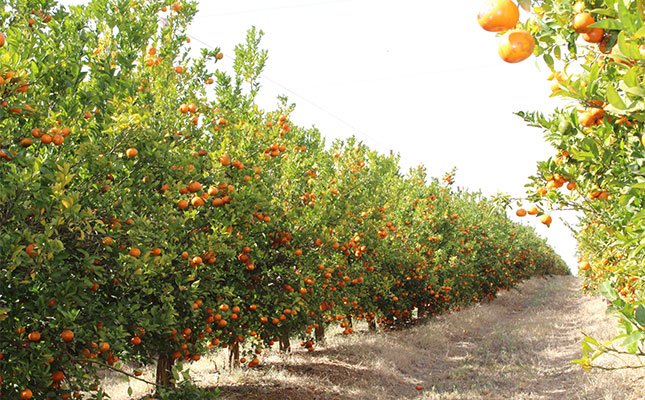
Citrus exports contributed an estimated R11,8 billion to agriculture’s surplus, accounting for approximately 67% of the total expansion, making it the most significant single commodity contribution to agriculture trade balance growth during the period under review.
However, the report stated that reliance on citrus as the primary source of surplus generation creates single-commodity risk on a national scale. With between 35% and 40% of citrus exports destined for the EU, any escalation in sanitary and phytosanitary (SPS) restrictions or competitive pressure could place R10 billion to R20 billion in annual export revenue at risk.
Livestock achieved a R5,6 billion surplus off the back of increased fish and lamb exports. Lamb exports expanded sharply, rising by 677% since 2021 to R1,16 billion, reflecting the combined effects of improved market access, favourable exchange rates, and strengthened product reputation.
Heavy reliance on export markets
Amid much market volatility over the last year, the report noted that market diversification has helped the agriculture sector. Losses in the US due to tariffs were offset by growth in Africa, the EU, and BRICS+, indicating that South Africa is quietly pivoting away from traditional markets, especially the US.
South Africa’s agricultural exports in 2025 were concentrated in 20 priority markets across Africa, Europe, Asia, and the US, reflecting regional depth and growing global reach.
Russia recorded the strongest growth among major destinations, as rising demand from non-EU markets created new access opportunities for South African products. Meanwhile, Saudi Arabia continued to expand, driven primarily by sustained demand for halal lamb.
Markets under pressure included China, amid domestic economic slowdown and ongoing SPS frictions.
Regional trade within Africa continued to strengthen, with exports to the continent rising to R94,4 billion, or around 34% of South Africa’s total agricultural exports. This underscores the growing importance of African markets for staple and field crops.
The report notes that while expanding African trade corridors and new export platforms provide meaningful diversification, they are not yet large enough to offset major disruptions in key markets.
Key chokepoints
Although South Africa has made strides in diversifying markets, the report shows that increasing unpredictability in market access has placed the agriculture sector in a precarious position.
“As access conditions in traditional export markets like the EU and US become more volatile and compliance costs rise, exporters face greater difficulty in planning long-term investments, managing risk, and sustaining established market positions. This is […] increasing the importance of continuous trade diplomacy and regulatory engagement.”
The EU’s strengthening environmental, pesticide, traceability, and sustainability requirements for agricultural imports are of particular concern. While these standards support consumer and environmental objectives, they raise compliance costs and increase the risk of market exclusion for smaller exporters and those with fewer resources.
The citrus industry is particularly vulnerable, with between R23 billion and R29 billion in exports to the EU and UK at stake. Maximum residue level reductions, false codling moth interception thresholds, and the citrus blackspot dispute could restrict access to the world’s highest-value fresh fruit market.
Phytosanitary risks aside, the report points to another challenge that could inhibit export growth: politically influenced trade. Global trade is becoming more fragmented along political and strategic lines, which makes balancing relationships while protecting traditional markets more complex.
“Agricultural exporters face greater exposure to political disruptions, pressure to align with specific blocs, and risks of being affected by disputes unrelated to commercial performance.
“At the same time, fragmentation creates opportunities for South Africa to position itself as a reliable supplier,” the report states.
Outlook shows modest growth
According to AgriSA’s projections, by 2028, the agricultural trade surplus could range from approximately R85 billion under adverse conditions to R180 billion under a favourable scenario. This variation is driven by five key variables largely beyond farmers’ direct control.
In an optimistic scenario, export earnings could reach R165–180 billion. This would require a combination of favourable developments, including containment of foot-and-mouth disease (FMD), improved access to EU markets, rollback of US tariffs, stronger intra-African trade, improved port performance, and favourable La Niña weather conditions.
The report notes, however, that the likelihood of all these factors aligning is low.
The base-case scenario, considered the most likely, projects export earnings of R135–150 billion. This assumes partial containment of FMD, manageable EU market tensions, steady growth in African markets, and incremental improvements in logistics, despite pressure from a moderate El Niño.
In a downside scenario, export earnings could fall to R85–105 billion. This would result from escalating EU restrictions, continued disease outbreaks, loss of US trade benefits, deteriorating logistics, and severe drought conditions.
The report notes that some of these risks have already materialised, increasing the likelihood of this outcome.
Upside scenarios require both sustained commercial investment and effective government execution.
Therefore, AgriSA argues for a defensive strategy to protect the R124,6 billion surplus through phytosanitary compliance, FMD containment, and port investment before pursuing the R20 billion to R50 billion in potential upside from African trade and new markets.
“The R44,9 billion citrus franchise, the R94,4 billion African trade corridor, and the R1,16 billion lamb platform are not guaranteed to persist and should be defended,” it adds.


