

The increase of R1.44, about 0.08 dollars, was calculated using the Consumer Price Index plus an additional 1.5 percent, in line with recommendations from the National Minimum Wage Commission.
Meth said the adjustment would benefit vulnerable workers, including farm and domestic employees. Under the National Minimum Wage Act, employers are legally required to pay at least the stipulated hourly rate, with violations subject to penalties enforced by the Department of Employment and Labour and the Commission for Conciliation, Mediation, and Arbitration.
Yet the policy shift has drawn criticism from both labour and business groups, highlighting the complex trade-offs facing Africa’s most industrialised economy.
The General Industries Workers Union of SA argued that the new wage still falls far below a living income. The union estimates that workers face a monthly shortfall of about R2,000 (roughly $108) to meet basic needs and is pushing for a minimum monthly wage of R15,000 (about $811).
On the other side of the debate, employers warn that higher mandated pay could suppress hiring, particularly for young and low-skilled workers.
Renowned economist Thomas Sowell has long argued that minimum wages can act as a barrier to employment rather than a guarantee of higher incomes.
“The real minimum wage is always zero,” Sowell said, warning that some workers may lose jobs when wage floors rise.
South Africa’s business community has echoed similar concerns. Gerhard Papenfus, chief executive of the National Employers’ Association of SA, described the policy as a “barrier to work”, arguing that many small business owners cannot afford the mandated rate.
He urged policymakers to prioritise growth-oriented reforms, saying the country is “in dire need of economic stimulation” through measures that encourage job creation.
Agricultural stakeholders are also uneasy. AgriSA, which represents a major share of the country’s farming employers, warned that above-inflation wage increases could place severe strain on farm viability, particularly as the sector grapples with a foot and mouth disease outbreak.
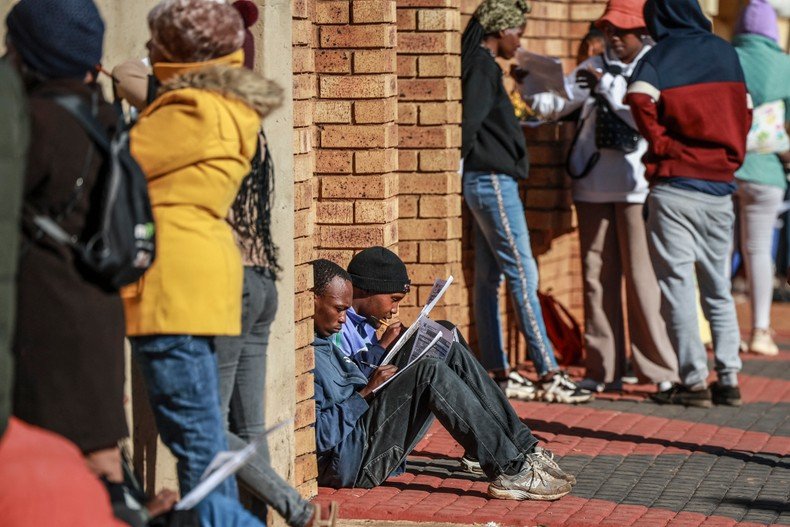
For policymakers, the dilemma is clear. Raising wages may cushion vulnerable workers against rising living costs, but if businesses respond by slowing hiring, the policy could deepen exclusion from the formal economy.
As the new wage takes effect in March, the real test will be whether South Africa can balance worker protection with the urgent need to expand employment in an economy already under strain.


