The report, released by the Localisation Support Fund in partnership with the Industrial Development Corporation and the Department of Trade, Industry and Competition under the Presidency of South Africa, outlines how industrial hemp could support manufacturing expansion, export growth, and climate-friendly industries across the country.
The study estimates that South Africa’s hemp sector could reach R40 billion, about $2.5 billion, by 2040, based on current exchange rates of roughly R16 to $1.
Industry advocates say the crop’s versatility makes it a strong candidate for large-scale industrial development.
“Industrial hemp represents one of the most compelling and versatile economic opportunities available to South Africa right now,” said Irshaad Kathrada, chief executive of the Localisation Support Fund.
“Every part of the plant is marketable, from grain for high-nutrition foods to stalks for carbon-negative construction materials.”
However, Kathrada stressed that the sector will only reach its potential through coordinated industrial policy and investment.
“Hemp is not a niche agricultural curiosity. It is a strategic platform for reindustrialisation, rural inclusion and South Africa’s green economic transition,” he said.

Positioning South Africa in a growing global market
The study comes as global demand for hemp products continues to rise rapidly. The global market is projected to grow from $10 billion in 2025 to $37 billion by 2032, creating significant opportunities for emerging producers.
South Africa’s geography may provide a competitive advantage. Its diverse climate zones allow hemp to be grown across multiple regions, while counter-seasonal production cycles enable year-round supply.
The country also has established industrial clusters in sectors such as automotive manufacturing, textiles, pulp and paper, and food processing, all of which could integrate hemp-based materials into their supply chains.
Garth Strachan, a technical consultant working with the Presidency and the Industrial Development Corporation, described the report as an evidence-based roadmap for the sector.
“This high-quality study provides a clear pathway for coordinated action across government, industry, and investment institutions. Most importantly, it creates the conditions for commercially viable investment and employment creation,” Strachan said.
Early growth, but major hurdles remain
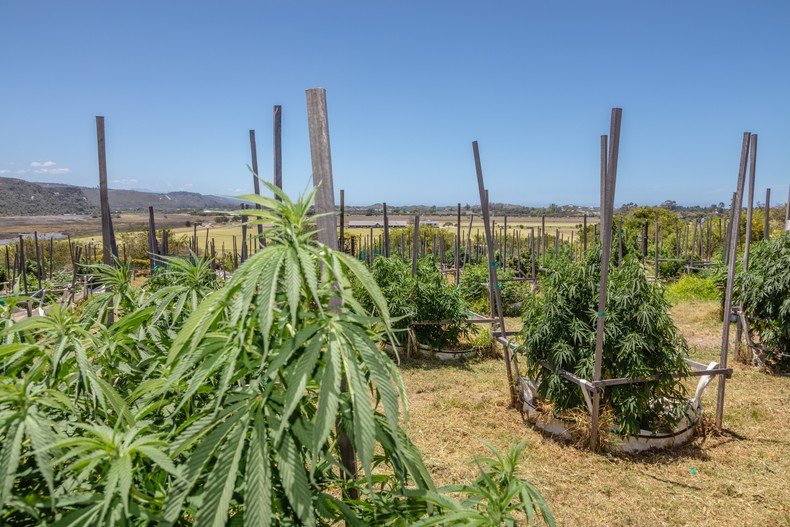
South Africa has already begun laying the groundwork for a hemp industry. Since 2022, authorities have issued 1,725 cultivation permits covering about 29,000 hectares, mainly across Gauteng, KwaZulu-Natal, and the Eastern Cape.
Yet the report highlights significant obstacles that could slow the industry’s development.
One of the biggest gaps is the absence of large scale processing infrastructure. Hemp must be processed into fibre, grain products, or industrial materials before it can enter manufacturing supply chains. Without processing facilities, farmers have limited access to commercial markets.
The report also points to regulatory fragmentation, which has created uncertainty for investors and businesses seeking to scale operations.
Five sectors poised for early growth
Researchers identified five industries with the strongest near term potential.
Food and beverage products, including hemp milk, flour, and cooking oils, are expected to lead early adoption due to growing consumer demand for plant-based nutrition.
The personal care sector could also expand quickly through hempseed oil-based creams, serums, and wellness products.
Beyond consumer goods, the study highlights opportunities in pulp and paper, textiles, and construction materials.
Hemp fibres can be used for biodegradable packaging, technical fabrics, and building products such as hempcrete and insulation.
In construction alone, hemp hurds, which make up about 65 percent of the plant’s stalk volume, could become a key raw material for low-carbon building solutions.
Policy coordination seen as critical
The report concludes that unlocking the industry will require targeted collaboration between the public and private sectors.
This includes financing for processing facilities, support for early-stage companies developing technical expertise, and cooperative models that allow farmers, processors, and manufacturers to operate at scale.
“This will not happen organically. It requires deliberate and sequenced interventions enabled by the state and implemented by industry partners,” said M. Ayanda Bam, executive director of Zageta Solutions.
Supporters of the sector believe the findings could also help clarify regulatory debates surrounding hemp and cannabis.
John Jeffery, project manager of South Africa’s Hemp and Cannabis Masterplan, said the research provides clarity on the regulatory environment while highlighting the crop’s economic promise.
For policymakers and investors, the report frames industrial hemp not simply as an agricultural product, but as a potential pillar of South Africa’s next phase of industrial and green economic development.