

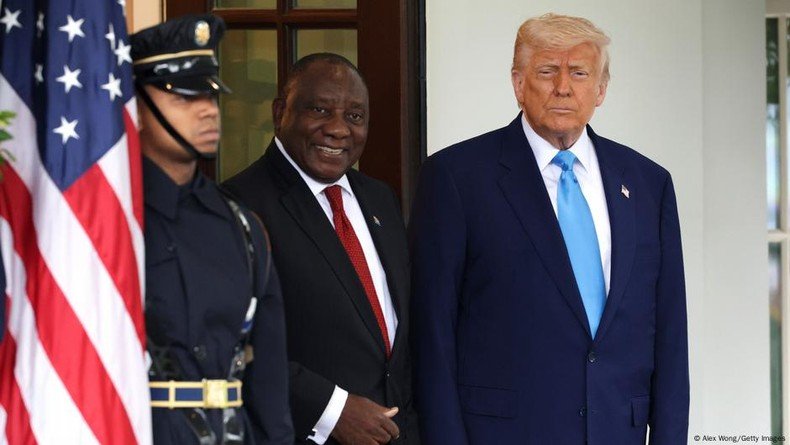
The shift comes amid growing indications that Pretoria may soon be excluded from Group of Twenty (G-20) meetings under its own presidency, a development seen by many as a further sign of waning US support.
According to reports, insiders familiar with private diplomatic discussions say Washington is preparing to formalise the exclusion, a move that could deny South Africa’s leaders access to crucial meetings during the coming year. One senior official discreetly described the prospects as “imminent,” signalling an official statement may follow shortly.
Despite a diplomatic note from Washington warning against adopting a final leaders’ declaration, South Africa endorsed the document shortly after the summit began.
The agenda, anchored on solidarity, equality, and sustainability, central themes for President Cyril Ramaphosa, stood in stark contrast with Washington’s objections.
While any change requires consensus among all member countries, as was the case when the African Union became a full member ahead of the 2023 India summit, the threat of visa denials for South African officials attending meetings may serve as a de facto exclusion mechanism.

The trade fallout
The diplomatic rift coincided with escalating trade tensions. In April, the US slapped a 30 percent “reciprocal tariff” on various South African exports.
By early August, the tariff took effect and was compounded for some categories by additional levies imposed under Washington’s self-imposed trade adjustments.
On the downside, there has been little movement in efforts to reduce the retaliatory tariffs. As noted in the presentation, the government continues to “negotiate an agreement that creates a level of predictability on trade, reduces the reciprocal tariff and enables trade to continue to flow, without compromising our ability to make policies that advance national interests.”
Roughly 35 percent of key exports, mainly mining and mineral products, have been exempted. Trade under World Trade Organisation rules has fallen from about 80 percent at the start of 2025 to roughly 72 percent.
The butterfly strategy takes flight
In light of the US impasse, South Africa is rapidly expanding its trade orientation towards alternative partners.
The DTIC says the country’s reciprocal trade agreements currently span 90 countries, covering nearly 28 percent of global gross domestic product and 29 percent of the world’s population.
Under the “Butterfly Strategy,” South Africa aims to spread its wings over 27 priority export markets, targeting specific product categories for each.
Through existing trade frameworks and newly launched export initiatives, the nation intends to grow the value of its exports from R2 trillion to R3 trillion by 2030, the equivalent of approximately $116 billion today, rising to about $174 billion.
The DTIC explained, “This matrix will serve as a starting point to guide market engagements, and through implementation of export initiatives, these opportunities will be further tested in the market and refined.”
Over time, product selection will become more focused, and market performance will shape future exports.
A strategic pivot with global and African reach
Trade diversification could buffer Pretoria from punitive tariffs, while new alliances may open fresh opportunities for expansion.
As ministers and business leaders mobilise to “spread the wings” of South Africa’s trade footprint, observers in capitals across Africa and beyond will be watching.
This butterfly may yet soar higher than many had expected, even as political storms swirl in its wake.



