

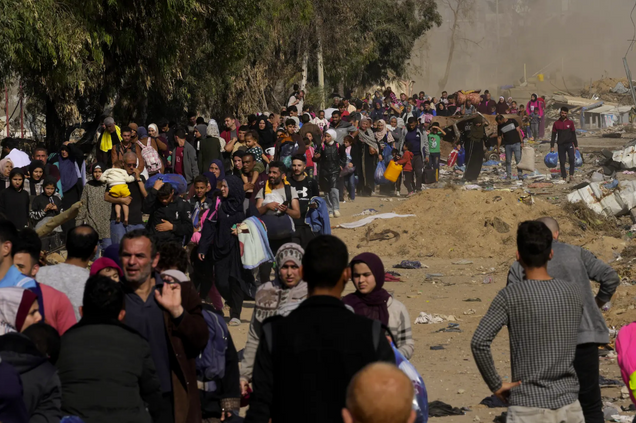
A group of about 153 Palestinian refugees finally made their way into South Africa on Thursday after a tense and exhausting standoff at Johannesburg’s OR Tambo International Airport.
The refugees, many of them women and children escaping intense bombardment in Gaza, had arrived on a Kenya Airways flight but were kept onboard for nearly nine hours as immigration officials struggled to reconcile missing documentation and verify identities.
The absence of exit stamps reportedly withheld by Israeli authorities, created an immediate complication for South African border officials, who required additional checks before entry could be authorised.
Humanitarian group – Gift of the Givers, which played a central role in coordinating the refugees’ journey, described the ordeal as a distressing extension of the hardship these families had already faced.
On arrival, the group of 153 Palestinians had to wait for permission from the Border Management Authority (BMA) to disembark after landing on a chartered flight from Kenya at around 8 a.m.
BMA Deputy Commissioner Mmemme Mogotsi said, “Following their failure to pass the immigration test and given that none of the travellers expressed an intention to apply for asylum, they were initially denied entry.”
“However, the Ministry of Home Affairs subsequently received correspondence from Gift of the Givers, expressing their commitment to accommodate the travellers during their stay.”
Founder Imtiaz Sooliman said the lack of Israeli exit stamps placed the refugees in an impossible position, deepening their anxiety at the very moment they expected safety.
Eyewitness News however, confirms that out of the 153 refugees, Twenty-three Palestinians from the group have since left for other destinations.
South Africa’s Motivation and a Worsening Global Migration Wave
Officials from the Department of International Relations and Cooperation (DIRCO), including Director-General Zane Dangor, intervened to fast-track verification processes.
Justice Minister Ronald Lamola also worked with the Department of Home Affairs to waive certain entry requirements, enabling the group to disembark safely.
Gift of the Givers acknowledged the intervention, noting that while the process ultimately prioritised humanitarian principles, an earlier decision could have prevented unnecessary emotional strain.
Africa, already burdened by internal migration pressures from conflicts in Sudan, the Sahel, the DRC and the Horn of Africa now faces new movements linked to crises beyond its borders.
In the long term, the ripple effects of the Gaza conflict could amplify migration pressures across the continent as countries historically aligned with Palestine, or those seen as sympathetic, may increasingly become destinations for families seeking stability.


