


Corruption has a long and sordid history in South Africa, but don’t look to the Financial Action Task Force (FATF) to help fight it. In late October, the world’s leading intergovernmental anti-money laundering watchdog removed South Africa from its “gray list” of countries subject to increased monitoring. The decision raises major concerns at a time when South Africa, which will host the G-20 summit this weekend, is embroiled in a sweeping corruption scandal implicating leaders at the highest levels of government and involving dozens of politically motivated killings.
South Africa landed on the FATF’s gray list in February 2023 due to glaring deficiencies in its protections against money laundering and terrorism financing. The listing followed the hearings and subsequent reports of the Zondo Commission, which operated from 2018 to 2022. The findings named and shamed hundreds of South African officials for acts of corruption, including nearly 100 prominent African National Congress (ANC) party officials—many of whom remain in power to this day. This and other graft led to years of rolling power outages, the deterioration of state-owned enterprises, and severe economic stagnation.
Corruption has a long and sordid history in South Africa, but don’t look to the Financial Action Task Force (FATF) to help fight it. In late October, the world’s leading intergovernmental anti-money laundering watchdog removed South Africa from its “gray list” of countries subject to increased monitoring. The decision raises major concerns at a time when South Africa, which will host the G-20 summit this weekend, is embroiled in a sweeping corruption scandal implicating leaders at the highest levels of government and involving dozens of politically motivated killings.
South Africa landed on the FATF’s gray list in February 2023 due to glaring deficiencies in its protections against money laundering and terrorism financing. The listing followed the hearings and subsequent reports of the Zondo Commission, which operated from 2018 to 2022. The findings named and shamed hundreds of South African officials for acts of corruption, including nearly 100 prominent African National Congress (ANC) party officials—many of whom remain in power to this day. This and other graft led to years of rolling power outages, the deterioration of state-owned enterprises, and severe economic stagnation.
The result is nothing short of a country in crisis. In a speech last month, South African President Cyril Ramaphosa declared an economic emergency, highlighting how “corruption corrodes competitiveness” and contributes to the country’s economic malaise. South Africa has one of the highest overall unemployment rates in the world: At around 32 percent, it is more than three times higher than the next highest unemployment rate of any G-20 country. Among young South Africans ages 15 to 24, joblessness reached 62.4 percent this year.
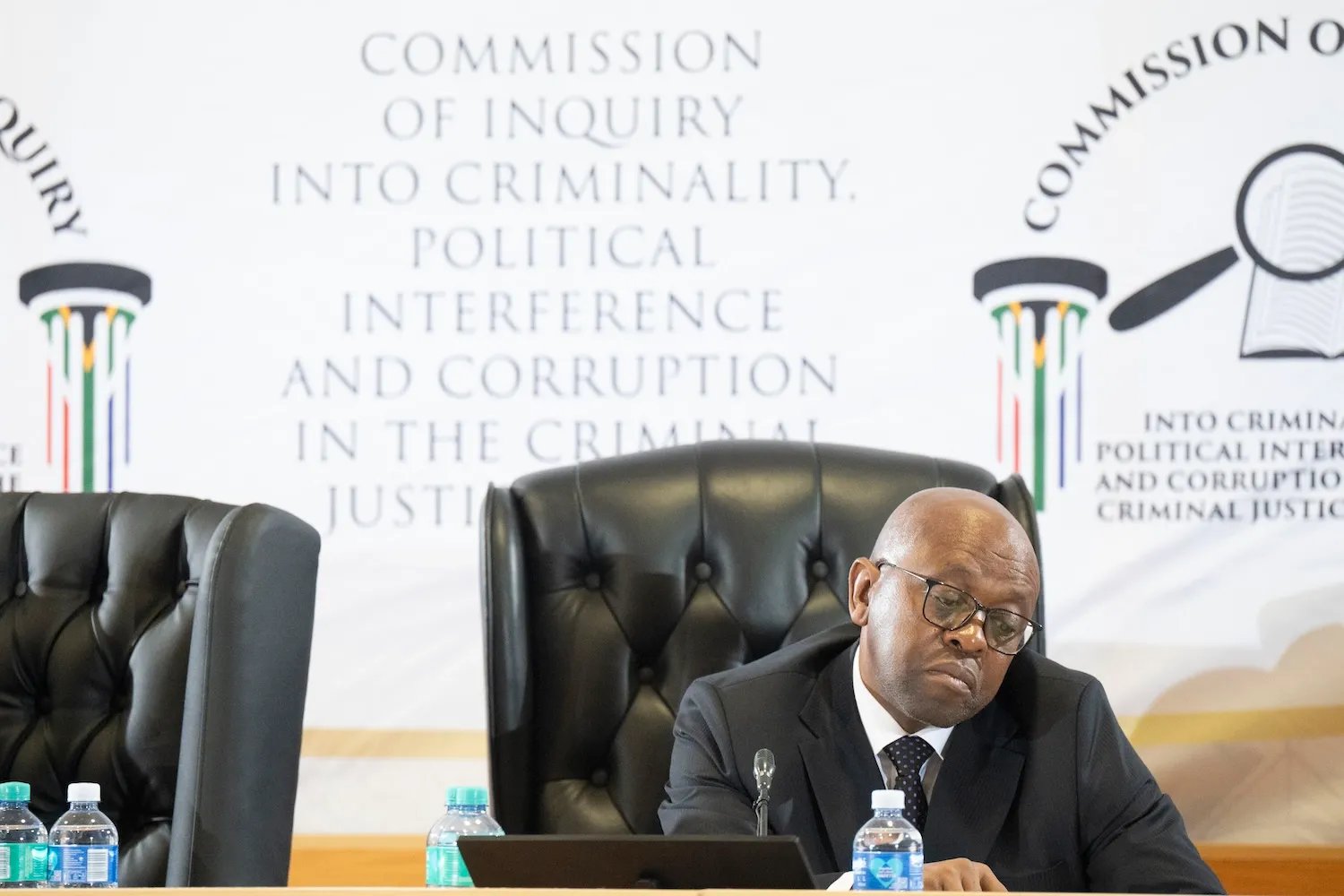
There is little indication that corruption has been contained. Another investigative panel—the Madlanga Commission—is now probing an expansive corruption scandal involving police-linked kickbacks from organized crime syndicates as well as high-level interference in a task force addressing political killings. South Africa’s recently dismissed police minister stands accused of aiding a criminal cartel and receiving payments from a gangster whose crimes allegedly include graft, contract fraud, and even attempted murder.
Nearly 150 municipal employees have been assassinated in South Africa since 2018, as well as five prosecutors in the last five years. Yet according to the head of South Africa’s National Prosecuting Authority, Shamila Batohi, who testified before the commission this month, “those of us in power that should be doing something about it are powerless to do anything about it.” Put simply, she said, “criminals are taking over our country.” This is why, according to the Global Organized Crime Index, South Africa is considered a “haven for criminal mafias and bosses to launder money and establish companies for money laundering activities.”
South Africa has also become a hub for terrorist financing. The U.S. Treasury Department sanctioned several South Africa-based Islamic State organizers and financial operatives in 2022, 2024, and 2025. Some of these, including Islamic State facilitator Zayd Gangat, currently await trial in South Africa, but others, such as Islamic State cell leader Farhad Hoomer, continue to evade justice. On multiple occasions, South African authorities have either been slow to analyze or failed to properly handle key evidence. After charges against Hoomer were repeatedly dropped—including those related to a deadly attack on a South African mosque—he subsequently attempted to launch the Islamic State of Africa as an official political party in South Africa this year. He remains free to this day.
So why would the FATF, which claims to assesses whether countries are taking effective action to prevent money laundering and terrorism financing, take pressure off South Africa in the middle of another corruption scandal? The short answer is that the FATF missed the forest for the trees, praising reforms on paper that did little in practice to rein in systemic corruption.
It is true that the country made legislative fixes to address certain deficiencies previously called out by the FATF. For instance, South Africa rolled out a beneficial ownership registry that purports to make it easier to investigate a variety of financial crimes and implemented legislation aimed at closing regulatory gaps related to cryptocurrency transactions. Additionally, according to the FATF’s reports, South Africa has boosted cross-border cooperation, tightened supervision of high-risk sectors, and stepped up the use of financial intelligence in investigations. But when it comes to actual prosecutions of complex money laundering cases or the arrests of corrupt officials and others linked to terrorist groups, South Africa’s efforts remain ineffective. The FATF is either overlooking the evidence or turning a blind eye.
According to Open Secrets, a South African anti-corruption watchdog group, there have been no successful prosecutions of any significant politician or corporate official in South Africa as of July 2025. Prosecutions related to terrorism finance remain limited as well, in part because South Africa does not consider Hamas or Hezbollah to be terrorist groups. Hamas-linked groups such as Al-Quds Foundation South Africa, the local branch of a U.S.-designated Hamas affiliate, continue to operate freely. The same applies to Hezbollah financier Nazem Ahmad and his South Africa-based network of companies.
But even where South African law theoretically permits a crackdown—in the case of the Islamic State, for instance—and where reforms such as the new beneficial ownership registry and cryptocurrency regulations have been implemented to support law enforcement investigations, South African authorities have repeatedly failed to bring perpetrators of terrorism-linked offenses to justice. This may be because, according to South Africa’s leading news service, “just one prosecutor” is working “to charge those who help fund foreign terror groups.”
If past is prologue, then the Madlanga Commission—like the Zondo Commission before it—will capture attention but fail to deliver accountability. But South Africa’s deficiencies have a reach that stretches well beyond its borders. South Africa serves as a gateway to Africa, and the risks extend to the global economy. The country’s critical mineral reserves, for example, are crucial for the world’s global energy transition, based on data from the International Energy Agency’s 2025 Global Critical Minerals Outlook. But a state that cannot police its own institutions cannot credibly manage the extraction, processing, or export of natural resources, a sector notorious for abuse and corruption.
There remains a narrow window to correct course. The FATF’s next evaluation of South Africa, set to begin in early 2026 and conclude in October 2027, will determine whether the country returns to the gray list. The United States and its allies—many of which sit on the FATF—should ensure that this member-led technical review process confronts South Africa’s entrenched corruption, its chronic failure to prosecute complex money laundering and terrorism finance cases, and the insufficiency of its legislative reforms. If the problems remain unaddressed, the FATF must be willing to return South Africa to the list of countries subject to increased monitoring. Anything less would render the institution complicit in legitimizing the wholesale decay of South Africa’s most important institutions. Unfortunately, as Transparency International attests: Pretoria remains “[c]ommitment rich, but implementation poor.”
Washington, however, need not wait for the FATF to act. The United States should use Global Magnitsky sanctions to target the South African officials and business elites most responsible for systemic graft and human rights abuses. Congress is already pushing in that direction: The pending bipartisan U.S.-South Africa Bilateral Relations Review Act calls for a reassessment of the relationship and the identification of ANC and government leaders eligible for sanctions. To this end, the Zondo and Madlanga commissions provide an abundance of evidence.
Corruption has become South Africa’s de facto currency—traded by elites for power, protection, and profit—while ordinary South Africans pay the price in unemployment and insecurity. As Pretoria gears up to host the G-20 summit, the FATF’s failure to recognize the continued extent of corruption not only betrays South Africans but also undermines the very architecture meant to protect the globe from the contagion of criminal governance. If South Africa’s slide continues unchecked, the cost will not stop at its borders.


