

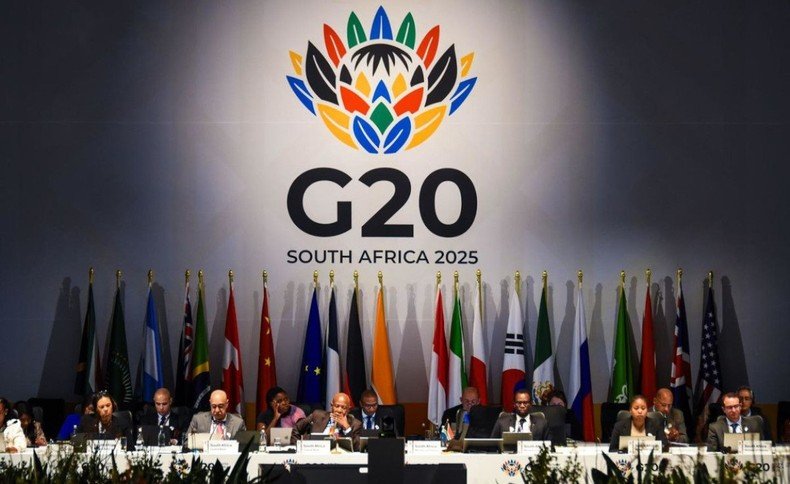
Tensions between the two countries have been building since January 2025, peaking last November when US President Donald Trump boycotted the G20 summit hosted in South Africa.
Speaking at the World Economic Forum in Davos last week, South Africa’s Finance Minister, Enoch Godongwana, confirmed the decision, describing it as a “temporary setback.” He said the move was aimed at avoiding a deeper diplomatic crisis with Washington.
“South Africa wants to avoid any problem, any crisis with the United States, and it is a really rational decision,” Koffi Kouakou, a lecturer at the School of Governance at the University of the Witwatersrand in Johannesburg, told Radio France Internationale (RFI).
Trade, BRICS alignment, and security concerns deepen the rift
The G20 standoff reflects broader, long-standing differences between South Africa and the United States.
Trade relations have been strained by disagreements over market access and preferential trade arrangements, while Washington has repeatedly criticised Pretoria’s land reform policies and political rhetoric around white farmers, arguing that they undermine investor confidence and social stability.
South Africa’s growing role within BRICS has further complicated relations. Pretoria’s close ties with Russia and China, particularly in the context of the bloc’s push for alternatives to Western-led financial institutions, have reinforced US concerns that South Africa is drifting away from Western strategic interests.
Security issues have added another layer of tension. Recall the United States raised concerns about Iran’s involvement in military training activities in South Africa, warning that such cooperation risks undermining international sanctions regimes and Western security priorities.
Kouakou warned that South Africa’s withdrawal has wider implications beyond bilateral relations. “The G20, which was created to bring together all the countries of the world… is now being destroyed by President Trump,” he said, adding that the move risks turning the bloc into a de facto “G19.”
“This is a very strong signal,” Kouakou added. “South Africa and the African Union represent nearly 1.4 billion people. Its withdrawal will create a void for Africa, a void of African representation within the G20.”


