


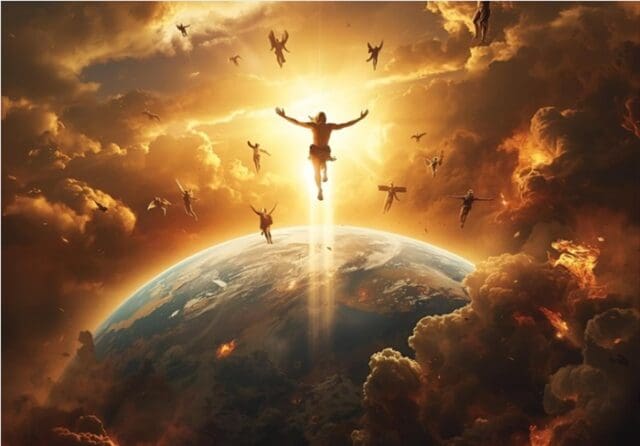
A South African pastor’s apocalyptic prophecy has sparked both fear and fascination across the internet, as some Christian believers brace for what they believe is the end of days—today.
Pastor Joshua Mhlakela, who claims Jesus personally appeared to him in a divine vision, has prophesied that the Rapture—a key event in certain Christian eschatologies—would occur on September 23 or 24, 2025. His prediction has gained viral attention on platforms like TikTok. The hashtag #RaptureTok has exploded in popularity, fueling a mix of panic, preparation, and parody.
– Advertisement –
What Is the Rapture?
The Rapture is a theological concept embraced by many evangelical and fundamentalist Christians. It refers to a future moment when believers in Christ will be taken up into heaven. The rest of the world will be left behind to endure a period of tribulation and divine judgment. The idea is largely derived from interpretations of passages in the New Testament—particularly 1 Thessalonians 4:16-17, which speaks of believers being “caught up… to meet the Lord in the air.”
However, it’s important to note that the word “rapture” never actually appears in the Bible. The concept as popularly understood today emerged primarily in the 19th century through the teachings of figures like John Nelson Darby. It was later popularized by books like The Late Great Planet Earth (1970) and the Left Behind series (1995–2007).
Pastor Joshua Mhlakela’s Viral Prophecy
Mhlakela’s prophecy first gained attention in an interview with Centtwinz TV, and later spread via YouTube and TikTok. In the now widely-shared videos, Mhlakela claims that Jesus told him directly: “I will come to take my church on September 23 or 24, 2025.”
– Advertisement –
He also pointed out that these dates align with Rosh Hashanah, the Jewish New Year. This event has long been associated by some prophecy teachers with the timing of end-times events. Though the Bible itself offers no exact timeline for the Second Coming, Jesus famously said, “No one knows the day or the hour” (Matthew 24:36). Still, this has not stopped Mhlakela’s claim from gaining traction.
The Internet Reacts: Fear, Faith, and Fun
The prophecy has split online audiences into three main camps:
True Believers: Some Christians have taken Mhlakela’s message to heart, with reports of individuals selling possessions, quitting jobs, and urging others to repent before the supposed hour arrives.
Skeptics and Critics: Many religious leaders and theologians have dismissed Mhlakela’s prophecy as unbiblical and dangerous. “Setting dates for the Rapture or the return of Christ is not only unscriptural—it’s historically been proven wrong every time,” said one U.S.-based evangelical pastor in response.
The TikTok Crowd: Meanwhile, TikTok has turned the doomsday warning into a kind of social media spectacle. Under the trending tag #RaptureTok, users are posting reaction videos, comedic skits, and even satirical countdowns to “blast off.” Some are genuine in their concern, others are clearly mocking what they see as yet another failed apocalypse.
A History of Failed Predictions
This is hardly the first time a bold end-times prediction has gone viral. Notable past prophecies include:
Harold Camping’s 2011 prediction, which led thousands to prepare for Judgment Day that never came.
The 2012 Mayan calendar myth, which sparked global media coverage and apocalyptic-themed parties.
Numerous other claims throughout history, all of which have failed to materialize.
Each of these episodes tends to follow a similar pattern: fervent belief, widespread media attention, public disappointment—and eventually, the next prophecy.
Why Do People Keep Believing?
Psychologists and religious scholars suggest several reasons why apocalyptic predictions continue to attract believers:
- Fear of the unknown
- Desire for justice or escape from a broken world
- Charismatic leaders who appear confident and authoritative
- Social media amplification, which spreads messages faster than ever before
For many, end-times beliefs offer a sense of meaning, especially in chaotic times. In a world facing climate crises, wars, economic instability, and technological disruption, the idea that it might all “end soon” is oddly comforting to some—and deeply unsettling to others.
So, Will the World End Today?
In all likelihood: no.
While Mhlakela’s prophecy may be sincere, it lacks biblical grounding, historical reliability, and any empirical evidence. Most Christian denominations warn against date-setting and emphasize readiness over prediction.
Still, as the sun rises and sets on September 23 (and possibly 24), many eyes will remain glued to their phones—not necessarily looking for Jesus in the sky, but to see whether this latest viral prophecy becomes another curious footnote in the long history of apocalyptic anxiety.
Final Thoughts
Whether you’re a believer, skeptic, or just here for the memes, one thing is certain: the internet will always find a way to turn even the most serious subject into a global conversation.
As #RaptureTok trends and the clock ticks on, perhaps the real takeaway isn’t about the end of the world—but about the stories we tell when we’re uncertain about the future.


