

The negotiations come at a sensitive geopolitical moment. On December 26, 2025, Israel formally recognised Somaliland, a breakaway region of Somalia, becoming the first United Nations member state to do so.
The move heightened diplomatic tensions in the Horn of Africa and added strain to an already fragile regional balance.
The country has lacked a functioning fixed-wing combat capability since 1991, constraining its ability to secure its airspace against emerging threats as regional alliances evolve.
Security pressures from Al-Shabaab
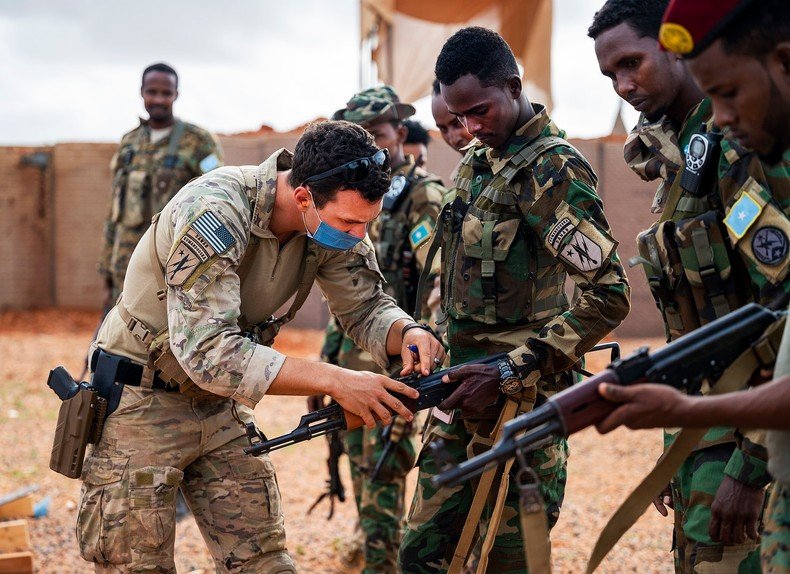
Meanwhile, the push to rebuild airpower comes as Somalia continues to battle Al-Shabaab, the Al-Qaeda-linked insurgent group that controls large rural areas in southern and central regions. The group frequently launches attacks in Mogadishu and surrounding towns.
According to the Council on Foreign Relations, 37% of Somalia’s population requires humanitarian assistance and millions are internally displaced. Al-Shabaab has also been accused of forcibly recruiting fighters, including children.
Amid these security pressures, Somali Air Force Commander Mohamud Sheikh Ali visited Islamabad in February 2026, accelerating discussions over the potential purchase.
“Our airspace must be protected by Somali hands,” a Somali defence ministry official said, describing the acquisition as both a statement of sovereignty and an effort to rebuild state institutions.
Cost, capability and strategic calculus
Pakistan has presented the JF-17 as a cost-effective alternative to Western aircraft. Pakistani Defence Production Minister Raza Hayat Harraj said, “While some Western options may be more technologically advanced, they cost more than three times as much as an approximately $30 million to $40 million JF-17.”
An Islamabad-based analyst said, “The JF-17’s appeal is less about headline performance than the overall package, which includes lower price, flexible weapons integration, training, spares and generally fewer Western political strings.”
Former Pakistan Air Force Air Commodore Adil Sultan added, “The PAF demonstrated superior performance against much more expensive Western and Russian systems, which has made these aircraft an attractive option for several air forces.”
The potential deal, valued at roughly $900 million, would represent Somalia’s largest defence investment since the Cold War, according to Somali Guardian.
Shifting regional and international alignments
The negotiations also come amid a broader recalibration of alliances across the Horn of Africa and the Gulf.
Israel’s recognition of Somaliland has intensified sensitivities around sovereignty and territorial integrity, increasing the strategic importance of airspace control.
In parallel, Mogadishu has moved closer to Saudi Arabia, a regional heavyweight and long-standing military partner of Pakistan, while its relationship with the United Arab Emirates has cooled compared with previous years, signalling a shift in diplomatic and security priorities.
Internationally, U.S. President Donald Trump has previously criticised instability in Somalia and questioned sustained American engagement there, including in the wake of the high-profile daycare fraud case in Minneapolis involving Somali-American defendants, which drew national political attention in the United States.
However, the United States and Turkey continue to provide military support and limited airpower assistance to Mogadishu, as Washington seeks to stabilise the Horn of Africa given Somalia’s strategic position along key maritime routes in the Red Sea and Gulf of Aden


