Senegal has approved its share of the capital payment for the Africa Energy Bank (AEB), bringing the continent closer to launching a financing institution for energy projects.
The payment is expected to be completed before the end of 2025.
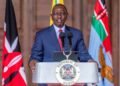

The disclosure was made by the Secretary-General of the African Petroleum Producers’ Organization (APPO) Dr. Omar Farouk Ibrahim, during the MSGBC Oil, Gas & Power 2025 conference and exhibition on Tuesday in Dakar.
Ibrahim said Senegal’s decision signals growing momentum behind the creation of the bank. He added that each new commitment strengthens the institution’s path to full operations.
“With this payment, we are getting closer to the development of the Africa Energy Bank,” he said.
The institution is designed to provide long-term financing for African energy projects, including oil, gas and renewable energy.
Senegal’s energy push
Senegal’s approval comes as the country accelerates development of its energy gap.
According to World bank, a national electricity access rate of 84%, Senegal is making progress towards universal energy access, yet more than 30% of rural communities remain disconnected from the grid.
The African Energy Bank will provide more financing options and help the country rely less on foreign lenders.
Access to funds from the AEB is expected to support upstream, midstream, and power-generation projects. The bank will also back infrastructure for energy transition, including renewable energy.
Addressing Africa’s energy financing gap
The International Energy Agency (IEA) estimates that more than 600 million Africans still lack reliable electricity. Limited access to energy financing remains one of the region’s biggest development constraints
The African Energy Bank was created to address the funding crisis in the continent’s oil and gas sector. That crisis has deepened as global financiers retreat from fossil-fuel investments because of climate concerns.
The bank is designed to fill that gap. It offers African countries access to capital without relying on institutions that restrict fossil-fuel funding.
For Senegal, this expands financing options for offshore production, gas infrastructure and power generation. It also strengthens regional energy cooperation.
At the continental level, the bank is expected to support industrialisation, improve electricity access and stabilise power supply.
What you should know
The AEB was established by APPO in partnership with the African Export-Import Bank (Afreximbank). It is headquartered in Abuja, Nigeria. The bank has an initial target capital base of $5 billion, which is expected to rise to $120 billion within three to five years.
The groundwork for the bank was laid in June 2024, when APPO and Afreximbank signed its establishment agreement and charter in Egypt. The signing opened the institution to capital subscriptions from member states.
By early 2025, several major producers had met their capital commitments. These include Nigeria, Angola and Ghana. Together, those contributions covered a significant share of the initial funding target.
Other countries, including Algeria, Benin, Republic of Congo, Equatorial Guinea and Côte d’Ivoire, also pledged support.