Scaling Inclusion Across Borders: Lessons from Watu’s Multi-Market Journey
As inclusive finance providers expand beyond borders, the real test is not how fast they grow, but how well they adapt.
For Watu, scaling across multiple markets has been less about replication and more about deep localization, embedding financial inclusion into the everyday realities of customers.
In this thematic interview, Andrii Volokha, General Manager for Watu in East Africa, shares insights into how the company has successfully navigated diverse regulatory environments, cultural contexts, and customer needs while maintaining operational consistency and trust.
Grounded in Local Context
According to Volokha, Watu’s expansion philosophy starts with respect for local realities. While the company’s mission to drive financial inclusion through access to mobility and connectivity remains consistent, execution varies significantly from one market to another.
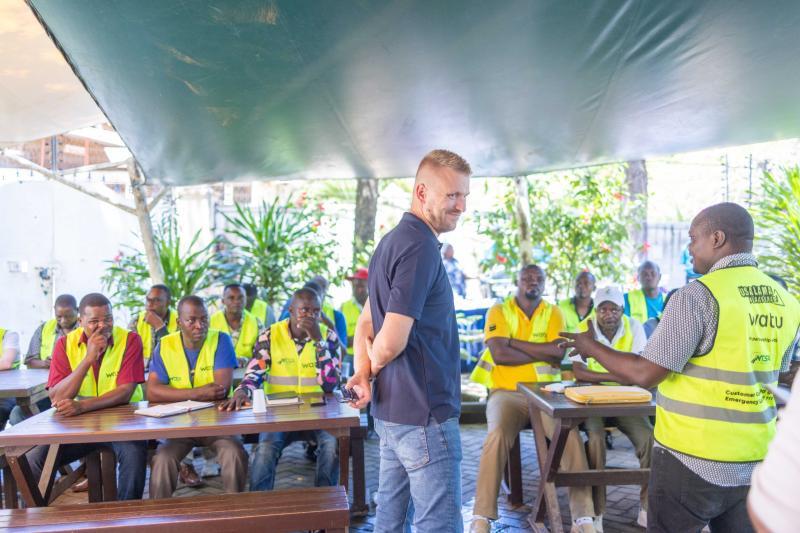
Watu conducts extensive market research but places equal emphasis on empowering local teams to listen directly to customers. Financing terms, repayment schedules, and asset types are tailored to local income patterns and preferred modes of transport.
Strong agent networks, locally relevant payment systems, and market-specific risk models ensure that Watu’s offerings reflect real economic conditions rather than generic credit benchmarks.
“Our success comes from being on the ground and designing solutions that empower rather than impose,” Volokha explains.
Scaling Inclusion Across Borders: Lessons from Watu’s Multi-Market Journey
Technology Powering Scale and Trust


A critical enabler of Watu’s multi-market success is its proprietary technology infrastructure. At the centre is the Watu App, which serves as a digital hub for payments, device unlocks, and customer support.
The app simplifies the customer journey while generating real-time data that strengthens portfolio oversight and decision-making.
Supporting this is an advanced analytics platform that monitors portfolio health, identifies trends early, and enables proactive risk management. The result is a consistent, secure, and transparent customer experience whether in Nairobi, Kampala, or Dar es Salaam reinforcing trust across regions.
Turning Regulation into a Strategic Advantage
Operating across borders inevitably means navigating complex regulatory environments. For Watu, compliance is not treated as a constraint but as a foundation for responsible growth.
The company works closely with regulators from the outset, embedding legal and compliance expertise within each country team. This commitment is reflected in Watu’s MicroFinanza Client Protection Certifications, Bronze in Kenya and Tanzania, and Silver in Uganda.
“These certifications are not just labels,” Volokha notes. “They guide how we engage customers every day, ensuring transparency, fairness, and accountability.”
Customer Feedback as a Driver of Innovation
Customer feedback plays a central role in Watu’s continuous improvement.
Field teams gather insights through daily face-to-face interactions, while digital platforms and customer care centres provide real-time feedback channels.
Using data analytics, Watu interprets both qualitative and quantitative inputs to identify pain points, emerging needs, and successful features across markets.
This approach has driven key innovations, including the expansion into smartphone financing to support digital access and the launch of road safety clinics.
In 2024 alone, Watu trained more than 20,500 riders through its road safety programmes, responding directly to customer safety concerns.
Balancing Standardisation and Customisation
Watu’s growth model balances scale with relevance. Core elements its mission, ethical standards, and technology platforms are standardized to ensure efficiency and consistency.
However, product features, financing structures, communication strategies, and asset offerings are adapted to local market dynamics.
For example, while motorcycles dominate much of East Africa, markets such as Dar es Salaam require tailored financing for tuk-tuks. Partnerships and distribution channels are similarly customized to leverage local strengths.
Partnerships that Deepen Impact
Strategic partnerships are central to Watu’s market adaptation. Collaborations with local leaders and regulators help build community trust, while extensive agent networks provide ongoing customer support.
On the technology front, partnerships with Samsung Mobile have expanded access to affordable smartphones.
In green mobility, alliances with ARC Ride in Kenya and Gogo Electric in Uganda are supporting the growth of electric motorcycle ecosystems, including battery swap and servicing infrastructure.
Lessons for the Next Decade
Reflecting on Watu’s multi-market journey, Volokha highlights several lessons shaping the company’s future. Deep local understanding is essential. Responsible finance and financial literacy must anchor growth.
Digital ecosystems unlock broader economic participation. Green mobility offers both environmental and economic benefits. And meaningful impact often begins where others perceive only risk.
As Watu prepares to expand into new markets such as Mexico and Brazil, these principles will continue to guide its strategy for inclusive, responsible growth.
Seeing Opportunity Where Others See Risk
One of the most striking insights from Watu’s expansion has been the entrepreneurial resilience of its customers. Many operate in informal or gig economies, yet demonstrate remarkable innovation and growth when given fair access to finance.
Equally transformative is digital connectivity. A smartphone, Volokha observes, is not just a device but an entry point into education, markets, and opportunity. The rapid adoption of electric motorcycles and tuk-tuks further demonstrates that sustainability and inclusion can advance in tandem.
For Watu, scaling across borders has reaffirmed a powerful truth: responsible innovation can create value for people, business, and the planet simultaneously.