


The South African National Defence Force (SANDF) is collecting intelligence that will inform where soldiers will be deployed under President Cyril Ramaphosa’s recently announced crime-fighting initiative.
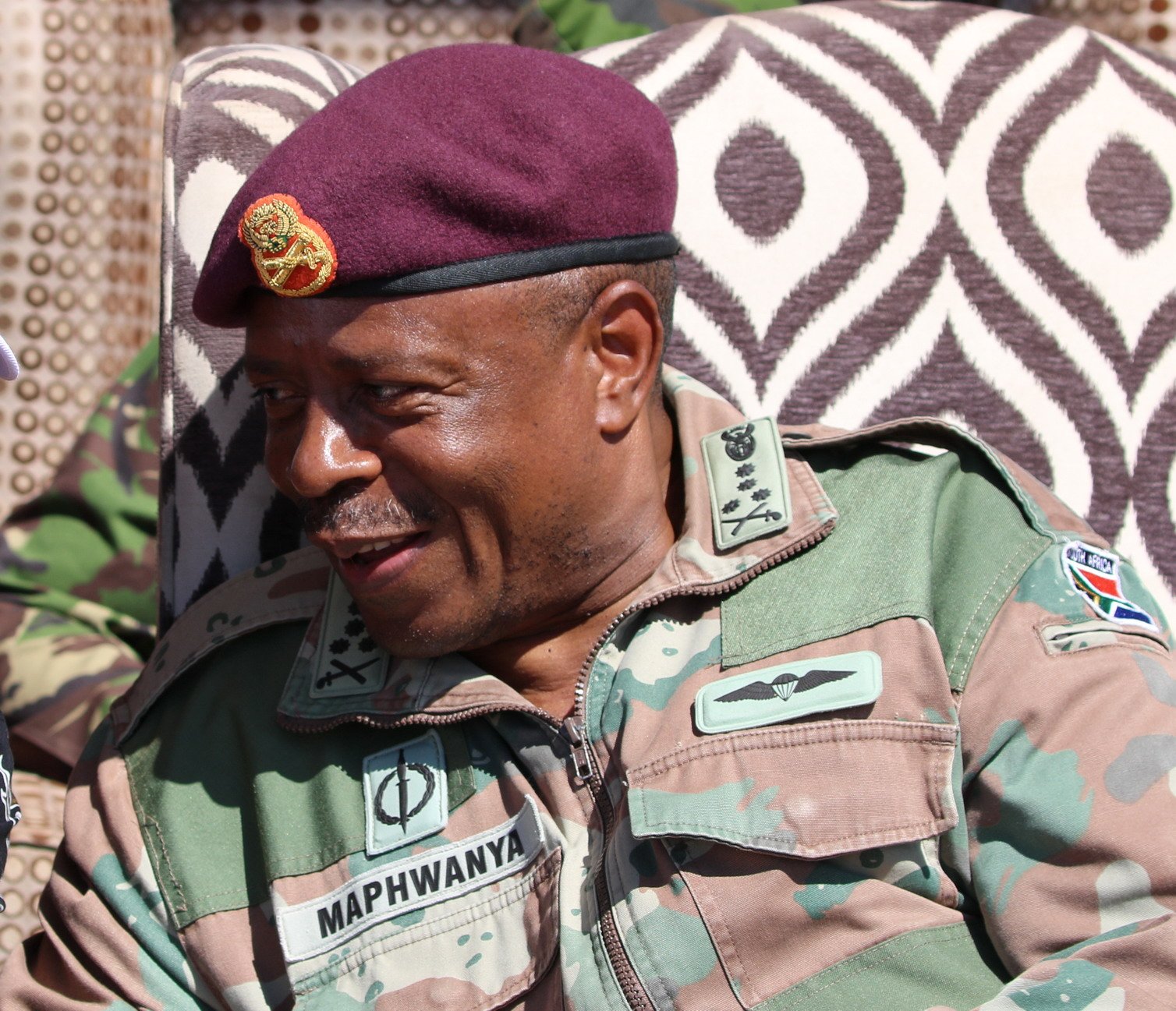
Chief of the South African National Defence Force, General Rudzani Maphwanya, made this known during a question and answer session with the media following the Armed Forces Day Legacy Project handover outside Thohoyandou on Friday.
Maphwanya said the SANDF has put together a team with the South African Police Service (SAPS) and started with initial planning, including intelligence collection. “Vehicles will start rolling in the next two weeks,” he said, emphasising their exact deployment will be determined by intelligence gathered.
During the State of the Nation Address on 12 February, Ramaphosa announced soldiers would be deployed to combat illegal mining, gangsterism, and other criminal activity in the Western Cape and Gauteng. Acting Police Minister Firoz Cachalia subsequently said the SANDF would also be deployed to assist police fight crime in the Eastern Cape.
Defence and Military Veterans Minister Angie Motsheka said the decision to withdraw the SANDF from the United Nations peacekeeping mission in the Democratic Republic of Congo (DRC) allows the SANDF to build its capacity and focus on other tasks, such as assisting the police. Some 700 SANDF members are still in the DRC serving with the United Nations mission there (MONUSCO) – the timeline for their withdrawal has not been made public.
Motsheka did caution that the SANDF must not “bite off more than we can chew” with domestic deployments.
Motsheka presided over the Armed Forces Day Legacy Project handover at Boxahuku Primary School in Qaza Village, Vhembe East, ahead of Armed Forces Day being marked on 21 February. She handed over 620 pairs of leather shoes to the school on Friday morning. The former Basic Education Minister thanked the SANDF for choosing education as one of the key Armed Forces Day outreach initiatives.
“Children are the most important investment,” she said, adding that the biggest budget line item is education because of its importance. “Teachers have the most important duty of developing the future of this country. This is where futures start.”
Motshekga said the SANDF was going to ‘adopt’ Boxahuku Primary School and will be back to help paint the roof and do other maintenance work.
“To our children: we love you. The future of this country is in your hands. Respect your teachers and classmates. Do you promise?” Motsheka asked the students.
The Minister added that the SANDF has lots of capabilities it is lending out to the community. For example, the Military Health Service has interacted with over 50 000 members of the community under Project Owethu.
Lieutenant General (Dr) Ntshavheni Peter Maphaha, SANDF Surgeon General, explained that Project Owethu is based on the One Health concept of how the environment can affect people’s health and encourages people to look after themselves, their environment and their animals. Project Owethu is carried out in collaboration with communities, civic associations, and the provincial government. By Tuesday, it had reached out to 51 000 community members.
Part of Project Owethu activities is conducting cataract surgeries, and on Thursday a total of 150 had been carried out. The SAMHS hoped to carry out another 20 operations on Friday. In addition, the Military Health Service is helping injured flood victims at the Phalaborwa hospital following deadly floods in Limpopo last month.
Maphwanya added that the SANDF Spouses Forum has been gathering donations for flood victims and has been distributing them to the needy. Through the Welisizwe bridges programme, SA Army engineers are helping build bridges in rural areas as part of efforts that continue well beyond Armed Forces Day activities


