Samsung’s semiconductor recovery has materialised during the third quarter of 2025, with the South Korean tech giant posting an operating profit of KRW 12.2 trillion (US$8.6 billion) – more than double the previous quarter and ending a streak of four consecutive quarterly declines in its chip division.
The turnaround centred on Samsung’s Device Solutions division, which reported KRW 33.1 trillion in revenue and KRW 7.0 trillion in operating profit, an over tenfold increase from the June quarter.
The Memory Business achieved what Samsung described as “record-high quarterly revenue,” driven by expanded sales of high-bandwidth memory (HBM3E) chips and server solid-state drives – both important components for artificial intelligence infrastructure.
But this wasn’t simply a story of rising tides lifting all boats. Samsung’s semiconductor recovery reflects calculated strategic pivots made during its downturn, market dynamics that finally shifted in its favour, and intense competitive pressures that forced the company to accelerate its AI chip roadmap.
The road back from the slump
Samsung’s journey to this quarter’s performance began in a different place. Throughout 2024 and into early 2025, the company faced multiple headwinds: a brutal memory chip glut that collapsed prices, delayed qualification of its HBM products with key customers, and the company seeing rival SK Hynix capture early leadership in AI memory chips.
The low point came in the second quarter of 2025, when Samsung’s chip division reported operating profit that had analysts questioning whether the company had lost its technological edge. SK Hynix had seized the top spot in the memory market for the first time, fueled by its early success supplying HBM chips to Nvidia’s AI accelerators.
MS Hwang, research director at Counterpoint Research, contextualised Samsung’s third-quarter performance as “a clear result of a broader memory market boom and rising prices for general-purpose memory.”
But Hwang’s firm also noted that Samsung had reclaimed the top spot in the memory market from SK Hynix during Q3, suggesting the semiconductor recovery involved more than just favourable market conditions.
HBM: From laggard to mass production
Samsung’s ability to reverse its HBM fortunes proved central to the turnaround. The company confirmed that HBM3E is now “in mass production and being sold to all related customers,” while HBM4 samples are “simultaneously being shipped to key clients.”
Reports emerged in late September that Samsung had passed Nvidia’s qualification tests for advanced high-bandwidth memory chips – a important milestone that had eluded the company for months. While Samsung hasn’t confirmed the Nvidia qualification publicly, the timing aligns with the acceleration in HBM sales reflected in Q3 results.
During the company’s earnings call, a Samsung executive outlined the demand environment: “We expect data centre companies to continuously expand their hardware investment because of the ongoing competition to secure AI infrastructure. Therefore, our AI-related server demand keeps growing, and this demand significantly exceeds industry supply.”
That supply-demand imbalance has created pricing power that Samsung lacked during its declining quarters. The company specifically cited “a favourable price environment” and “notably reduced one-off costs like inventory value adjustments” as contributors to higher profits.
Beyond memory: Foundry progress and challenges
Samsung’s semiconductor recovery extended beyond memory chips. The Foundry Business, which manufactures chips designed by other companies, “posted a significant improvement in earnings in Q3 2025, stemming from a reduction in one-off costs and better fab use.” The division also achieved “record-high customer orders, mainly on advanced nodes.”
The foundry business is ramping up mass production of 2-nanometer Gate-All-Around (GAA) products, an important technology that helps maintain competitiveness against TSMC, the company that dominates the foundry market. Samsung indicated it would begin operations at its fab in Taylor, Texas, “in a timely manner” in 2026.
However, the System LSI Business, which designs Samsung’s Exynos processors and image sensors, saw earnings stall “due to seasonality and customer inventory adjustments.”
What this means for 2026
Samsung’s guidance for the coming year reflects confidence that the semiconductor recovery has staying power. The Memory Business will “focus on the mass production of HBM4 products with differentiated performance” while aiming to “scale out the HBM sales base.”
The company plans capacity expansion in its 1c manufacturing process to meet projected HBM4 demand increases. Consolidated revenue for the quarter reached KRW 86.1 trillion, a 15.4% increase from the previous quarter and 8.85% higher year-over-year. The Device eXperience division, which includes smartphones, contributed KRW 34.1 trillion in revenue, supported by the Galaxy Z Fold7 launch and strong flagship sales.
Yet challenges persist. Samsung Display reported solid performance with KRW 8.1 trillion in revenue and KRW 1.2 trillion in operating profit, but the Visual Display business recorded an operating loss of KRW 0.1 trillion despite “solid sales growth of premium products,” citing “intensified competition.”
The semiconductor recovery that Samsung achieved in Q3 2025 resolves the immediate crisis that threatened its market position. Whether the company can sustain this momentum while navigating intense competition from SK Hynix in HBM, TSMC in foundry, and emerging geopolitical pressures on the chip industry will determine if this quarter marked a true turning point or merely a reprieve.
For now, Samsung has demonstrated that even after four quarters of decline, strategic execution and market timing can still produce a comeback.
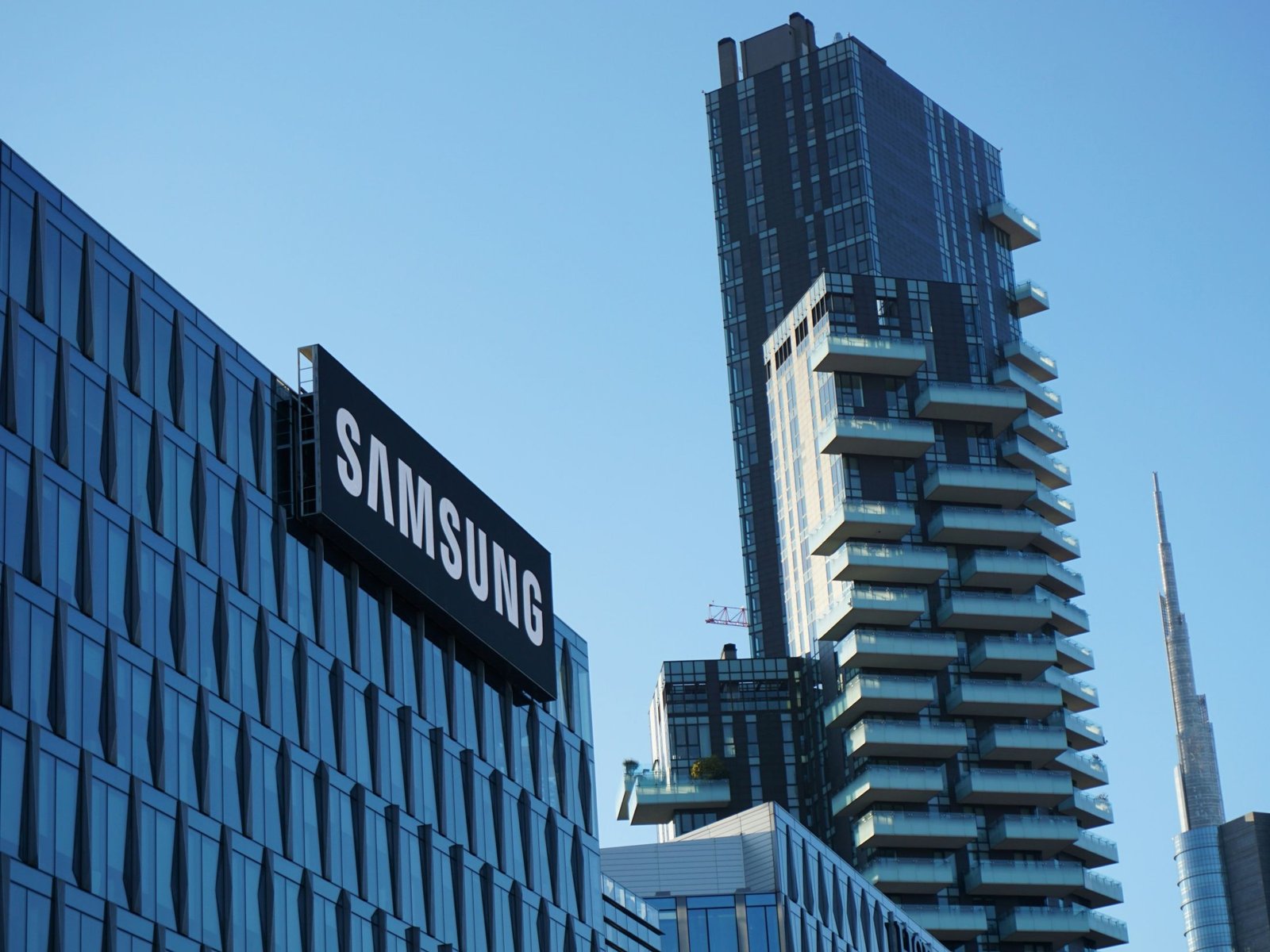
(Photo by Babak Habibi)
See also: Samsung AI strategy delivers record revenue despite semiconductor headwinds

Want to learn more about AI and big data from industry leaders? Check out AI & Big Data Expo taking place in Amsterdam, California, and London. The comprehensive event is part of TechEx and is co-located with other leading technology events, click here for more information.
AI News is powered by TechForge Media. Explore other upcoming enterprise technology events and webinars here.