The RDF said the engineers will focus on rehabilitating critical infrastructure damaged by Hurricane Melissa, which struck the Caribbean in late October 2025 and left large sections of Jamaica’s road networks, drainage systems, public buildings, and utilities severely affected.
The deployment is being carried out under a bilateral cooperation agreement between Rwanda and Jamaica that allows Kigali to provide technical and disaster-recovery support when major emergencies occur.
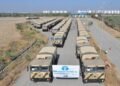
Before departing for Kingston, the engineers received a briefing from Brigadier General Faustin Tinka, Commander of the Mechanized Division, speaking on behalf of the RDF Chief of Defence Staff.
He urged the contingent to apply their full technical expertise and professionalism, stressing that the true measure of success would be the impact felt by Jamaican communities.
He highlighted the values that define the RDF, particularly discipline, which form the foundation of the Force.
“It is these values that earned you this responsibility,” he said, calling on the officers and other ranks to uphold and safeguard the RDF’s core values at all times.

Africa’s expanding overseas security footprint
The Jamaica deployment reflects a growing trend in which African militaries are increasingly used not only for peacekeeping and counterterrorism, but also for humanitarian engineering and disaster-recovery missions abroad.
African militaries increasingly operate abroad in roles that combine security with humanitarian protection, though dedicated disaster-relief deployments remain rare.
South Africa is one of the few African states with a documented record of sending military aircraft, engineers, and logistics units to support disaster responses in neighbouring countries such as Mozambique after major cyclones.
Most other African overseas deployments take place through UN, AU, and regional peacekeeping missions, where countries like Rwanda, Ethiopia, Ghana, Nigeria, Egypt, Senegal, Tanzania, and Uganda are tasked with protecting civilians and securing humanitarian access.
In that context, Rwanda’s engineering mission to Jamaica stands out as a rare example of an African military deploying specifically for post-disaster infrastructure recovery rather than conflict stabilisation.
For Rwanda, which has built a reputation through UN and bilateral deployments across Africa and the Middle East, Jamaica represents a further expansion of its security diplomacy beyond the continent.
By sending engineers rather than combat troops, Kigali is also projecting soft power through infrastructure rebuilding, technical expertise, and rapid disaster response, tools that are increasingly shaping how African states engage with partners in the Global South.