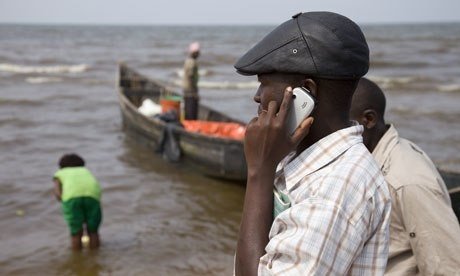
Africa’s leading mobile network operators are planning to introduce a $40 smartphone in six African markets as part of a broader effort to close the continent’s digital access gap and bring millions of people online.
The initiative, led by the GSMA Handset Affordability Coalition, was announced during a press conference at the African Pavilion at the Mobile World Congress (MWC) in Barcelona, Spain.
The event also marked the first time African mobile operators had exhibition space on the MWC show floor.
Members of the coalition include Airtel, Axian Telecom, Ethio Telecom, Orange, Vodacom Group and MTN Group.
Combined, these companies serve roughly 800 million Africans, giving the initiative potential to significantly accelerate smartphone adoption across some of the continent’s fastest growing telecom markets.

$40 smartphone to close Africa’s digital gap
Africa’s telecom operators say device affordability remains one of the biggest barriers preventing millions of people from accessing digital services.
“One of the biggest barriers and challenges for Africa is around the affordability of devices. This presents itself in the willingness of our population to go online, simply because they cannot find content in their own languages. For us, the challenge is around closing the usage gap by bringing devices at an affordable minimum specifications on 4G into the pilot phase,” said Angela Wamola, head of Africa at GSMA.
Industry data shows that around 85 percent of Africa’s population lives within reach of mobile broadband networks, yet far fewer people actually use mobile internet services.
The gap is largely driven by the cost of smartphones, which remain out of reach for many households across the continent.
Six African markets chosen for pilot launch
Under the coalition’s plan, six African countries will serve as pilot markets for the new device. These include the Democratic Republic of Congo, Ethiopia, Nigeria, Rwanda, Tanzania and Uganda.
Negotiations with distributors in these markets have indicated the devices could reach consumers at the target retail price of about $40.
“Many other countries have shown interest while we have been here in Barcelona,” Wamola said.
The coalition has shared minimum specifications with device manufacturers including requirements for storage capacity, screen size and battery performance.
According to Wamola, the proposal has received “a positive response from its vendor ecosystem”, raising hopes that the device could soon reach the market.
Smartphone ownership in Africa still lags global levels
Africa’s smartphone market is currently dominated by Chinese manufacturers that produce lower cost devices designed for emerging markets.
These devices are typically cheaper than premium smartphones produced by companies such as Apple and Samsung.
Even so, smartphone ownership across Africa remains far below global levels.
A recent GSMA study found that only one in four Africans owned a smartphone in 2024 compared with more than half of the global population.
Studies by Google and the International Finance Corporation estimate that the continent’s digital economy could reach about $180 billion by 2025 and expand to around $712 billion by 2050 as internet adoption, digital services and mobile innovation accelerate.
Governments urged to support affordability
Part of the coalition’s strategy involves working with governments and regulators to ensure that taxes do not make smartphones more expensive for consumers.
Wamola pointed to South Africa as an example where policy changes helped lower device prices.
In March 2025 the country removed luxury taxes on smartphones costing R2,500 or less following lobbying efforts led by communications minister Solly Malatsi and mobile operators.
The decision led to a decline in smartphone prices and improved access for consumers.
However, the effort to deliver ultra low cost smartphones is also facing pressure from rising component prices and supply constraints in the global electronics market.
“With the memory shortage, the $40 price point could slip away. Prices are really escalating, even though vendors have committed to doing their best to bring the devices at that price point. We need this to get started because the momentum will bring us scale and that scale will help us get to that $20 price point,” said Wamola.
Industry leaders say expanding smartphone access will be essential if Africa is to keep pace with rapid global technological shifts and ensure millions more people can participate in the digital economy.