

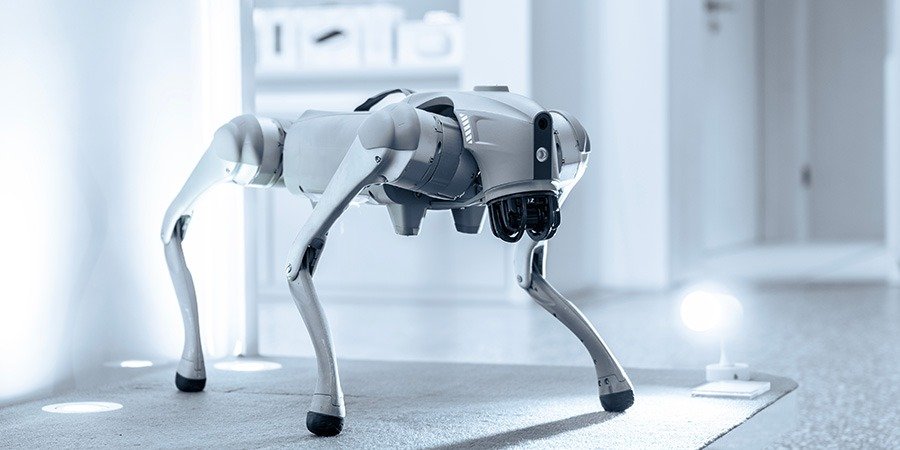



A team of researchers from Peking University has introduced two innovative robotic dogs, “Anteater” and “Salamander,” designed to explore the moon’s lava tubes, underground tunnels formed by ancient volcanic activity that could serve as future habitats for astronauts.
These robots were tested in a lava cave near Jingbo Lake, Heilongjiang, chosen for its resemblance to the lunar subsurface environment with narrow passages, uneven terrain, and low light.
Equipped with autonomous navigation, obstacle avoidance, and 3D mapping, the robotic dogs can independently traverse hazardous or inaccessible areas. Their embodied intelligence allows them to adapt to complex terrain in real time, combining physical movement with AI-driven decision making.
The development marks a significant step toward China’s broader ambition to build a lunar base within these subsurface structures, which offer natural protection against radiation, micrometeorites, and extreme temperatures, which are the key challenges in sustaining long-term human presence on the moon.


