

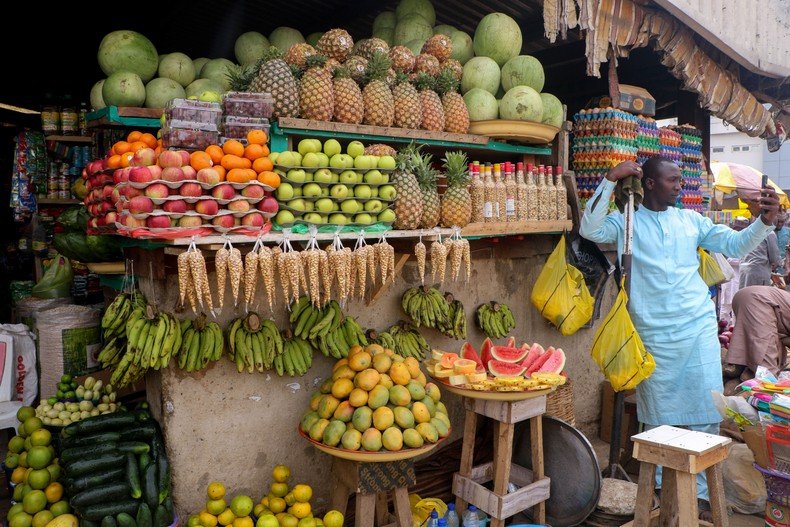
A new Informal Economy Report 2025 reveals that over 40% of informal businesses in Nigeria make less than $12 in daily revenue, painting a vivid picture of resilience amid rising economic hardship.
Despite contributing roughly 65% of the country’s GDP and employing more than 80% of its workforce, the sector’s fragility remains exposed.
“The informal economy is Nigeria’s silent engine, but one that’s running on fumes,” the report noted.


A young but struggling workforce
The report identifies the informal economy as overwhelmingly young, with 38% of businesses run by entrepreneurs aged between 18 and 34.
Many of these youth-led ventures are small, often family-operated, and locked in a cycle of survival. Only 40% of these businesses have employees, underscoring their micro-scale nature.
Retail and general trade dominate the space, accounting for 44% of informal activity, followed by agriculture and creative services. Yet, beneath this industrious energy lies a harsh truth: most of these enterprises barely stay afloat.
“Informality provides jobs but not prosperity. Without access to finance, basic infrastructure, and supportive regulation, young entrepreneurs remain trapped in low-income activities,” the report emphasised.
Profitability gap and gender divide
While revenues for many businesses have grown in nominal terms, profitability continues to lag. Inflation, volatile exchange rates, and rising supplier costs have eaten deep into earnings.
The report found that 41% of women-owned businesses earn less than $6 in daily profit, compared to 34% of male-owned businesses.
This gendered income gap reflects not just market realities but structural inequities in access to credit and resources.
“Women dominate informal trading and services,” the report noted, “but they face systemic barriers, from limited financial literacy to societal expectations, that stifle their ability to expand.”
High costs, low support
The Informal Economy Report 2025 paints a stark picture of Nigeria’s rising cost of doing business.
A staggering 79% of respondents said their operating costs surged in the past year, driven largely by inflation, higher transport expenses, and supplier price hikes.
Meanwhile, multiple layers of taxation from federal, state, and local authorities continue to discourage formalisation.
“Entrepreneurs perceive registration as a tax trap rather than a growth opportunity,” the report explained.
“Formalisation remains unattractive when it brings more costs than benefits.”
Digital divide in a cash-first economy
Despite Nigeria’s rapid fintech expansion, cash remains king in the informal market. One in four informal businesses reported that less than 10% of their transactions are digital, highlighting a significant gap in adoption.
While many businesses now use bank transfers to buy supplies, few use point-of-sale systems or mobile apps for customer payments. The reasons range from transaction fees and poor connectivity to distrust of digital systems.
“This digital exclusion limits efficiency and record-keeping,” the report stated.
“Bridging this divide is essential to integrating informal businesses into Africa’s growing digital economy.”
But the transition remains slow. Many entrepreneurs associate formalisation with red tape, not opportunity.
“Until registration brings visible benefits, like access to loans, training, or government support, most informal operators will stay where they are,” the report warned.
Unlocking potential through inclusion and support
Despite the challenges, experts say the informal sector represents one of Africa’s greatest economic opportunities.
“Empowering women entrepreneurs through tailored financial products and digital literacy programmes is essential for shared prosperity,” the report urged.
Nigeria’s informal economy mirrors a continental reality. Across Africa, more than 85% of jobs exist in the informal space, from Kenya’s jua kali artisans to Ghana’s market women and South Africa’s township traders.
The barriers, limited capital, regulatory friction, and gender disparity are shared challenges requiring coordinated solutions.
“The fate of Africa’s informal sector will define its economic future. With the right policies, what is today a survival mechanism can become tomorrow’s engine of inclusive growth,” the report concluded


