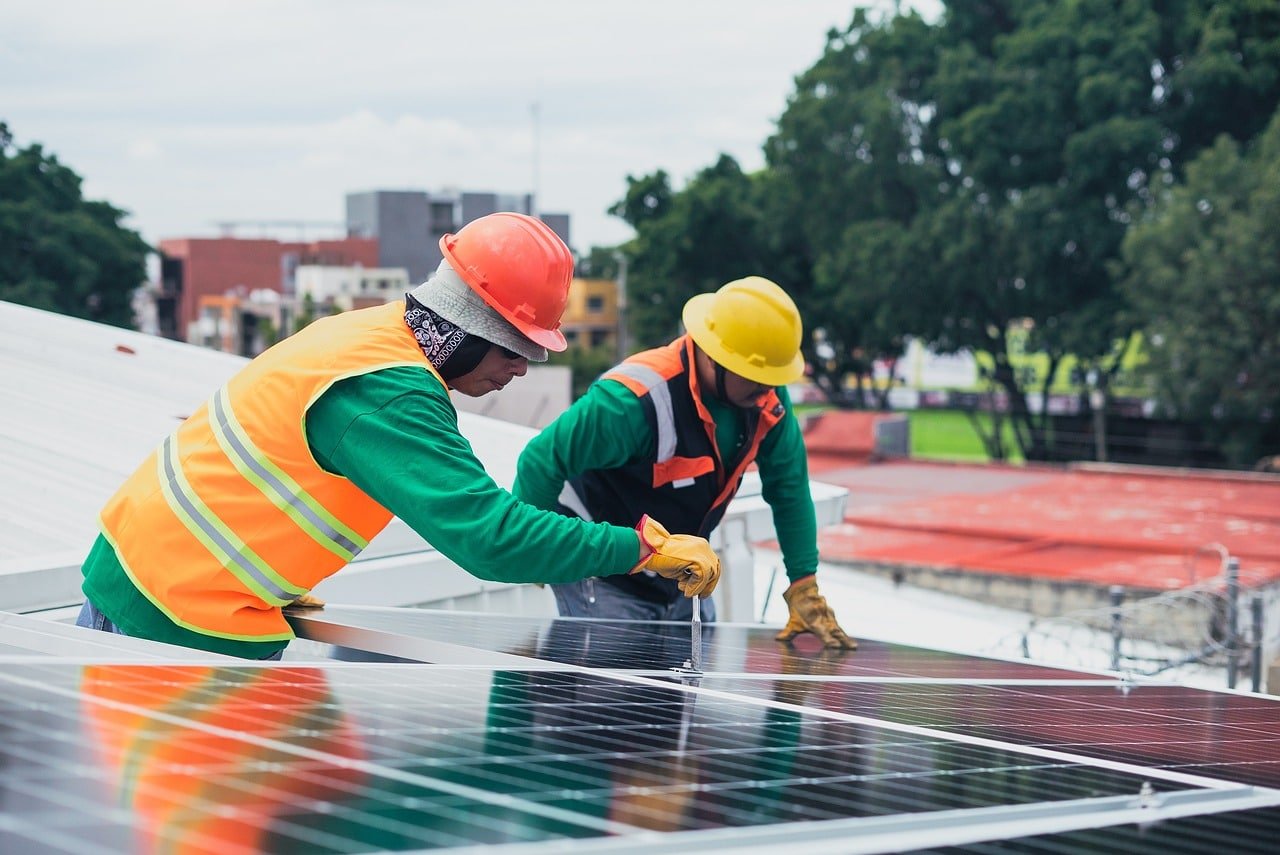
The energy landscape in Nigeria is still one of the most challenging and promising in Africa. Despite decades of economic growth, millions of people in the country still lack access to reliable and sustainable electricity or continue to rely on generators.
In 2025, Nigeria ranked as the second-largest solar installer in Africa, installing 803 MW of solar power capacity, just behind South Africa, which installed 1,602 MW.


This persistent gap and rising capacity have created fertile ground for solar startups. Not only do these ventures offer decentralised power. They also offer economic development in underserved communities.
The fundraising for these companies has been heightened in 2026, as investors see the business potential as well as the impact of solar solutions. Investors have also become very selective in terms of the types of companies that they are willing to invest in. Investors are now looking for outcomes, readiness, and revenue models before investing.
Global trends are also impacting the local market. The investment in renewable energy is becoming tighter globally. Impact is also a key aspect in this case. It is essential for startups to prove that their solutions are working and that they can sustain their business.
The solar market in Nigeria is affected by both local and international pressures. For startups, the new reality is that they not only have to plan their strategies but also execute them and show traction for them to be funded.
A sector on the rise
In Nigeria, the solar industry has experienced tremendous growth over the last few years, where small-scale solar businesses have transformed into successful ventures. The development of solar startups can be explained by the energy crisis that Nigeria is currently undergoing.
Bello Daniel, who is the CEO of Bluespark Innovations, a solar energy startup, said that there is an emerging trend of startups in the energy sector in Nigeria. According to him, the youths of Nigeria are transforming their ideas into solar startups. These startups show both creativity and ambition.
“Over the past three years, we have seen a growing number of startups tackling energy challenges, particularly in solar,” Daniel said. “This has translated into a significant increase in fundraising opportunities for energy and solar companies across Nigeria in 2026.”
The growth of the industry can also be understood from the amount of funding that startups have managed to raise.
Rensource, a startup that offers solar mini-grids for local markets and merchants, raised $20 million in funding in 2019. Another startup, Koolboks, raised $11 million in funding in 2025 for the acceleration of the rollout of the startup’s solar-powered IoT-enabled refrigeration units.
Salpha Energy was able to raise funds amounting to $1.3 million for the company’s solar manufacturing business. Another startup, Arnergy, raised funds amounting to $15 million in 2025, having raised another fund of $3 million in 2023.
Experts claim that the investment in startups shows that investors are willing to invest in companies that have the potential to deliver results.
However, challenges remain. High infrastructure costs and distribution channels have been a hindrance to some startups in the industry. The industry has been growing, but not all startups have been able to grow at the same rate.
The hard truths investors want to see
While there has been an improvement in the amount of funds available to solar startups, investors in 2026 are still very particular.
According to Babatunde Adio, the CEO of solar power startup, Cabax Energy, investors are requiring proof that a startup can scale and function well.
“Investors are prioritising scalable business models, reliable revenue streams, and strong unit economics. They want startups that combine technology with practical distribution strategies, especially for underserved communities,” Babatunde told Energy in Africa.
“Impact metrics, such as improved energy access and carbon reduction, alongside financial sustainability and effective management teams, are also key considerations.”
Solar ventures are very different from fintech or software startups. They need a lot of upfront investment in equipment, installations, and maintenance.
This can delay returns for investors. Babatunde says that startups have to prove that the capital they receive will translate into real solutions that can earn money, as well as having a significant impact socially and environmentally.
Thara Aisha Atta, the CEO of Trashformas Nigeria Limited, a renewable energy startup, also shares the same view. She says the investment climate is improving but remains highly performance-driven.
“Compared to previous years, the fundraising environment for energy and solar startups in Nigeria in early 2026 appears more active than much of 2025, particularly within clean energy,” she told Energy in Africa.
“Investors are increasingly prioritising solutions that deliver measurable emissions reduction alongside clear commercial applications.”
The lesson is clear. Ambition alone is not enough. Startups must be able to tick boxes in terms of traction, operational capacity, and a revenue model if they are to succeed in the competitive landscape.
Scaling solar and what startups must demonstrate
Growing a solar business in Nigeria is about more than technology. It requires a clear strategy and strong internal structures. Bello Daniel says startups need to be clear about their main goal. Are they providing installation services, making equipment, developing software, or doing a combination of these?
“Identifying the goal of your startup determines what kind of structure it will have and automatically affects the kind of funding you will apply for in the future. For example, if your startup’s basic goal is to provide solar installation services, it will be difficult to access funding from investors looking for companies that produce software to monitor solar energy consumption,” he said.
Another important aspect for startups to have in mind is to keep their investor portfolios and reports of traction. This will help them show their investors that they have been able to deliver in the past and can continue to do so in the future.
External support is also important, and this includes grants, NGO programs, bank financing, and pitch competitions, among others. However, this depends on how ready the startup is from within.
Investors need to see that a startup can deliver on its execution, create an impact, and scale up its operations. A well-prepared company with a good internal structure and external network is more likely to secure investment than a company without such foundations, regardless of how good its ideas are.
How operational readiness affects fundraising success
Operational readiness remains a key determinant in securing capital. Babatunde Adio underscores that investors want tangible proof that their money can be deployed effectively.
“Startups must show not only technological innovation but also practical distribution and deployment capacity. Investors want to see that their capital can be translated into tangible energy solutions for communities, with clear revenue models and effective management teams,” Babatunde said.
The 2026 funding landscape supports this approach. Companies like Rensource, Koolboks, Salpha Energy, and Arnergy show that startups with solid operations can secure significant investment.
According to Babatunde, these examples show that well-structured operations, clear revenue models, and measurable social impact can reduce investor risk and accelerate capital inflows.
Operational readiness goes beyond technology. It includes the availability of reliable supply chains, qualified people, and the ability to maintain the systems.
Startups that cannot prove these aspects often experience delays in fundraising or lose interest from the investors. This is an industry that is becoming more professional and more mature.
A globally improving funding landscape
Solar energy has moved from an experimental phase to a market that is ripe for investment. Global factors cannot be ignored in this aspect. According to the International Renewable Energy Agency (IRENA), investments in energy transition reached a record high of $2.4 trillion in 2024 globally. Renewable energy alone received $807 billion of that total.
But the global economy is not without pressure. Rising interest rates and tighter capital after the pandemic have made investors more selective. This is very particular in markets where rules and regulations are still developing.
In Nigeria, solar startups face their own challenges. Unlike software or fintech companies, solar businesses need big upfront investments. Panels, inverters, batteries, and installation networks all cost money. They must also hire trained teams to install and maintain these systems.
Most of these costs are in dollars, while revenues are mostly collected in naira. This makes startups and investors vulnerable to currency risks. As a result, only startups that can demonstrate their operational readiness, traction, and business model success multiple times access available funds.
The cautious optimism in 2026 reflects this reality. Startups with good operations attract local and international investors, but due diligence is strict. This follows a global trend that renewable energy funding now focuses on evidence and results rather than promises alone.
Projections and the next wave of investment
Looking ahead, the solar sector in Nigeria is projected to keep rising.
In 2023, Nigeria imported over 4 million solar panels, worth over $200 million. In early 2025, Nigeria’s solar panel import value was N125.29 billion. Nigeria’s solar capacity as of 2024 was 385.7 MW. This indicates that the use of solar power is rising in Nigeria and in the entire African continent.
The Nigerian solar market was valued at over $600 million in 2024. It is also projected to increase by 15-20% annually until 2030. This is because of the rise in domestic demand and interest in investing in Nigeria.
The above is a great opportunity for startups. The next round of funding will favour businesses that can prove their operational readiness and demonstrate a social and environmental impact.
Bello Daniel also believes that investors should invest in business models that offer scalability, as well as practical solutions to real-life problems. This is also the same opinion of Babatunde Adio. He points out the significance of having a source of revenue as well as results.
For entrepreneurs, the projections present opportunities and challenges. More capital may be available to entrepreneurs, but only if they are able to offer energy solutions that are sustainable in the long term.
The maturation of the market presents a new chapter in Nigeria’s solar energy sector. It presents opportunities that require discipline and planning to be successful in terms of impact and profitability.