

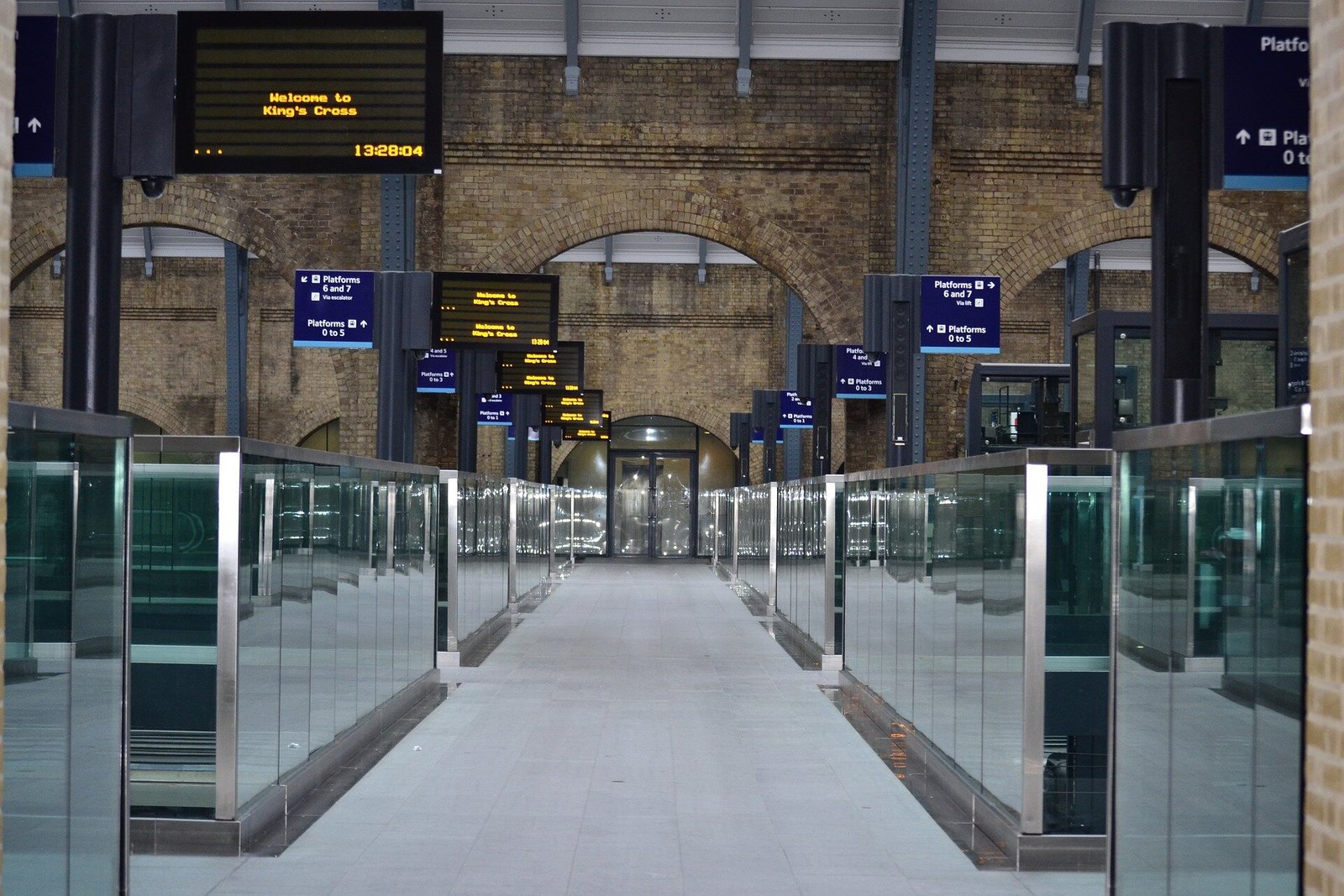

Recent disruption to Britain’s rail network, caused by a fault in its outdated nationwide radio system, was more than just an inconvenience for thousands of commuters. It was a stark reminder of how far the UK has fallen behind in its critical infrastructure.
It’s a particularly bitter irony given that Britain was the birthplace of the industrial revolution and the pioneer of railway systems. These days, however, Britain’s railways—and much of its infrastructure—are a source of frustration, inefficiency and spiraling costs.
Britain’s rail system is among the most expensive in the world, yet passengers endure frequent delays, technical failures and overcrowding. These inefficiencies aren’t just inconvenient—they impose a significant cost on productivity and economic growth.
Last year’s high-speed rail fiasco—where plans for the HS2 line were drastically scaled back—perfectly illustrates the UK’s failure to address infrastructure challenges. Billions of pounds have been spent, yet the project remains mired in delays, cost overruns and political indecision.
Meanwhile, countries like China, Japan and Germany treat infrastructure as a foundation for economic growth. China’s high-speed rail network connects remote regions while remaining widely affordable and profitable—a process that began several decades ago when China was far poorer than it is today.
Japan’s Shinkansen (or bullet train) sets global standards for punctuality and efficiency. And Germany’s €86 billion (£71 billion) rail modernization plan prioritizes efficiency and sustainability, reflecting a strong belief that investing in infrastructure drives growth, even during a serious economic downturn.
In contrast, Britain’s rail system feels increasingly like a relic, stuck in a cycle of patchwork fixes and escalating costs.
The UK’s infrastructure challenges extend well beyond rail. An aging electricity grid, inconsistent broadband, underwhelming 5G coverage, and fragile water systems reflect a broader lack of strategic vision and investment. These failures leave Britain ill-prepared for the demands of a 21st-century economy.
Successive governments have taken a piecemeal approach, tinkering at the edges while avoiding the bold decisions needed for long-term solutions. High transport costs and poor digital infrastructure could discourage businesses from operating in the UK, while crumbling energy and water systems raise household bills and impose significant environmental costs. The results are inefficiency, declining trust in public institutions, and a steady erosion of Britain’s global competitiveness.
Without urgent action, the UK risks falling further behind in the global race for investment, innovation and growth.
To reverse this decline, bold investments in technology and modern infrastructure are essential. Modernizing rail systems with AI-driven scheduling, full automation, and predictive maintenance could lower costs, save time, boost reliability and increase capacity.
Upgrading broadband and 5G networks to world-class standards would bridge regional divides. Smart energy grids and advanced water management systems would drive sustainability, enhance resilience and reduce costs for households and businesses. These upgrades are the backbone of a competitive economy.
A vision for growth
Revitalizing infrastructure could become the cornerstone of a credible growth strategy. The Labor government has a rare opportunity to use its majority to turn things around, positioning Britain as a leader in modern infrastructure and setting an example for other developed countries facing similar challenges.
The steps are clear. The UK should invite global leaders in technology, engineering and large-scale projects to establish operations in the country. Their expertise and resources can help position Britain as a model for how developed economies can turn aging infrastructure into new engines of growth.
By creating an environment that attracts both investment and talent, the UK can rebuild domestically while becoming a new hub for exporting expertise and solutions.
In today’s challenging financial climate, funding massive infrastructure upgrades may seem daunting. However, as chancellor Rachel Reeves recently suggested, unlocking pension funds for infrastructure investment offers a practical solution. Australia has demonstrated how pension funds can be channeled into major infrastructure projects, generating growth without overburdening public finances.
Proven models like public private partnerships (PPP), as demonstrated in London’s Crossrail project, and a land tax system known as land value capture, as seen in Hong Kong’s MTR system, could also ease the financial burden.
Leveraging the City of London’s expertise and resources could unlock other innovative solutions, such as the UK government bond known as the green gilt, for example.
The real question is: can the UK government afford not to act? Managed decline is a recipe to fall further behind. By focusing on resources effectively, the UK can live within its means while investing in the infrastructure it desperately needs.
The price of maintaining the status quo is staggering. Delays and inefficiencies already cost businesses billions each year. Infrastructure failures exacerbate regional inequalities, stifle productivity and drive talent and investment abroad. Worse, they undermine public trust in government and institutions.
Britain’s history as the birthplace of the industrial revolution should inspire, not haunt, its future. Imagine a rail system that is automated, reliable and affordable. Picture a country where broadband and mobile networks lead Europe, energy grids seamlessly integrate renewables and EVs, and water systems are resilient and efficient. These are attainable goals with the right vision, strong leadership and sustained investment.
Britain cannot afford to muddle along. Modernizing infrastructure could be the catalyst to drive growth and attract investment.
With its strong parliamentary position, the Labor government has a historic opportunity to take decisive action. The nation that invented the railway shouldn’t settle for being left behind—it must lead once again.
The Conversation
This article is republished from The Conversation under a Creative Commons license. Read the original article.
Citation:
Rail disruption in the UK is so common that the economic damage it causes is barely noticed, but change is possible (2024, December 16)
retrieved 16 December 2024
from https://techxplore.com/news/2024-12-rail-disruption-uk-common-economic.html
This document is subject to copyright. Apart from any fair dealing for the purpose of private study or research, no
part may be reproduced without the written permission. The content is provided for information purposes only.


